 John Myers
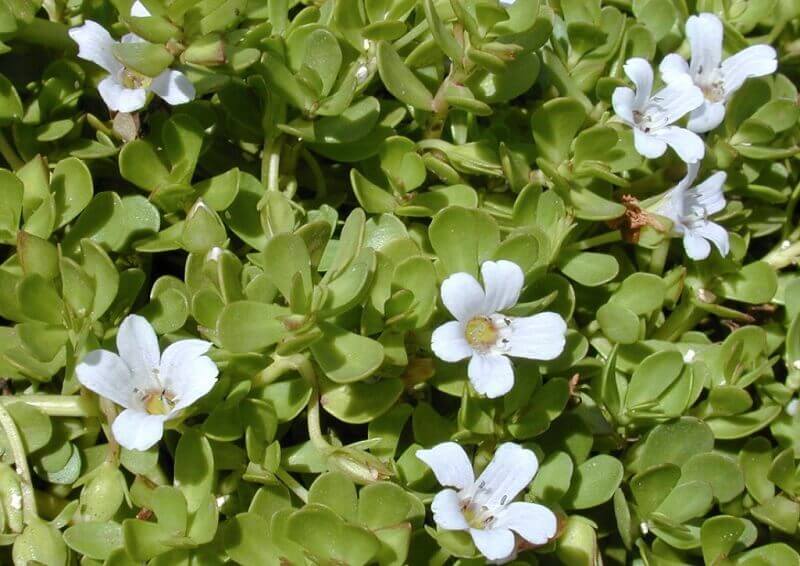
Brahmi is a traditional medicinal plant from Ayurveda. It strengthens memory and could play an important role in the prevention and treatment of dementia. All information about the intake and dosage of brahmi – the small fat leaf – can be found with us.
Brahmi for a strong memory
Brahmi is the Indian name for the Bacopa ( Bacopa monnieri ). The plant has been used in Ayurveda for 3000 years to strengthen the brain and nerves.
The plant is also highly valued in traditional Chinese medicine (TCM). Brahmi is said to have extremely positive effects on memory – not only in people with memory disorders, but also in healthy individuals.
For this reason Brahmi is also called memory herb. Brahmi is also used in children and adolescents to improve attention and learning skills and to support therapy for hyperactivity.
Brahmi has a long tradition in Ayurveda
Ayurveda is India’s traditional holistic health system and has existed for 5000 years. In Sanskrit (an ancient Indian scholarly language), the term Ayurveda means something like “science of life” or “wisdom of life”. The term Brahmi comes from Hinduism. “Brahma” is the god of creation. And the members of the top caste are called “Brahmans” in the caste system of India. Formerly it was the duty of Brahmins to become scholars or priests. Derived from these two terms, Brahmi can be understood as “sacred” or “divine”. Scholars are said to use the plant to better memorize texts.
Brahmi: The Little Bacopa
Despite its widely used Indian name, Brahmi is by no means native to India, but wherever there is a tropical or subtropical climate with sufficient humidity. Bacopa prefers to grow in damp, swampy areas and therefore on the banks of water or near the sea. That can be in India, China, Africa, Australia, but also in North or South America.
In Europe, Brahmi can be kept as a houseplant or outside in a pot in summer (more on this in the paragraph “Keeping Brahmi as a houseplant”). The plant even feels at home in the aquarium.
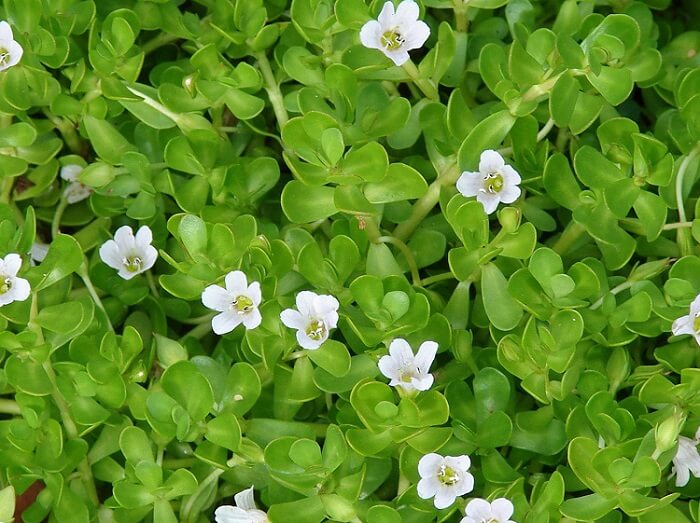
Bacopa is characterized by green, thick leaves reminiscent of a succulent. The leaves contain bitter substances , which is reflected in the taste. However, the plant can also be eaten raw. However, it is also processed into powder, extract or oil and can therefore also be taken as a dietary supplement.
Do not confuse brahmi with gotu kola
Pennywort ( Centella asiatica ) is also sometimes referred to as Brahmi. However, this is a different plant that has nothing to do with the Bacopa.
The pennywort comes from the umbelliferae family, as do caraway , fennel and parsley. Bacopa, on the other hand, comes from the plantain family and is therefore (distantly) related to plantain, psyllium and foxglove.
The pennywort is also known in the west as gotu kola or tiger grass – in Ayurveda the plant is called mandukaparni. Gotu kola is also used in Ayurveda and traditional Chinese medicine. The plant is said to help with wound healing, arteriosclerosis and mental disorders, but is also known for its nerve and memory strengthening effects.
Why gotu kola is also referred to as brahmi is not clear – probably because of the similar effect on memory. Therefore, both plants are often used together (and combined with other plants) in herbal mixtures.
The Effect of Brahmi
Recently, brahmi has been gaining popularity all over the world, which has brought the plant into the focus of science as well. Among other things, it works:
- antioxidant
- antimicrobial
- antidepressant
- liver protecting
- cardioprotective
- anti-inflammatory
The active ingredients and components of Brahmi
Brahmi contains, among other things, various alkaloids and flavonoids such as e.g. Saponins. The two saponins bacoside A and bacoside B are mainly responsible for the positive properties of the plant.
Bacoside A and Bacoside B improve the transmission of nerve impulses and promote the repair of damaged nerve cells. For this reason, they can promote attention, concentration, learning and memory and are of great interest for the treatment of Alzheimer’s and Parkinson’s.
Brahmi strengthens the brain
Above all, the positive effect of brahmi on the brain stands out: the plant is said to stimulate the renewal of brain and nerve cells. For this reason, it is being investigated whether brahmi could help with Alzheimer’s, Parkinson’s, schizophrenia , stroke, epilepsy, depression and anxiety, among other things – i.e. diseases that have something to do with the brain.
In India, brahmi has long been recommended and used to treat mental illness, epilepsy, insomnia, anxiety, and poor concentration.
Studies on rats have already produced promising results – as with many naturopathic remedies, there are still no large-scale clinical studies. However, the results of some clinical studies with a small number of participants are already available. In the next few paragraphs, we’ll go into more detail about some of them.
Brahmi in Alzheimer’s
Alzheimer’s is a neurodegenerative disease characterized by cognitive decline, memory loss, and disorientation. It is one of the most common and feared types of dementia.
Better memory performance through Brahmi
Brahmi may slow the progression of Alzheimer’s through its positive effects on memory, as suggested by several (double-blind and placebo-controlled) clinical studies:
- 60 people with an average age of 62 years took 300 or 600 mg brahmi extract or a placebo daily for 3 months. The working memory of both Brahmi groups had improved after the 3 months compared to the placebo group.
- 49 people over 55 took a daily dose of 300 mg of brahmi extract for 3 months. After the 3 months, their memory performance had improved significantly compared to the placebo group.
- 54 people, with an average age of 73 years, took either 300 mg of brahmi extract or a placebo for 3 months. The memory values of the Brahmi group had improved compared to the placebo group. Her depression scores were also down.
There are many other studies of this type. It is true that the test subjects were (relatively) healthy older adults who did not yet suffer from Alzheimer’s. Nevertheless, the results are positive.
Because studies on Alzheimer’s rats confirmed the potential effect of brahmi in dementia and give hope that the effect on Alzheimer’s can soon be proven in human studies.
Brahmi in children with ADHD
Studies with Brahmi have also been carried out in children and adolescents with Attention Deficit Hyperactivity Disorder ( ADHD ):
We would like to go into a study by Indian researchers in more detail below: 13 ADHD children between the ages of 6 and 12 took two teaspoons of “Brahmi Ghrita” daily for 2 months in the morning on an empty stomach. “Brahmi Ghrita” is Brahmi with ghee (clarified butter). In Ayurveda, medicinal herbs are commonly prepared (sometimes boiled for hours) in ghee and then ingested in that form.
The placebo group received daily Ritalin (methylphenidate) – the well-known ADHD drug. In both groups, the children were more attentive after the 3 months and some also improved their academic performance. There was hardly any difference between the two groups (not significant).
So the results show that Brahmi can indeed compete with a drug like Ritalin. While side effects such as insomnia and irritability often occur when taking Ritalin , taking Brahmi – apart from rare cases of digestive disorders – has no negative effects.
Brahmi strengthens the hair roots
Brahmi is also said to have a positive effect on hair growth and prevent hair loss by strengthening the hair roots. These beneficial effects, along with the plant’s memory-boosting properties, have led to brahmi being touted as an anti-aging herb.
Brahmi Oil and Brahmi Powder for hair
Brahmi oil and brahmi powder are available for external use. You can prepare a hair mask from the brahmi powder by mixing the powder with a little warm water to form a paste. Massage the paste and the oil into the scalp, leave it on for one to two hours and then wash the hair thoroughly.
According to the manufacturers, the application to strengthen the hair roots should be repeated regularly (e.g. once a week) in order to show an effect. Please note, however, that no studies have yet proven the effectiveness of Brahmi in existing hair loss.
Brahmi Oil: Two variants
To make brahmi oil, either brahmi extract is slowly heated in a carrier oil (such as coconut oil) or it is distilled from the leaves. The latter contains the concentrated essential oils of the plant and is correspondingly stronger and more expensive – a 7ml bottle of essential oil costs the same as 100ml of brahmi oil with a carrier oil.
A few drops of the essential brahmi oil are sufficient for use on the head. It is best to also mix it with a carrier oil for better distribution. Steam distillation is considered a gentler process for extracting oil.
Buying Brahmi: You should pay attention to this
When buying brahmi, make sure you are actually buying brahmi ( Bacopa monnieri ) products and not gotu kola ( centella asiatica) products as both are available under the brahmi name. Although gotu kola has its healing effects, it is not exactly the same as brahmi.
You can buy brahmi in capsules, as a powder or as an oil. The oil is only used externally – the powder, on the other hand, can be used internally and externally.
For internal use, the capsules are a bit easier to use as the dose has already been measured. The easiest way to find the various Brahmi products is on the Internet, although Brahmi food supplements are now increasingly available in well-stocked pharmacies.
Organic Brahmi
Rely on organic quality for both the capsules and the powder – because brahmi is taken for several months and could be contaminated with pesticides in non-organic quality.
Application of Brahmi: intake and dosage
Brahmi is taken over a period of several months to allow the plant’s effects to unfold.
Taking brahmi capsules
In the studies presented above, the subjects usually took 300 mg of brahmi extract per day for 3 months. 300 mg is considered the middle dose. Many studies also used 300 mg of Brahmi extract twice a day.
Brahmi capsules contain either powder or extract. Brahmi powder is much less concentrated, which is why manufacturers recommend higher daily doses: Usually 600 to 1000 mg divided into two capsules.
Capsules with brahmi extract are rarely found (e.g. from Ayumeda), but are considered more effective due to the strong concentration. The Ayumeda capsules contain about 350 mg Brahmi extract per capsule.
The extract has a ratio of 1:25, which means that 1 kg of extract contains as many active ingredients as 25 kg of the fresh plant.
For the powder, on the other hand, the plant is only dried and ground. The ratio here is therefore only an estimated 1:10, since plants usually consist of around 90 percent water, which is removed during drying.
Taking Brahmi Powder
You can take 800 to 1000 mg of Brahmi powder daily – because it is not a pure extract, but the dried and powdered leaves of the bacopa.
It is best to mix the powder in a glass of water. Since the bitter taste takes some getting used to, you can also add the powder to a juice or smoothie.
Brahmi is best taken on an empty stomach
It is best to take one brahmi capsule in the morning on an empty stomach and another before dinner. Since it should ideally be taken on an empty stomach, it is best to wait at least half an hour before eating.
You also drink the powder (mixed with water or juice) on an empty stomach and then wait half an hour before eating.
The use of brahmi in children and adolescents
Since clinical studies are not usually carried out with children and adolescents for ethical reasons, there is a lack of reliable knowledge about the dose and safety of the application. For this reason, you will often read the note on Brahmi preparations: “Children under the age of 12 should only take the dietary supplements after consulting their doctor or alternative practitioner.”
However, we would like to point out that the use of Brahmi in children in India’s Ayurvedic health system is completely natural and that Brahmi, as you can read in the section “Side Effects of Brahmi”, is considered to be very well tolerated – in contrast to clinically tested medications such as e.g. Methylphenidate (Ritalin), which has been shown to cause side effects.
For this reason, there are no recommended intakes for children. Due to the lower body weight of children, we would use brahmi powder and start with a low dosage of, for example, one teaspoon per day. If your child tolerates the dose well, you can increase the dose to two teaspoons after a few weeks. You could also discuss details with a suitably experienced naturopath or an Ayurvedic health advisor.
Take Brahmi and Ashwagandha together
Brahmi is often combined with Ashwagandha, as both have similar positive effects on the brain and memory. Ashwagandha, also known as the sleeping berry, has a calming effect, which is why it is particularly used for stress-related sleep disorders.
You can also take Ashwagandha as a capsule (from powder or extract) or powder. It is taken at the same time as Brahmi. If you are taking both in powder form, you can also mix the two powders together directly to make it easier to take.
Side Effects of Brahmi
Brahmi is generally well tolerated, but can cause diarrhea, nausea and abdominal cramps in sensitive individuals. However, no side effects have occurred in the vast majority of studies. Should you experience any side effects, reduce the daily dose.
Who should not take Brahmi
You should not take Brahmi if you have a thyroid disorder (e.g. Hashimoto’s), lung or urinary tract disease, or a slow heartbeat (bradycardia). In addition, it has not yet been studied whether it is safe to take brahmi in pregnant and breastfeeding women.
Interaction with drugs
If you are taking medication for Alzheimer’s, ADHD, depression, etc., you should first discuss taking Brahmi with a pharmacist or doctor, because the similar mechanisms of action could lead to interactions between Brahmi and your medication.
Be careful with coffee!
Consuming coffee at the same time can lead to overreactions (e.g. jumpiness), so you should wait a few hours after taking brahmi before drinking coffee.
Brahmi in the kitchen
In Ayurveda, preparations made from fresh brahmi leaves are very often used – the effect is said to be greater than that of dietary supplements. For example, Brahmi is pressed into juice (Brahmi Swarasa), made into a paste (Brahmi Kalka) or incorporated into ghee (Brahmi Ghrita).
Brahmi Ghrita can already be bought in Ayurveda online shops. The preparation is a bit more complicated than making ghee at home.
Brahmi leaves in salad and smoothie
Fresh brahmi leaves can also be eaten raw in salads, although try only a small handful at first as the leaves taste very bitter. You should not boil or fry the leaves, as most of the ingredients are destroyed by heat. However, you can add a few leaves to your smoothie.
Unfortunately, fresh Brahmi leaves are very rarely found in Europe, but well-stocked garden centers and online shops now offer Brahmi plants (small fat leaf), which you can keep wonderfully as house plants or in your aquarium.
Keep Brahmi as a houseplant
If you keep the brahmi plant or bacopa as a houseplant, you always have fresh leaves on hand and can harvest the plant as needed. The plant prefers a semi-shady to sunny location. The soil should never dry out completely, as Brahmi grows in swampy areas in the wild.
When the outside temperature is over 20 degrees, Brahmi can also stand outside. However, the Bacopa is not hardy and extremely sensitive to frost. If the plant is outside over the summer, it forms small white to light blue flowers from July to September. If it is kept indoors, it can also flower outside of this period.
You can also keep the plant in the bathroom or in the kitchen, where there is usually high humidity. However, it should also be bright enough in these rooms.
If you can’t find the plant in the houseplant section, check out the aquatic plants for aquariums. You can then transplant the bare-rooted plants into a pot at home.
Harvesting Brahmi Plant
Brahmi leaves can be harvested all year round. To do this, cut off a few leaves with a sharp knife and use them immediately so that as many ingredients as possible are preserved.
Conclusion: Brahmi, the memory herb from Ayurvedic medicine
Brahmi is an effective medicinal plant that can look back on thousands of years of tradition in Ayurvedic medicine. The plant and dietary supplements made from it can be used to treat age-related memory problems or to prevent dementia, but they can also support concentration and the ability to learn and have a calming effect on hyperactivity.
Shatavari: Another Ayurvedic medicinal plant
Shatavari is another medicinal plant that has been used in Ayurveda for centuries. The root is mainly taken by women with menopausal symptoms, menstrual problems and an irregular cycle.


Facebook Comments