 John Myers
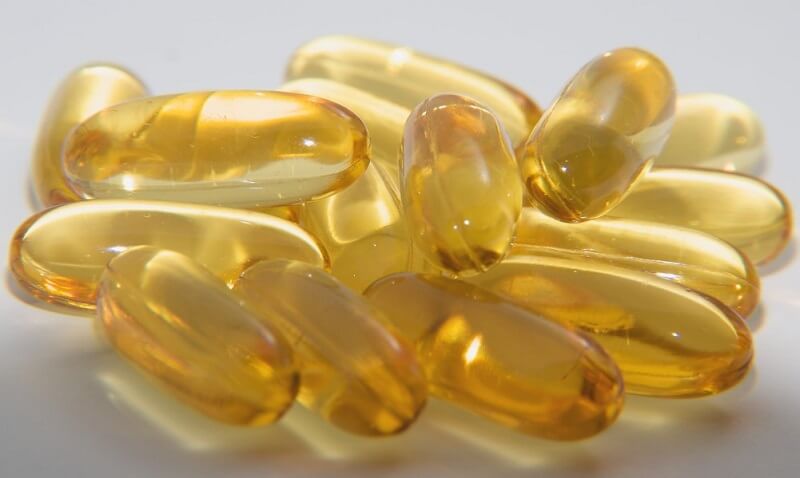
Whether in fish oil capsules or sea fish fillets – omega-3 fatty acids stand for a healthy lifestyle. But its good reputation is crumbling.
That’s what it’s about:
Omega-3’s wonder weapon status is based on a misconception
Omega-3 fatty acids are propagated as real all-rounders: If you believe the advertising slogans for omega-3 capsules, they keep the heart and brain healthy, ensure a healthy metabolism and protect against infections and inflammation . With these promises, the industry sells vast quantities of fish oil capsules – and thus makes billions in sales.
Above all, fatty cold-water fish such as mackerel or salmon, but also krill and seal fat have a high content of these polyunsaturated fatty acids. Their success story begins exactly where seals and co live: in Greenland.
Supposedly healthy Greenlanders
In the 1970s, Danish scientists observed that the Inuit on Greenland suffered from heart diseases such as heart attacks or arteriosclerosis extremely rarely. That seemed strange, because the inhabitants of the icy north in particular had a very fatty diet containing meat and fish – with little fruit and vegetables. Even then, this contradicted all the principles of a healthy diet that protects the cardiovascular system.
The researchers had only one explanation: the healthy heart of the Inuit had to be related to the high amounts of seal and whale blubber in their diet – and thus to their intake of omega-3 fatty acids.
The catch in the story: The Danish scientists had not really examined the Inuit for their heart health at the time. Their knowledge was simply based on the fact that the natives of Greenland simply did not know arteriosclerosis and co as a disease in their culture – or did not describe it as such.
Atherosclerosis also a problem in Greenland
The crazy thing about it: Later studies turned out that the Inuit in Greenland suffer from coronary heart disease just as often as other western peoples, and always have: Up to 1000-year-old Eskimo corpses were found frozen in the ice – with the clinical picture: arteriosclerosis.
That’s why we need to talk about it:
Omega-3 capsules do not protect against heart attacks
To this day, the myth of the protective miracle effect of omega-3 fatty acids persists. However, their prominence has also led to a number of studies being carried out on their health effects – with sobering results:
“There is evidence that taking omega-3 capsules does not lead to a reduction in heart disease, stroke or mortality. There is little evidence on the effects of eating fish,” summarizes the Cochrane Collaboration the results of the largest meta-study to date on the effects of omega-3 supplements on cardiovascular disease.
“The domain of omega-3 fatty acids is crumbling more and more, at least as far as the effects on the heart are concerned,” says Jan Philipp Schuchardt from the Institute of Food Science and Human Nutrition at Leibniz University Hanover.
Omega 3 capsules are not medicine
A rethink has therefore already taken place in the minds of physicians. In December 2018, the European Medicines Agency (EMA) published an opinion : Omega-3 fatty acids have no protective effect against other cardiovascular diseases in heart attack patients. They are no longer recommended as a drug .
But:
There is one exception
Namely these: Omega-3 capsules have been shown to help reduce excessive triglyceride levels in the blood . Only in this special case does the EMA still rate the supplements as a sensible therapy .
Limited Effect
Like cholesterol, triglycerides are also blood fats whose levels affect our health. “However, triglycerides are just one factor among many others that can increase the risk of cardiovascular disease,” says Jan Phillip Schuchardt from Leibniz University Hanover. In addition, a high triglyceride level does not mean that everyone has an increased risk of heart disease. Sometimes this is simply genetic .
Sobering conclusion
Omega-3 capsules can help with an elevated triglyceride level . If that’s not the case, however, it’s better to save the money for the pills – and protect the sea at the same time. As their name suggests, the fish oil capsules are made from fish, now often krill.
Declining krill stocks
The problem: If krill stocks fall, this has fatal consequences. The small crustaceans are the basic food source for many Antarctic marine organisms . Blue and fin whales, squid, seals, penguins or even seabirds depend directly or indirectly on this crustacean.
Incidentally, there is now a more environmentally friendly alternative made from microalgae, even if it still has to establish itself on the market.
And now?
Research has yet to show whether omega-3 fatty acids can do even more
However, fatty acids have not simply become irrelevant to our health. As already mentioned at the beginning: Our body cannot produce the fatty acids that are essential for us. So we have to ingest them with food. This applies equally to omega-3 and omega-6 fatty acids.
It is not crucial that we take in a particularly large amount of a particular fatty acid, for example through dietary supplements – it is more about a balanced relationship.
Unsaturated fats help
This is also shown by the evaluations of the Cochrane Collaboration. The current study situation clearly indicates that if we reduce the proportion of saturated fatty acids in our food and replace it with polyunsaturated fatty acids – i.e. omega-3 and omega-6 – we actually protect ourselves from cardiovascular diseases. This means: It is better to eat vegetable oils, nuts and avocados more often than to only eat milk, meat products and animal fats such as butter.
Omega-3 and Omega-6 are competitors
“There is also increasing evidence that the ratio of omega-3 to omega-6 fatty acids also plays a role,” says Jan Philipp Schuchardt. Because the two polyunsaturated fatty acids compete in our body for the same enzymes. Schuchardt and his colleagues were also able to prove this in their research work.
For precisely this reason, the German Society for Nutrition (DGE) recommends a ratio of 5:1 between omega-6 and omega-3 fatty acids. We generally run the risk of consuming too many omega-6 fatty acids.
Because omega-6 fatty acids are found in all vegetable oils, especially in soybean and sunflower oil, but also in animal products. Omega-3 fatty acids, on the other hand, are only found in significant amounts in some plant foods, such as walnuts and rapeseed oil, as well as in fatty fish.
“It has not yet been finally clarified whether adhering to the 5:1 ratio really has a positive effect on our health,” says Angela Bechthold, nutritionist in the DGE’s Science department. Epidemiological studies examining the risk of chronic diseases have not yet been able to confirm this.
Does omega-3 protect against dementia?
One thing is clear: We still do not know everything about the effect of the various fatty acids on our health. Research is currently being carried out into whether omega-3 fatty acids can protect against dementia and help with depression . Because we know that they are involved in the neuronal development of an embryo. However, there is still no study that clearly shows that omega-3 supplements therefore also protect against “forgetting”.



Facebook Comments