 John Myers
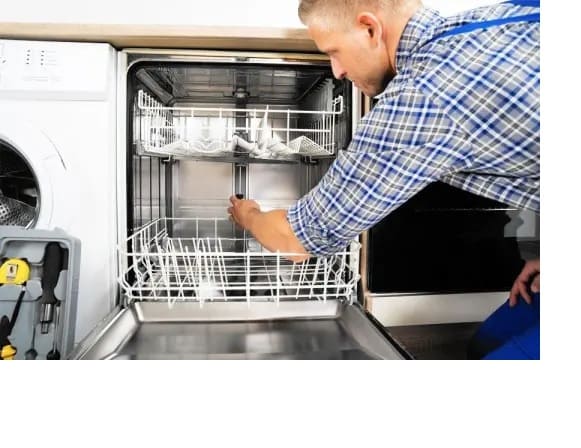
Repair AquaStop: How to check the component
If your washing machine or dishwasher no longer draws water, this can indicate a defective AquaStop. Before calling a professional to repair, check if the fault comes from this component.
- When you start the dishwasher, the first thing you hear is a short pumping noise. A hissing sound follows, caused by the inflowing water. If there is no hissing, the water supply is probably interrupted. This can but does not have to, indicate a defective AquaStop.
- First, check the water hose. If this is kinked, the water supply is disrupted.
- The corner valve can also be the cause of the lack of water flow. Turn off the angle valve and remove the AquaStop. Place a container under the angle valve and briefly open it fully. A strong jet of water should be visible.
- If the problem is not resolved, the AquaStop is likely to be the cause of the fault. To check the component acoustically yourself, switch on the machine and hold your ear very close to the AquaStop. A low hum should be heard. If you hold your finger on the component, you will notice a slight vibration. If buzzing and vibration can be heard and felt, the solenoid valve in the AquaStop is OK.
- The source of the error is then probably the pneumatic valve that has not reset itself. To check and repair this, the inlet hose must be removed from the solenoid valve. Since the AquaStop is live, you should leave this in the hands of a professional.
AquaStop: These are the steps involved in repairs
The purpose of the following explanation is to understand how a professional repairs the defective AquaStop. For your own safety, do not attempt to repair it yourself.
- Once the expert has ruled out all other sources of error and comes to the conclusion that the pneumatic valve has not reset, he will remove the inlet hose from the solenoid valve.
- First he sets the dishwasher to “drain”, then the machine is set to draw water. Then he reconnects the inlet hose. With a bit of luck, the pneumatic valve will have reset itself and the AquaStop will work.
- If this is not the case, the craftsman removes the inlet hose again and also the small hose that is located on the pressure can. He sucks in air with his mouth via another short hose, which he puts on the pressure cell, in order to create a negative pressure in the pressure cell and thereby reset the AquaStop.



Facebook Comments