 John Myers
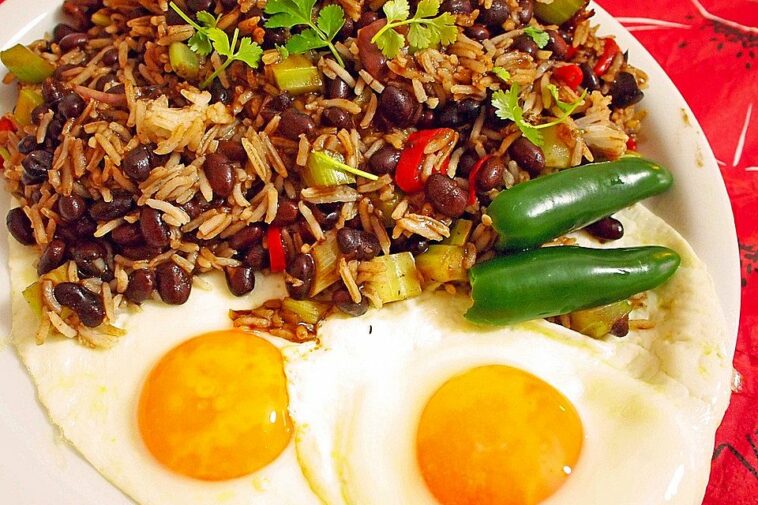
Ingredients for 4 servings:
- 300 g beans, cooked black in their own broth
- 500 g rice, cooked from the previous day (Arroz blanco)
- 2 tbsp oil (such as sunflower oil)
- 1 onion(s), finely chopped
- 1 garlic clove(s), pressed or finely chopped
- 2 tbsp celery, finely chopped (optional)
- ½ bell pepper(s), red or green, diced (optional)
- 1 tbsp coriander, finely chopped (optional)
- 1 tbsp Worcestershire sauce (preferably “Salsa Lizano” from Costa Rica)
- n. B. Sauce, Salsa Picante/Hot Pepper (optional)
- e.g. sour cream, Costa Rican natilla
- e.g. Tortilla(s) de Maiz (corn tortillas) or baguette
- n. B. Banana(s), Plátanos maduros fritos (fried, ripe plantains)
- e.g. eggs (fried or scrambled eggs)
- e.g. cheese, fried, smoked cheese, alternatively fried halloumi
- n. B. Steak(s) or chop(s), naturally cooked
Instructions
Working time approx. 15 minutes; Cooking/baking time approx. 10 minutes; Total time approx. 25 minutes
THE traditional breakfast in Costa Rica, Nicaragua, and elsewhere…
Nicaragua and Costa Rica claim Gallo Pinto as their national dish, claiming that the other doesn’t know how to prepare it properly. Nicaraguans use red beans, while Ticos prefer black beans. This dish is also found in the other countries of the Central American Isthmus. However, in Honduras and El Salvador, it’s called “Casamento” (marriage). On the Atlantic coast, from Belize to Panama, where Black people fled from the Caribbean, it’s given an English name: “Rice and Beans.” There’s a small difference: the rice is first cooked in coconut milk. In the Spanish-speaking Caribbean, especially in Cuba, the fried rice and bean mixture is known as “Moros y Cristianos” (Moors and Christians) and is just as popular as in Central America. It also bears this name in Spain. Given this background, it’s probably difficult to definitively identify the dish. However, an Arab-African influence is not entirely unlikely. Prepare the day before: Gallo Pinto is made with cooked rice from the previous day and cooked black beans in their own juices. Both are always on hand in a Central American household because they are simply always needed. Let’s take this as another indication of how unfair the world is. What the Tico has readily available, the German has to plan for. Those who enjoy cooking according to original recipes will find the recipe for this Central American staple rice under “Don Diego’s Arroz blanco” and the beans under “Don Diego’s Frijoles negros cozidos.” That was yesterday. In the morning, when the “gallo” (rooster) awakens: Today we heat oil in a pan, first sauté the onion and garlic, then the celery, diced bell peppers, and cilantro, and finally add the beans in their own juices to the pan. This is a good opportunity to season the beans with Worcestershire sauce, preferably Salsa Lizano, the original from Costa Rica, which gives the Gallo Pinto its distinctive flavor, but alternatively Lea & Perrins or another “Salsa Inglesa,” the Spanish collective term for this seasoning sauce, can be used. We let the bean sauce thicken slightly before stirring in the rice. Once the beans, vegetables, and rice are well blended and the rice has darkened from the bean broth, all that’s left is to season with salt, pepper, and—a tiny drop?—Salsa Lizano. A word about “must” and “can.” Oil, onion, beans, and rice, plus the indispensable Salsa Lizano (according to Costa Ricans!), make a complete Gallo Pinto. Everything else is a matter of personal taste and whether the household was fully stocked. I prefer the enriched version if I can make it myself. Arguments also arise among purists over the “how” question. Should the Gallo Pinto be dry and slightly toasted, or moist? Some like it this way, others that way, many like both. But it’s only right what tastes best to them. The extended “must-have” and “can-have” question relates to the side dishes. Common choices are Maduros Fritos and fried or scrambled eggs. A slice of smoked fried cheese that squeaks so nicely between your teeth increases the satisfaction level immensely. An oven-fresh baguette with Gallo Pinto has long been socially acceptable, as it’s so delicious to dip into the sour cream. But nothing beats a fresh tortilla casera, fresh from the comal, the iron skillet, wrapped in a cloth and served in a small wicker basket. It’s all served. Now that the Gallo Pinto has been served, accompanied by the preferred side dishes, it’s time to open the table conversation and remember Uruguayan President Sanguinetti, who once honored the peaceful nature of the Costa Rican people in a speech with the words: “Esté donde esté dondequiera que haya un costarricense hay paz,” which roughly translates as “Wherever you go, where there is a Costa Rican, there reigns peace.” When the manufacturer of Salsa Lizano modified the phrase on a giant advertising poster on the way to the airport—just as aptly—to “Esté donde esté dondequiera que haya un costarricense hay Salsa Lizano” (Wherever you go, where there is a Costa Rican, there you will also find Salsa Lizano), the nationalistic and self-respecting part of the Costa Rican people sat on the sofa and took offense. The other part laughed or smiled happily… and digested it reverently.



Facebook Comments