 John Myers
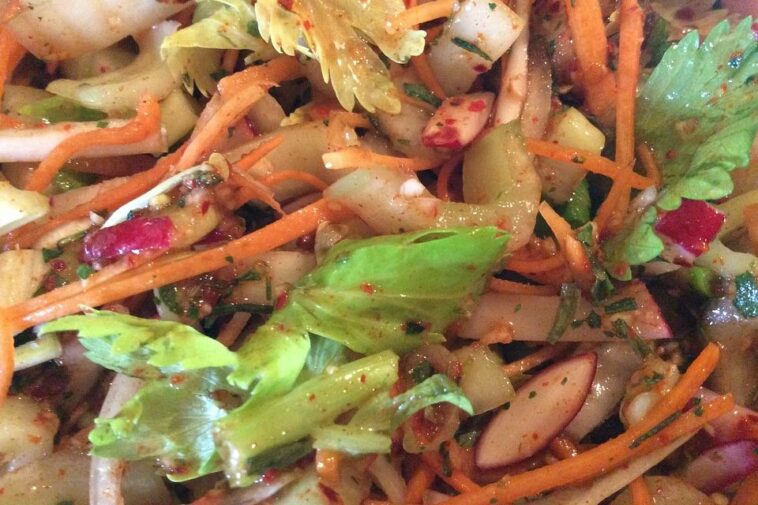
Ingredients for 8 servings:
- 1 large celery
- 2 tbsp, heaped sea salt, grainy
- 1 carrot(s) (cleaned approx. 100 g)
- 2 spring onions
- 5 radishes, finely diced, approx. 100 g
- 2 garlic bulb(s), Chinese (alternatively 8 cloves of “normal” garlic)
- 1 shallot(s), cut into fine strips
- 1 piece(s) ginger, fresh and cleaned, hazelnut-sized
- 1 tbsp, heaped coriander leaves, dried
- 150 ml water
- 1 tsp sugar
- ½ tbsp Korean glutinous rice flour, alternatively potato or cornstarch
- 40 ml fish sauce, Korean (Asia shop)
- 1 tbsp, heaped paprika powder, sweet
- 1 tbsp, heaped chili flakes, Korean, NOT very hot (if necessary, ask for advice in an Asian shop)
Instructions
Working time approx. 1 hour; Rest period approx. 10 days; Cooking/baking time approx. 10 minutes; Total time approx. 10 days 1 hour 10 minutes
Korean-style fermented celery
Divide the celery into individual stalks and remove the tough, bottom core. Cut off the very young leaves and set aside for later. Thinly peel the ridged side of the stalks. This removes those annoying strings that tend to get stuck between your teeth. This is best done with a vegetable peeler. Then cut the stalks into approximately 5 mm wide “half-moons”. Place them in a bowl and mix thoroughly with the sea salt. Let them steep for about 2 hours, stirring occasionally. Finally, rinse off most of the salt in a sieve under running water. Some “saltiness” should remain, though. Taste a piece every now and then. While the celery steeps, prepare the marinade and the remaining vegetables. Bring the water to a boil in a pot with the glutinous rice flour and sugar, whisking well. Once boiling, remove from the heat and let cool. Use a vegetable peeler to peel wide shavings along the entire length of the peeled carrot. Then cut them into pieces about 4 to 5 cm long. Stack several pieces on top of each other and cut very fine sticks across the long side. If you have a julienne cutter, this is of course the tool of choice. The only important thing is that the carrot sticks are of a suitable length. Clean the shallot, halve it, and cut it into fine strips. Clean the spring onions and cut them into fine rolls. Roughly chop the celery leaves. Finely chop the radishes. Only finish cooking the vegetables shortly before the end of the 2 hours so that they do not dry out and important vitamins do not oxidize when exposed to air. Roughly chop the ginger and garlic and place them in a blender with the fish sauce and blend to a paste. A hand blender will also work. Then add them to the cooled water, glutinous rice flour, and sugar mixture along with the paprika, chili flakes, coriander leaves, and the prepared vegetables and mix everything thoroughly. Mix the celery and marinade thoroughly in the bowl. If you want to do this by hand, wear disposable gloves, as the paste stains well and the capsaicin from the chili can burn quite a bit. Let the celery marinate uncovered at room temperature for at least 2 hours. Then transfer it to jars with screw-top lids, Tupperware containers, or vacuum-sealed bags, as airtight as possible. Rinse the jars and containers with boiling water beforehand. Store at room temperature for 3 days to get the fermentation process underway. Then place it in the refrigerator or a cool pantry and let it mature for at least a week. If you let it ferment for longer, the flavor will become more acidic. It won’t go bad, just “different.” Everyone should try it little by little to find their own favorite acidity. Kimchi is a food for explorers. Kimchi makes a great side dish to fish, meat, poultry, or tofu, but also a real hit in soups or salads. Kimchi is also wonderfully suitable for cross-cooking (e.g., as a pizza topping). The only limits are your imagination. Holistic medicine practitioners recommend fermented foods like kimchi, miso, or sauerkraut as a supportive therapy or preventative measure against inflammatory processes in the body. Tip: When you start with kimchi, don’t go for the hottest chili right away. If this kimchi is too mild for you, it’s better to slowly work your way up to your personal level of spiciness the next time you try it. Either use more of the milder chili or switch to the next hotter variety. It’s important, however, that the chili is in flakes. This is one of the visual highlights when you serve it. Powder doesn’t look as good.

Facebook Comments