 John Myers
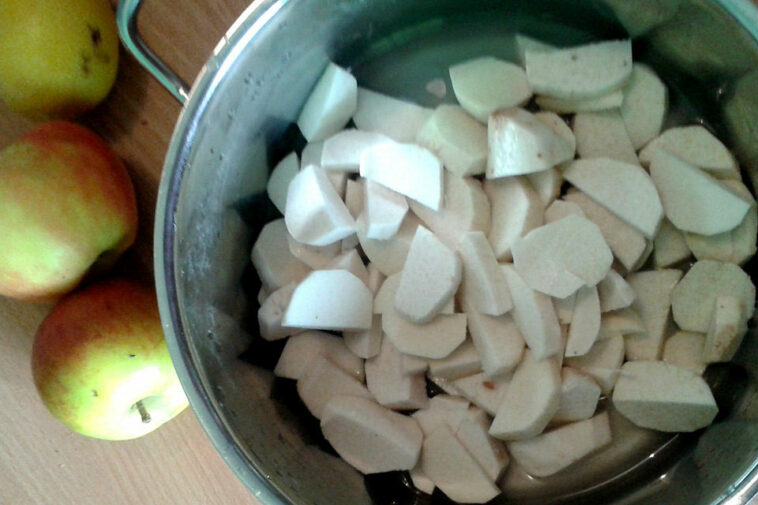
Ingredients for 3 servings:
- 9 small taro tubers (yields about 420 g of taro puree)
- some water
Instructions
Working time approx. 10 minutes; Cooking/baking time approx. 10 minutes; Total time approx. 20 minutes
Other names are: taro, colocasia, taioba, eddo, eddoe, eddro, dasheen, sato-imo.
Wash the tubers thoroughly while wearing gloves (as the hairy covering can burn or irritate your skin) and then peel them. Cut them into cubes or even pieces. Taro can be boiled, steamed, roasted, braised, fried, and deep-fried. For example, steam for 10 to 15 minutes (for large pieces). Prick them occasionally with a wooden skewer. If you use the taro for bowls and curries, they can remain firm to the bite; if used as a puree, they should be quite soft. Good to know: They can be eaten as is or used in other dishes: – for example, mashed with a fork as a puree for a dessert, pudding, or cream – in a bowl, in a curry, or in a stir-fry. The flavor itself is difficult to describe. Raw, taro has a slightly nutty taste and a texture reminiscent of coconut meat. Taro softens when cooked or steamed. When diced, it becomes slimy; when pureed, the consistency is more crumbly, like sticky rice, but it doesn’t stick to your fingers. Taro is available at Asian supermarkets.



Facebook Comments