 John Myers
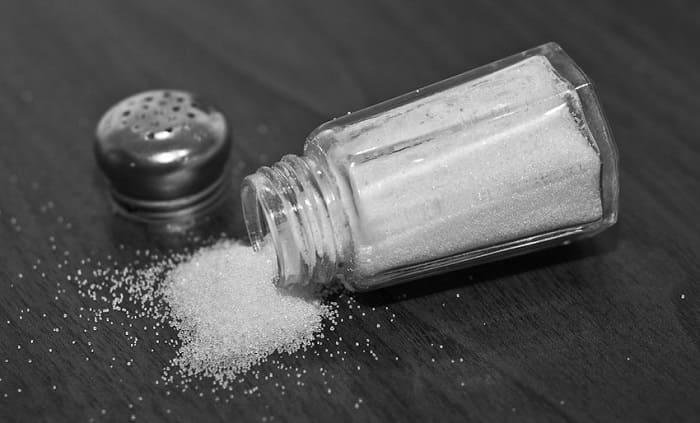
Salt has a binding or strengthening effect on gluten and thereby adds strength to any flour. The additional firmness imparted to the gluten by the salt enables it to hold the water and gas better, and allows the dough to expand without tearing.
Why the pinch of salt in the cake batter?
Many recipes call for a pinch of salt on the list of ingredients, and some may have wondered what the salt is doing in the sweet dough. The salt ensures that the sweetness of the pastry is perceived even better. “A touch of salt takes the spiciness out of the sugar,” says Josef Haslinger, head pastry chef at Meinl am Graben in Vienna, in an interview with the Standard. In addition, the salt controls the development of enzymes and thus controls the fermentation in the yeast dough.
What does a pinch of salt do in a cake?
You can’t taste that pinch of salt in the cake. But it causes a modulation of the taste: The sweetness of the cake, which it has as a basic taste, no longer seems quite so banal. Even today it is still a trick for cooks to always add something sweet to salty dishes and vice versa – for example, you add a little sugar to tomato sauce.
It is known from science that the tongue reacts to this. But not in such a way that it looks salty in the cake, but it causes a slight “vibration” – like an overtone in music.
Cutting out the salt completely would mean the cake or cookie wouldn’t taste as sweet. But there is such a small amount of salt in baked goods and most home cooking, cutting it out won’t remove that much sodium from your diet. And if the flavors aren’t as satisfying, you could end up eating more.
Does it really matter what kind I use to bake? Actually, it does. The salt you use impacts the flavor of your baked goods, how some doughs behave, and even the way you measure.
Do you really need to use salt in baking and why?
But salt isn’t added as a seasoning in baking, it’s added to enhance the color, the flavors, and to improve the texture of your baked goods. Rate of Rise: In bread making, salt actually plays a very important role. Because salt kills yeast, it works to control the rate of the yeasts fermentation.
Baking soda helps the finished product to rise and have a crisper texture. It’s also a little salty tasting. Overdoing it with baking soda can result in an extra salty or even metallic-tasting bake!
Using lower-moisture sugar (granulated) and fat (vegetable shortening), plus a longer, slower bake than normal, produces light, crunchy cookies. That said, using a combination of butter and vegetable shortening (as in the original recipe), or even using all butter, will make an acceptably crunchy chocolate chip cookie.
How does salt affect baking?
The main function of salt in cake recipes is to enhance the flavor of the other ingredients. Its presence perks up the depth and complexity of other flavors as the ingredients meld. Salt also provides a balance to the sweetness of cake batters – but a salty flavor should not be discernible.
Carbon dioxide gas and water vapor form the bubbles which make cookies rise. Rising doesn’t just make cookies taller. It also opens up space to keep the cookie from becoming too dense. Salt slows down the decomposition of baking soda, so the bubbles don’t get too big.
Does salt affect baking powder?
In baking, salt is used to activate the leavening agent in the product-like baking powder or baking soda. This means that if you omit salt all together your product won’t rise as much or at all.
Why do you add salt to sweet recipes?
Because salt helps certain molecules of the ingredients release their flavor easier and more. It also suppresses the bitter taste perception, so whatever bitterness there can be in the sweet recipes are decreased by the help of salt.
What does a dash of salt do in a recipe?
Why do recipes ask for a pinch of salt?
The simple answer is: people can taste (and smell, when the substance in question has a smell) substances in very low concentrations. A pinch of salt is not a small amount at all, it is a sufficient amount to be tasted.
Why is salt used in so many recipes?
Salt enhances aromas, dampens down the taste of bitterness in foods and helps reveal the essential taste of food. It makes a thing taste more like the thing it is – a tomato more tomato-y, a steak more steaky.
And because baking soda also introduces carbon dioxide, or air, to the dough, too much of it will create a cookie that’s cakey rather than chewy.
White sugar will make your cookies crispier while brown sugar contains more moisture and will result in a softer and more chewy cookie. Most chocolate chip cookie recipes call for both sugars. Lowering the amount of sugar or substituting some of the white sugar for brown sugar will result in softer lighter cookies.
For softer, chewier cookies, you will want to add much less granulated sugar, slightly more brown sugar, and a fair bit less butter. For cakey cookies, you will often be including even less butter and sugar.



Facebook Comments