 John Myers
Contents
show
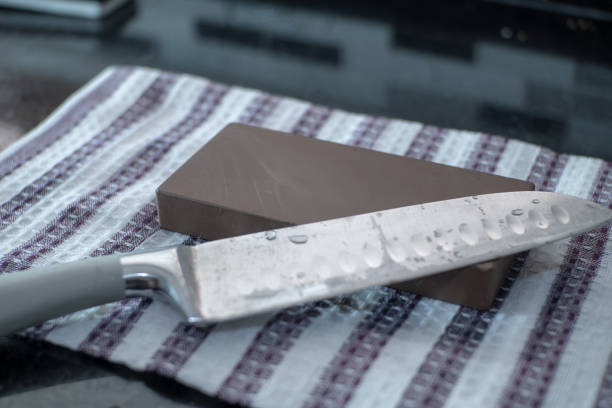
Sharpening stones are practical aids for always having sharp knives at home. However, the utensils are available in different grits. This kitchen appliance tip will tell you which grain size is right for which purpose.
Coarse grit sharpening stones
If you want to sharpen your very dull blades again, it is best to use a coarse-grain whetstone.
- This category of kitchen appliances includes whetstones with 150 to 800 grit. These grinders are mainly used for preliminary grinding with the following fine work.
- If the blade of your knife is damaged, for example, a small piece has broken off, you can repair the error with coarse grit.
- By the way: almost all sharpening stones should only be used when they are wet. So you should put them in the water about five to ten minutes before use.
Medium grit sharpening stones
If the knife is not completely blunt but only needs to be sharpened, medium-grain sharpening stones are suitable.
- This means grit sizes between 800 and 1000. With these grit sizes, which some kitchen appliances have, you can sharpen your knife from time to time.
- They are also used for finishing work if you have previously worked on your knife with coarse grit. Grinding with this grit is enough to keep your kitchen knives sharp at all times.
- Again, soak the stone in water for five to ten minutes before use, allowing it to soak up as much water as possible.
Sharpening stones with very fine grain
Your knife will be very sharp if you sharpen it with very fine grit.
- Such sharpening stones, also known as polishing stones, have a very fine grain size. It is higher than 2000. This strength goes up to the low five-digit range of around 10000.
- Natural rubble stones are often used. The most well-known sharpening stone in this category is the “Belgian chunk”.
- Belgian chunks are characterized by the extreme hardness and roundness of the abrasive grains.
- A distinction is made here between the traditional yellow “Belgian Brocken” and the even higher quality so-called “Blue Western”. The latter is characterized by the grain size of around 5,000 to 6,000. With such a sharpening stone, your knives will become extremely sharp.
- Chefs like to use this stone. Also, knife collectors and lovers, as this stone is suitable for even the highest quality Japanese knives.
- The high-quality sharpening stone is particularly well suited for knives with Damascus blades.
If you want to sharpen blades made of very hard steel, such as those used for outdoor knives or filleting knives, the yellow version is the best choice. - Belgian chunks have a special feature. These sharpening stones do not need to be soaked. It is sufficient if you wet the stones with water.


Facebook Comments