 John Myers
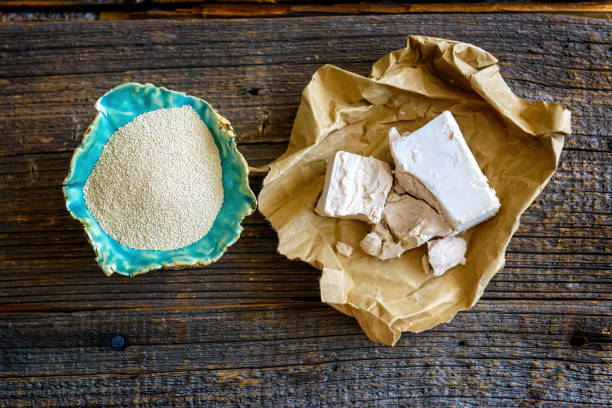
If you suffer from yeast sensitivity or simply don’t like it and are looking for a substitute for baking, you can resort to alternatives. You can find out what these are in this practical tip.
Yeast Substitute – Whatever Substitute You Can Bake With
Yeast is an excellent leavening agent. Supplied to the dough, it rises nicely and becomes loose. Since fresh yeast can be frozen, it is possible to always have some on hand. However, if you don’t want to bake with yeast or don’t have any at home, you can use alternatives. You have the following options for this:
- Baking powder is used in many baked goods.
- Cream of tartar is another, but less well-known, yeast substitute.
- Baking soda can be found in any well-stocked kitchen.
- Sourdough contains yeast but serves as a substitute when yeast is otherwise unavailable.
The different propellants
You can bake without yeast using other leavening agents. We have put together a few examples.
- Baking powder consists of three main ingredients. A leavening agent (sodium bicarbonate = baking soda), an acid (a phosphate variant), and a release agent (starch). You can find out more about this in the article “What is baking powder made of? Ingredients simply explained”
- Unlike traditional baking powder, cream of tartar does not contain any phosphates. It uses tartaric acid as an acidulant. what is essential.
- If you want baking soda, or just use baking soda, you need an acid. This could be buttermilk or vinegar, for example. The baking soda will neutralize the sour taste so you won’t be able to taste the vinegar anymore.
- Sourdough supports the yeast in bread baking through fermentation. This also comes in handy when you run out of yeast. However, sourdough requires a few days lead time before the approach is developed.



Facebook Comments