 John Myers
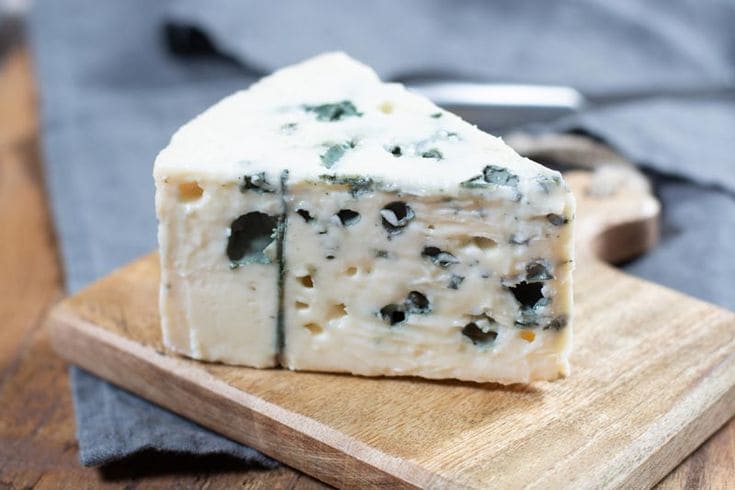
It is probably the most famous and oldest noble mushroom cheese from France. Roquefort is made from raw sheep’s milk. To do this, the master cheese maker adds the Penicillium roqueforti mold to the milk or curd. During the first 3 to 5 days in the rock caves of Mount Cambalou, near the town of Roquefort, needles are used to poke holes in the cheese wheel, which weighs around three kilos. The mushroom cultures develop the typical green and blue veins in the white cheese cylinders through the resulting air channels.
Origin
The semi-hard semi-hard cheese comes from the town of the same name in the southwestern French department of Aveyron. According to legend, a shepherd left bread and cheese in a cave on Mount Cambalou. After a few days, a noble fungus had formed on the cheese, the shepherd tasted the cheese and was amazed by its taste. As early as 1411, Charles VI. a protective decree for the Roquefort production. Only cheeses from the area around Roquefort are allowed to call themselves that. They bear the AOC mark, which stands for controlled designation of origin.
Season
Roquefort is there all year round.
Taste
The soft, crumbly, but juicy cheese is very aromatic and flavorful.
Use
Roquefort is delicious on bread, refines the cheese platter for the buffet and is the basis for the aromatic Roquefort salad dressing. Creamy cream sauces with cheese for pasta, spicy eclairs filled with Roquefort cream, and quiche also taste delicious.
Storage/shelf life
Store the cheese in the refrigerator either in the packaging, the wrapping paper from the cheese counter, or perforated aluminum foil. Then it lasts for a few days.
Nutritional value/active ingredients
Roquefort has a fat content i. Tr. between 50 and 60%. It has around 360 kcal/100 g and absolute fat content of around 30 g/100 g.


Facebook Comments