 John Myers
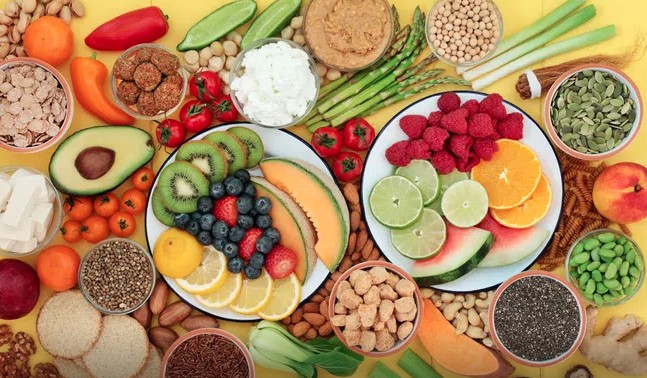
Introduction: The Fascinating World of Food Facts
Food is a universal language that connects people across cultures and continents. From the basic necessity of sustenance to the complex world of culinary arts, food is an endless source of fascination and delight. But did you know that beyond its taste and nutritional value, food offers a plethora of mind-blowing facts that will leave you amazed? Let’s explore some of the most interesting facts about food that you may not have known.
1: The Incredible Journey of a Single Grain of Coffee
Have you ever wondered how your morning coffee reaches your cup? The journey of a single coffee bean from a plant to a brewed cup is nothing short of incredible. Coffee beans are grown in over 60 countries worldwide, and it takes between three to four years for a coffee plant to produce its first crop. After the beans are harvested, they are dried, roasted, and packaged before making their way to your local coffee shop or supermarket. The journey of a single coffee bean can take months, and it’s a long and complex process that involves farmers, traders, roasters, and baristas.
2: The Surprising Chemistry Behind Baking
Baking is a science, and there’s a lot of chemistry involved in turning flour, sugar, eggs, and butter into delicious cakes, cookies, and bread. One of the most fascinating chemical reactions in baking is the Maillard reaction, which occurs when sugars and proteins are heated together, resulting in browning and flavor development. This reaction is what gives baked goods their characteristic taste and aroma. Another interesting fact is that baking powder and baking soda are not the same thing. Baking powder is a combination of baking soda and an acid, while baking soda is a base that reacts with acid to create carbon dioxide, which causes baked goods to rise. Understanding the science of baking can help you become a better baker and create delicious treats every time.
3: The Secret Lives of Olives and Avocados
Olives and avocados are two of the most popular and versatile fruits in the world, but did you know that they share some interesting facts? For one, both olives and avocados are fruits, not vegetables. Olives are actually classified as drupes, like peaches and cherries, while avocados are berries. Another surprising fact is that both fruits are native to Central and South America and were brought to Europe by Spanish explorers. Today, olives are grown in over 40 countries, while avocados are grown in over 50 countries, making them global favorites.
4: The Mind-Blowing Science of Taste Perception
Taste perception is a complex process that involves not only our taste buds but also our sense of smell, touch, and even hearing. Our sense of taste can detect five basic tastes – sweet, sour, salty, bitter, and umami – and scientists are still exploring how our brains process and interpret these flavors. For example, did you know that the perception of sweetness can be influenced by the color of a drink or food? Studies have shown that pink-colored drinks are perceived as sweeter than white-colored drinks. Taste perception is also influenced by cultural and personal preferences, which explains why some people love spicy foods while others can’t handle the heat.
5: The Unusual Origins of Popular Foods
Many of our favorite foods have unusual origins that may surprise you. For example, did you know that the first chocolate bar was invented by Joseph Fry in 1847, and it was made from cocoa paste, sugar, and cocoa butter? Or that french fries are not actually French, but Belgian, and were first sold by street vendors in Brussels in the late 18th century? Another interesting fact is that sushi, a staple of Japanese cuisine, was originally a way to preserve fish by fermenting it with rice, and it wasn’t until the 19th century that sushi became a popular dish in Japan.
6: The Strange Habits of Foodies Around the World
Foodies around the world have their quirks and unusual habits when it comes to food. For example, in Japan, slurping noodles is a sign of appreciation, while in some European countries, burping after a meal is considered rude. In the Middle East, it’s customary to eat with your right hand only, while in India, it’s common to use your hands instead of utensils. Foodies also have their superstitions, such as never cutting an onion with a knife used to cut garlic or never eating the last bite of a meal to avoid bad luck.
Conclusion: Food – A Never-Ending Source of Wonder and Delight
Food is more than just a source of sustenance; it’s a world of endless possibilities, where science meets art and cultures collide. From the incredible journey of a coffee bean to the unusual origins of our favorite foods, food offers a never-ending source of wonder and delight. So the next time you sit down to enjoy a meal, take a moment to appreciate the fascinating world of food and all its mind-blowing facts.


Facebook Comments