 John Myers
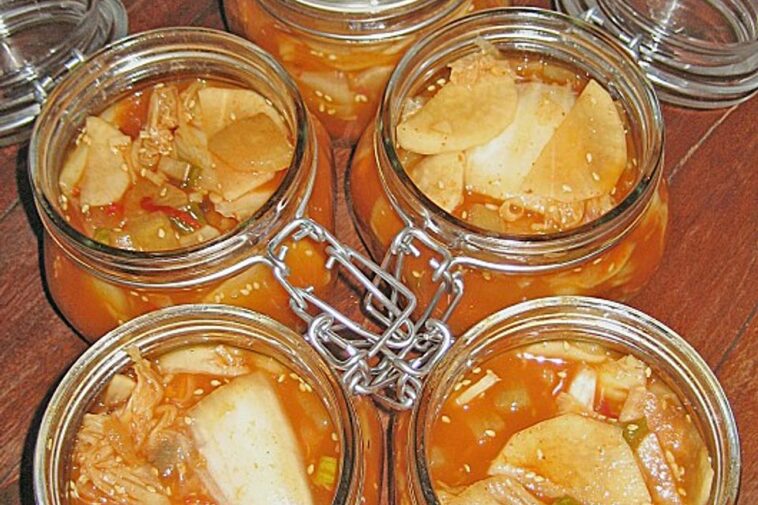
Ingredients for 18 servings:
- 2 ½ kg Chinese cabbage
- 4 tbsp salt
- 1 liter of salted water (with 3 tbsp salt)
- 1 kg radish(s)
- 1 leek(s)
- 1 bunch of chives
- 1 pear(s)
- 3 cloves garlic
- 1 piece(s) ginger, approx. 2 cm
- 6 chestnuts
- 2 plum(s), dried
- 2 tbsp pine nuts, chopped
- 2 tbsp paprika powder, hot
- 3 tbsp salt
- 1 tsp cayenne pepper
- 3 tbsp sugar
- 1 liter of salted water (with 2 tbsp salt), to fill
- 1 liter of boiled water
- 1 chili pepper(s), deseeded and chopped
- 3 tbsp tomatoes, pureed
- 2 tbsp sesame seeds, roasted
Instructions
Working time approx. 1 hour; Total time approx. 1 hour
bek – kim – tschi
This recipe comes from a Korean family in a village not far from Seoul. I looked at the recipes available in the German database, but their preparation does not correspond to actual kim-chi. This is a fermented vegetable and cannot ripen in the refrigerator. Halve or quarter the Chinese cabbage, depending on its size. Then wash and drain. Salt the individual pieces. Pour salted water over it in a bowl, cover, and let it steep for about 3 hours, turning the cabbage pieces a few times. Then toss the cabbage in clean water and drain. Prepare the seasoning mix in a bowl: Wash the radish, peel it, and cut into fine strips. Clean the leek and halve it lengthwise, then wash and cut it into fine pieces. Wash the chives and pear and cut into 2 cm long strips. Peel and finely chop the garlic and ginger. Score the chestnuts and boil until soft. Then let it cool, peel and cut into fine strips. Pit the prunes and cut them into fine strips. Mix these ingredients well with the remaining ingredients, along with salt and sugar. Now distribute this seasoning mixture evenly between the Chinese cabbage leaves. Fill jars with the cabbage and the juice of the seasoning mixture, but do not fill completely for fermentation and leave at least 2 cm free to the top. Press down firmly, place a loose cabbage leaf on top and weigh it down with a boiled stone. Then add enough salted water until the cabbage is covered. Finally, cover and let ferment in a warm place for about 4-5 days. Note: As explained above, the fermentation process usually takes place in a larger container, and the kimchi is then transferred to another container.



Facebook Comments