 John Myers
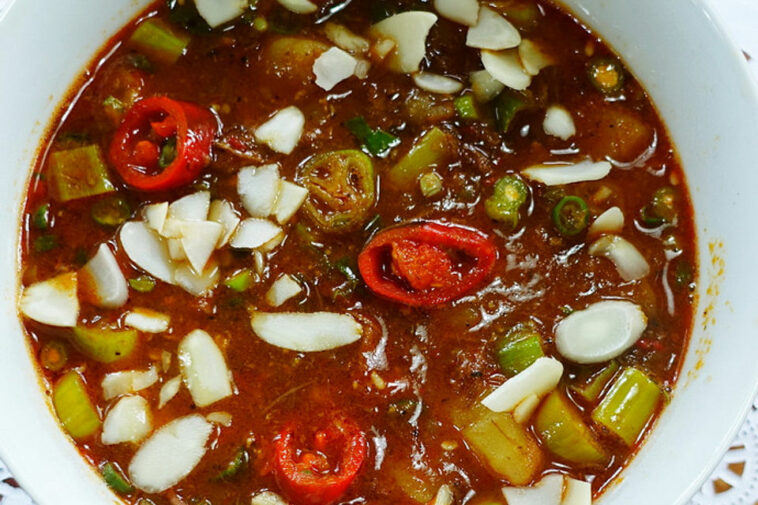
Ingredients for 2 servings:
- 300 g beef goulash, fresh or frozen
- 1 large vegetable onion(s), brown
- 2 medium-sized garlic cloves, fresh
- 4 m.-large tomato(s), red, fully ripe
- 2 Pepper, red, long, mild
- 1 small bell pepper(s), red
- 2 small chili peppers, red, fresh or frozen
- 2 tbsp sunflower oil
- 400 g water
- 12 g beef bouillon, granulated
- 1 tbsp lemon juice
- 2 tbsp soy sauce, sweet (kecap manis)
- 2 tbsp coconut milk, creamy (24% fat)
- 20 g ginger, finely diced, fresh or frozen
- 8 cm cinnamon stick(s)
- 6 cloves
- 1 pinch(s) cardamom powder
- 4 kaffir lime leaves, fresh or frozen
- 1 medium-sized potato(s), waxy
- 2 stalks of Kailan (Chinese broccoli)
- 1 Pepper, red, long, mild
- 1 ½ liters of fresh frying oil (preferably refined peanut oil)
- 1 m.-large spring onion(s), fresh or frozen
- n. B. almond flakes
- flowers and leaves
Instructions
Working time approx. 30 minutes; Cooking/baking time approx. 2 hours 30 minutes; Total time approx. 3 hours
Recipe from Lombok, Indonesia, original title: Cah Sapi Sayuran.
Heat the frying oil to 200 degrees Celsius. It is hot enough when small bubbles immediately rise from the handle of a wooden spoon dipped in the frying oil. Brown the beef in two batches at room temperature for about 15 seconds until light brown and set aside. Halve the onion lengthwise, trim both ends, peel, and roughly chop. Wash the tomatoes, remove the stems, halve lengthwise, and cut out the green and white cores. Halve each half lengthwise, remove the seeds, and cut the quarters crosswise into thirds. Remove the stems from the red bell pepper, wash them, halve them lengthwise, remove the seeds and membranes, and cut crosswise into approximately 1 cm wide pieces. Wash the bell peppers, quarter them lengthwise, remove the stems, seeds, and white membranes, and cut the quarters crosswise into approximately 1 cm wide strips. Wash the small red chili peppers, cut them into thirds crosswise, leaving the seeds and discarding the stems. Wash the fresh ginger, peel it, and cut it crosswise into pieces about 4 cm long. Cut the pieces lengthwise into thin slices and chop them into strips. Cut the strips crosswise into small cubes. Weigh the frozen goods and let them thaw. Heat a medium-sized pan, add 2 tablespoons of the peanut oil, and let it heat up. Add the onions and fry until the onions turn light brown. Add the prepared vegetables, press in the garlic cloves, and fry until the tomatoes begin to break down. Add the water, lime juice, and beef stock; mix everything well; cover and simmer for 10 minutes. Remove from the heat, let cool slightly, and blend in a blender on high for 60 seconds until smooth. Place the puree in a covered saucepan with the browned beef and spices; simmer for 2 hours. Stir occasionally to prevent burning. After 90 minutes, remove the lid and let the soup simmer until thickened. In the meantime, for the garnish, wash and peel the potatoes, quarter them lengthwise and then cut them into thirds crosswise. Wash the fresh kailan, separate the leaves from the stem. Separate the woody stem above the first leaf and discard. Separate the thin leaf stalks from the leaves along the midrib, halving the leaves lengthwise. Cut the leaf stalks and stem crosswise into thin rolls. Chop the leaves. Keep the leaves and stem rolls separate. Freeze any unused produce. Measure and thaw frozen produce. Wash the red pepper, remove the stalk, and cut it crosswise into approximately 8 mm wide pieces, leaving the seeds. Wash the spring onions, remove any wilted leaves, and cut them into approximately 10 mm wide rings. Keep the white and green parts separate. Remove the cinnamon stick, leaves, and cloves. Stir in the soy sauce and coconut milk, and season with salt and pepper. Add the potatoes, kailan rolls, and the white parts of the spring onion and cook for 20 minutes. Just before the end of the cooking time, add the green leaves and simmer for 1 minute. Ladle the soup into serving bowls, garnish, and serve with toasted baguette or white rice. Note: The Gilis are small islands located off the coast of larger islands. The Gilis west of Lombok are well known. One of them is Gili Air (air = water), because it used to have a freshwater spring that dried up after an earthquake. The Gilis are popular tourist destinations, and the restaurants there are of a respectable standard.


Facebook Comments