 John Myers
Ingredients for 6 servings:
- 1 ½ kg beef goulash, fresh
- 2 liters of frying oil, preferably refined peanut oil
- 400 ml creamy coconut milk (24% fat)
- 2 tbsp soy sauce, sweet (kecap manis)
- 2 tbsp, heaped coriander seeds
- 4 m.-large tomato(s), fully ripe
- 120 g onion(s), brown
- 8 m.-sized garlic cloves, fresh
- 6 Pepper, red, long, mild
- 4 small red chili peppers
- 40 g celery, fresh or frozen
- 30 g ginger, fresh or frozen
- 20 g turmeric, fresh or frozen
- 20 g galangal, fresh or frozen
- 2 tbsp palm oil, premium quality, alternatively sunflower oil
- 500 g coconut water (Asian shop, drinks)
- 14 g beef bouillon, granulated
- 4 stalks of lemongrass
- 8 cloves
- 4 cardamom pods
- 2 cinnamon sticks, 8 cm
- 1 tsp, heaped mace powder
- 1 tbsp coconut palm sugar
- 4 kaffir lime leaves, fresh or frozen
- 2 lettuce leaves
- 8 small onions, red
- 4 medium-sized garlic cloves, fresh
- 120 g carrot(s)
- 2 stalks of spring onion(s)
- 4 Pepper, red, long, mild
- 12 m.-large tomato(s), ripe
- 30 sugar snap peas
- 4 tbsp palm oil, premium quality, alternatively sunflower oil
- 1 tsp, heaped chicken broth (strong bouillon)
- 30 g glass noodles, wide
- 1 liter of salt water
- Tomato(s), peeled and pitted, quartered
- n. B. Sesame, white
- n. B. flowers and leaves
Instructions
Working time approx. 45 minutes; Cooking/baking time approx. 5 hours; Total time approx. 5 hours 45 minutes
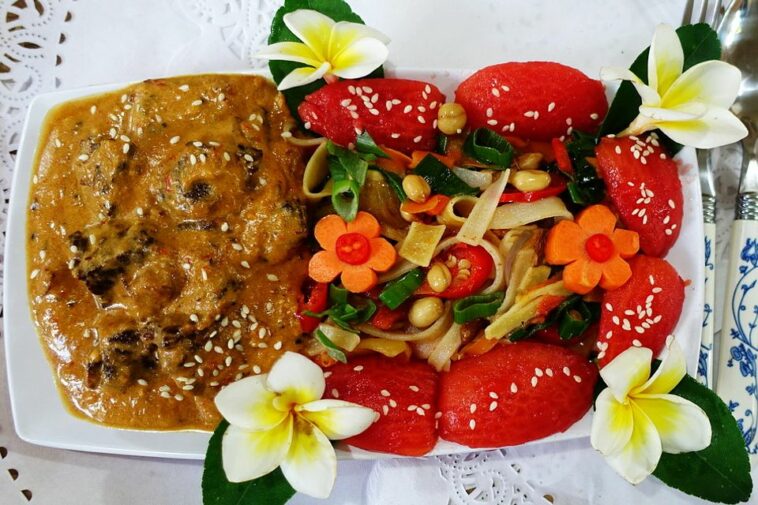
A festive menu brought together in one serving dish. Recipe from Bali, Indonesia. Original title: Mi Hofun Cap Cay dengan Rendang Sapi.
Heat the peanut oil to 220°C, fry the bite-sized goulash cubes in batches until light brown (takes a maximum of 15 seconds) and set aside. In a small pan, roast the coriander seeds without oil until fragrant. Immediately remove from the heat and from the pan. Wash the tomatoes, remove the stems, quarter lengthwise, remove the green stalks, and halve crosswise. Trim both ends of the onions and garlic cloves, peel, and roughly chop. Remove the stems from the red chili peppers, wash them, halve them lengthwise, remove the seeds and membranes, and cut crosswise into approximately 1 cm wide pieces. Wash the small red chilies, cut them into thirds crosswise, leaving the seeds in place, and discard the stalks. Wash the fresh celery, shake it dry, and pick off only the unblemished leaves, chop them, and freeze. Cut the unblemished stalks crosswise into approximately 3 mm wide rolls. Freeze any unused stems as rolls. Weigh the frozen goods and thaw. Wash the roots (galangal, turmeric, and ginger), peel them, and cut them into thin slices. Remove the tough root ends (eyes) from the galangal. Weigh the frozen goods and thaw them. Heat the palm oil in a wok, add the onions and garlic cloves, and fry until translucent. Add the roots and stir-fry briefly, then add the remaining ingredients, stir-fry for 1 minute, and deglaze with 200g of the coconut water. Cover and simmer for 10 minutes. Remove from the heat and allow to cool slightly. Place the lemongrass in a blender along with the remaining coconut water and blend for 1 minute at full speed until smooth. Gather the spices. Wash the fresh lemongrass, remove the tough stalk at the bottom, discard any brown or wilted leaves, and use only the white to light green parts. Cut them crosswise from the bottom into pieces about 8 cm long. Remove the outer, green leaves if necessary. Gently crush the lower halves of the pieces with a hammer, leaving the stem intact. Wash the leaves and use them whole. Place the puree from the blender into a sufficiently large pot along with the browned beef pieces. Mix in the spices and bring the mixture to a simmer. Simmer for 4 hours, stirring occasionally to prevent burning. Add the coconut milk and simmer for another hour, uncovered if necessary, if the sauce is very thin. And don’t forget to stir occasionally! During the last hour of cooking the rendang, prepare the vegetables for the cap cay. Trim both ends of the onions and garlic cloves, peel them, and roughly chop them. Wash the carrot, trim both ends, and peel them. Using a coarse grater, grate the appropriate amount from the bottom. Wash the spring onions, remove any wilted leaves, and cut into approximately 10 mm wide rings. Keep the white and green parts separate. Wash the fresh red peppers, remove the stalks, and cut diagonally into approximately 6 mm wide pieces, leaving the seeds. Remove the stalks from the tomatoes, skin them, quarter them, and deseed them. Halve 12 of the quarters lengthwise and crosswise. Season the rest with salt and use for garnishing. Wash the snow peas, trim both ends, and pull the strings off both sides. Halve the pods diagonally. Cook the pasta in salted water for about 5 minutes until al dente, drain well, and spread out on a fresh tea towel to dry, trimming slightly. If desired, carve petals from carrot slices and decorate with pepper rings to create flowers. Cook the pasta in salted water until tender, then drain well. Heat half of the palm oil in a wok, add the onion and garlic pieces, and stir-fry until the onion pieces are translucent. Add the grated carrots, the white parts of the spring onions, and the pepper pieces and stir-fry for 1 minute. Sprinkle with the chicken stock, add the tomato and snow pea pieces, and stir-fry for 1 minute. Remove from the wok, add the remaining palm oil, and let it heat up. Fry the noodles for 2 minutes, then add the vegetables and mix well. Fry for another minute, turn off the heat, and cover to keep the noodles warm. Season the rendang with salt and cayenne pepper, stir in the soy sauce, and remove the cinnamon sticks and cardamom pods. Divide the noodles among serving bowls, add the rendang, garnish, and serve warm. Country and people: The word rendang describes a style of cooking that is relatively unknown in Europe. Describing a rendang dish as a curry or goulash is like describing a pizza as a sandwich. Due to the effort involved, one or more different rendang dishes are generally only served on festive occasions. Originally, one or more fresh, ripe coconuts are used. The coconut water is used, and the finely grated flesh is boiled and squeezed twice to produce a thin coconut milk. The meat (e.g., beef) is cooked in it for a very long time with a variety of spices. The coconut milk thickens to at least a creamy consistency. In West Java, they go even further, cooking until a “dry rendang” is formed. Cooking times vary depending on the type of meat. Water buffalo meat takes the longest to cook (8–10 hours). Traditionally, the meat is always freshly slaughtered, and even beef, venison, or deer is not aged. This increases cooking times by at least one hour. The above recipe comes from Bali. Rendang has something in common with goulash: the larger the quantity cooked, the better the taste. Since it can easily be frozen, it’s advantageous to do all the work only once. Since coconut milk greatly offsets the spiciness of the chili, and the long cooking time evaporates the capsaicin, seasoning with cayenne pepper at the end is certainly appropriate.


Facebook Comments