 John Myers
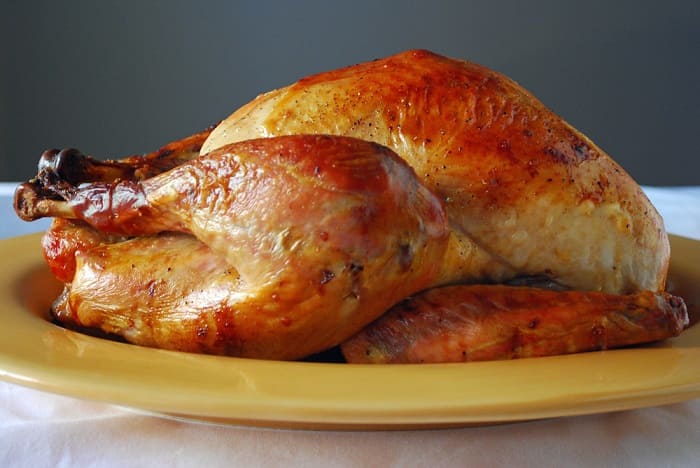
Deep-frying makes the turkey crispy on the outside and super juicy on the inside (even the white meat). It also leaves the heat outside! You can deep-fry the turkey in either peanut or vegetable oil, your choice.
How long does it take to fry a turkey in vegetable oil?
Once the oil temperature climbs back up to 350 degrees F, start timing: Fry the turkey until a thermometer inserted into the thickest part of the thigh registers 180 degrees F, about 3 1/2 minutes per pound. (A 12-pound bird will take about 50 minutes from the time you lower it into the oil.)
Is it OK to deep-fry with vegetable oil?
There’s no one oil that’s best for deep-frying, although vegetable, canola, sunflower and rice bran oil are all good, as they can be heated to high temperatures without burning. Their neutral flavors also won’t affect the taste of the food.
Do you have to use peanut oil to fry a turkey?
Roasting a turkey can take hours, so if you want a quicker option, you can deep-fry the turkey in oil instead. While peanut oil is the oil that is traditionally used, you can deep-fry the turkey in any oil that has a high smoke point.
Can you reuse oil after frying turkey?
You can reuse oil from deep-frying a turkey, provided it was properly stored. According to the National Turkey Federation, after frying, the oil needs to be strained, filtered and cooled. Then put it in a covered container and refrigerate or freeze it so that it won’t go rancid.
Can you use vegetable oil to fry chicken?
Think vegetable oil, canola oil, or peanut oil. Don’t use olive oil or butter—they both have lower smoke points. The ideal temperature for frying chicken is 350˚ to 365˚, and you’ll want to make sure that you bring the oil back to temperature between batches.
What is the smoke point of vegetable oil?
It’s neutral-tasting and -smelling and has a smoke point of about 400° (although it can vary, depending on the oils used in the blend). Because it doesn’t add much flavor, it’s good for high-heat sautéing and is generally our fry oil of choice.
Can you deep-fry with Crisco vegetable oil?
If you find yourself short on Crisco, and are unable to get to the store for more, you may be tempted to mix it with liquid vegetable oil to fry your fish. You can mix Crisco and vegetable oil together as long as you use the right oil.
How long can you use vegetable oil for deep frying?
Most oils should be changed after eight to ten uses. You need to remove oil from the deep fryer after each use, strain it and store it correctly until the next time. A good tip: keep the filtered oil (food residue left in the oil will give it a bad taste) in a cool, dark place until the next use.
Can you reuse vegetable oil after frying?
Yes, it is OK to reuse fry oil. Here’s how to clean and store it: Once you’ve finished frying, let the oil cool. When it’s reached a safe temperature, use a utensil to remove any large pieces of batter that might be left over.
Can you mix peanut oil and vegetable oil together to fry a turkey?
While it’s generally safe to mix peanut oil and vegetable oil, keep in mind that you will have to follow the lower smoke point of the oils.
How many times can you fry a turkey in the same oil?
Peanut oil can usually be used three or four times to fry turkeys before it shows signs of going bad, according to the Texas Peanut Producers Board via The National Turkey Federation. Watch for foaming, darkening or smoking excessively — these are all signs that your oil has gone rancid and needs to be discarded.
What do I do with the oil after frying a turkey?
Remember, once your oil is caput, don’t pour it down the drain. That’s bad for your pipes and bad for the environment. Do place it back in that resealable container and throw it away. For bonus points (and good oil karma) use this handy site to find out where you can recycle cooking oil in your area.
How much oil do you need to fry a 20lb turkey?
4 to 5 gallons of cooking oil. Long heavy-duty oven mitts (the kind you might use for grilling) an instant-read thermometer for checking the internal temperature of the turkey.



Facebook Comments