 John Myers
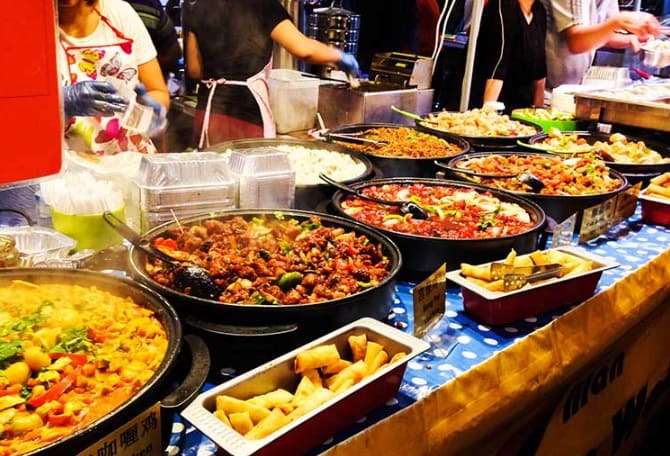
Chinese dishes: This is what characterizes Chinese regional cuisine
Chinese cuisine is anything but homogeneous: on the whole, it can be divided into four to five major regional cuisines, because of course each area (i.e. province, autonomous region, city, etc.) also has its own culinary specialties. We’ll start with Cantonese cuisine, native to southeast China.
- Cantonese cuisine is probably the most well-known Chinese cuisine tradition abroad and forms the basis of most of the dishes served in Chinese restaurants around the world today.
- The Guangdong region (also called “Canton” in western obsolescence) is China’s most important area for rice cultivation and also plays an important role in fisheries.
- Commonly used vegetables in Cantonese cuisine are cabbage, potatoes, garlic, onions, lettuce, tomatoes, and soybeans. When fermented, the latter form an important ingredient in many southern Chinese dishes. Classic Cantonese spices are ginger, rice wine, rice vinegar, soy sauce, and spring onions.
- In addition to the classic types of meat pork, beef, and poultry, which are frequently consumed throughout China, as well as lots of fresh fish, insects, snakes, or dogs are also often used in Cantonese cuisine (although these are more for reasons of traditional Chinese medicine).
- A very well-known dish in Cantonese cuisine is z. B. Chow Mein or also: fried noodles with vegetables and soy sauce, with meat, shrimp, or tofu.
- Dim sum, i.e. small, steamed, or fried dishes such as spring rolls or jiaozi (meat-filled dumplings), is still popular.
The Beijing cuisine of northern China
Commonly referred to as Beijing cuisine, northern Chinese cuisine is heavily influenced by Mongolian cuisine and the cuisine of Shandong Province (on China’s east coast): the Mongols introduced many dishes using lamb here, while Shandong Province introduced the use of Onions and garlic were added as spices. In addition to the folk cuisine, there was also the cuisine of the imperial court in Beijing for a long time, which is referred to as Mandarin cuisine. The northern Chinese folk cuisine is probably the simplest in all of China, which is mainly due to the harsh climate of the region (in the past there were often bad harvests and famines in northern China).
- Wheat, millet, and soy have always been the main staples of northern Chinese cuisine (especially since it’s too cold there to grow rice). Commonly used vegetables are celery, Chinese cabbage, and cucumbers, and the cultivation of watermelons also has a tradition.
- As in the rest of China, the most commonly consumed type of meat is pork. Lamb, beef, or poultry are also often prepared. Traditional northern Chinese and Pekingese condiments include ginger, sesame oil, garlic, and soy sauce.
- Typical of the Pekingese cuisine are noodle soups, as well as the filled dumpling variants baozi (large) and jiaozi (small), which are traditionally filled with pork, wild garlic, and sometimes a broth.
- The internationally most well-known dish in the area is the Peking duck, the preparation of which is so complex that it is now almost exclusively done by restaurants.
- A dish of Pekingese mandarin cuisine is the eight treasures, the compilation of which can vary, but chicken, duck, vegetables, and fish are often used.
East China: the Jiangsu cuisine
East Chinese cuisine comes from the provinces on the delta of the Yangtze River (where the city of Shanghai is also located). The style of cooking is considered to be very complex since great importance is attached to the presentation of the dishes. The region is particularly known for its wealth of high-quality teas and the breeding of silkworms in mulberry tree plantations.
- Rice and wheat are stapled foods in eastern China – many types of fruit and vegetables are also grown.
- The main types of meat consumed are pork, chicken, and duck – beef and sheep play almost no role.
- However, the most popular is still by far the consumption of fish and seafood. As the Yangtze River is now heavily overfished and polluted, there are many fish farms specializing in the farming of crab, shrimp, and fish.
- Typical of East Chinese cuisine is the liberal use of oil and a preference for sweet flavors. A typical cooking technique is “red cooking”, i.e. cooking fish and meat in rice wine or dark soy sauce.
- Commonly used spices are scallions, sugar, rice wine, and ginger.
- Regional specialties are fish in sweet and sour sauce, frog legs, snails, and shrimp. Vegetarian dishes also play a role in eastern China due to the widespread Buddhism.
The West: The Sichuan-Hunan Cuisine
The home of western Chinese cuisine commonly referred to as Sichuan cuisine, is in the western Chinese provinces of Sichuan, Hunan, and Yunnan.
- The main characteristics of western Chinese cuisine are the use of pickled vegetables, especially bamboo shoots, garlic, and Chinese cabbage, as well as plenty of seasoning with chili, white pepper, and Szechuan pepper. Another spice typical of the region is dried tangerine peel.
- By far the most popular meat is pork. In the province of Yunnan, ham is also produced that is compared to the Serrano ham from Spain in terms of quality.
- One of the most well-known western Chinese dishes is scanlating, the sour and hot soup made from bamboo shoots, sesame oil, wine vinegar, chili, pepper, chicken or duck blood, mushrooms, and lily buds (sometimes with meat).
- Also internationally known is Gong Bao Ji Ding: Wok-cooked chicken with dried tangerine peel and peanuts.
- An exceptional characteristic of Yunnan cuisine is the preparation of vegetables and ham, which are only briefly tossed in burning oil in a wok.


Facebook Comments