 John Myers
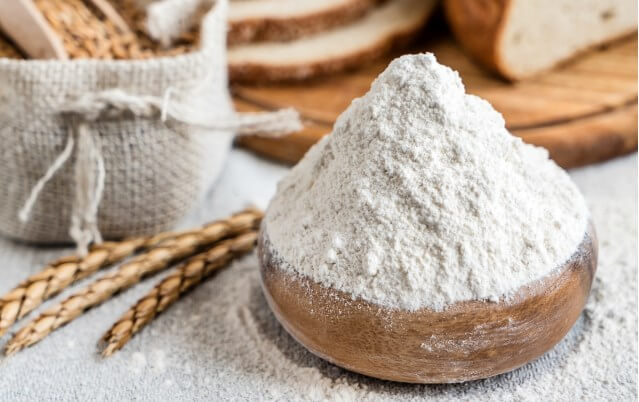
In order to be able to bake, you absolutely need a scale, after all, the flour has to be weighed exactly. No, that’s not true – you can also use a measuring cup to determine the amount of flour you need. We show how this works and how many grams of flour corresponds to how many milliliters.
Table: Conversion of flour
From our table, you can quickly read how many grams of flour corresponds to how many milliliters of flour. You will find the most common measurements used in baking recipes.
Flour in grams
- 10g
- 25g
- 50g
- 100g
- 250g
- 500g
- 1000g
Flour in milliliters
- 15ml
- 37,5ml
- 75ml
- 150ml
- 375ml
- 750ml
- 1500ml
Tip: Our conversion table only applies to flour. Since other foods such as sugar or semolina have a different density, 100 milliliters weigh different amounts.
Crap, no scales!
Would you like to bake a cake, but realize that you don’t have a kitchen scale at hand or the batteries in your scale are dead? No problem, because to be able to measure the exact amount of flour, you can use a standard measuring cup. And it doesn’t even have to show the flour ingredient in grams on a scale – our conversion table will help you because you can quickly read the number of milliliters required. When purchasing a measuring beaker, a variant with a narrow bottom is highly recommended: Small amounts of flour (or other ingredients, of course) can also be measured in milliliters. With measuring cups that are flat at the bottom, the scale often only starts at 50 or even 100 milliliters.
Tip: The volume of the individual types of flour, such as light flour or wholemeal flour, differs so little that a general conversion can be used for all types of flour. Other cereal flours such as spelled flour or rye flour are no exception. We will also tell you which flour is best to use for what when baking.
Weight vs Volume
While flour, which is weighed in grams, is about the weight of the baking ingredient, measuring it in milliliters is different. Here the volume of the flour is meant. The density of plays a role here and that is why 100 grams of flour do not correspond to 100 milliliters of flour. On average, the ground grain has a density of 0.57 grams per milliliter. But since we don’t want to do a math diploma, but would rather bake a cake, we can use the following rule of thumb.
Rule of thumb: 100 grams of flour correspond to 150 milliliters of liquid.



Facebook Comments