 John Myers
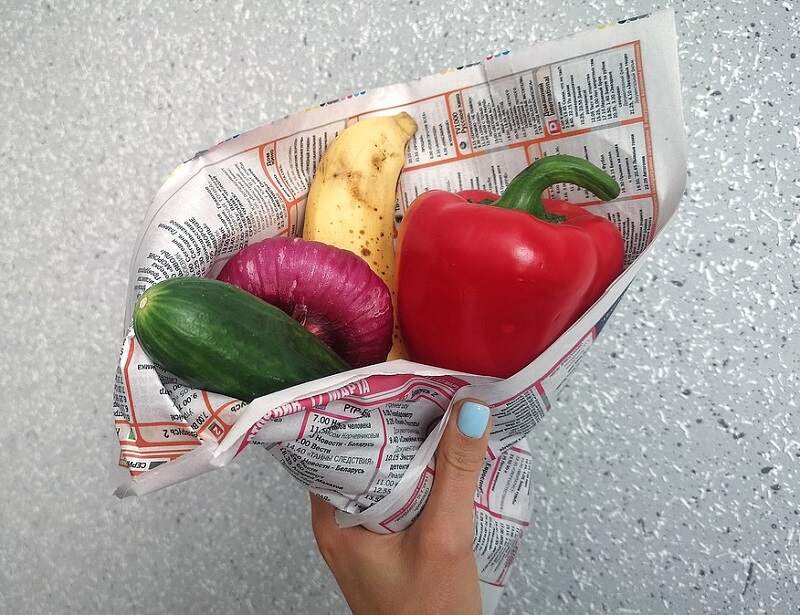
Fresh fruit and vegetables at the market often lie on newspaper for hours – and people like to wrap them in it. Don’t, say food experts.
If you want to do without plastic, you need alternatives. Market stallholders therefore like to use the good old newspaper. A good idea from an ecological point of view. However, food experts strongly advise against it. “Newsprint is not food packaging,” says Dr. Sieglinde Stähle, Scientific Director of the Federation for Food Law and Food Science BLL.
Toxic pigments and mineral oil mixtures
If you wrap fresh fish or a portion of radishes in newspaper, you will rub off all the ink on it. “Sometimes you can tell when you have printer’s ink on your hands,” says Dr. Stähle. The longer the contact, the more stain. The paint consists of about 20 percent pigments and 80 percent mineral oil mixtures. If you wrap food in newspaper, it will be transferred to it.
Various scientists and the European Food Safety Authority EFSA have even been able to detect mineral oil residues from newspaper in recycled material. In an official statement, EFSA strongly advises against excessive mineral oil content in recycled paper.
Long-term consequences not explored
If too much mineral oil from printer ink gets into your body, it can build up as a layer of fat in the liver or lymph nodes. The long-term effects of printer ink have not yet been researched. However, the EFSA assumes that the substances can be detected in the body for decades. Newspaper should therefore not be used to wrap food.


Facebook Comments