 John Myers
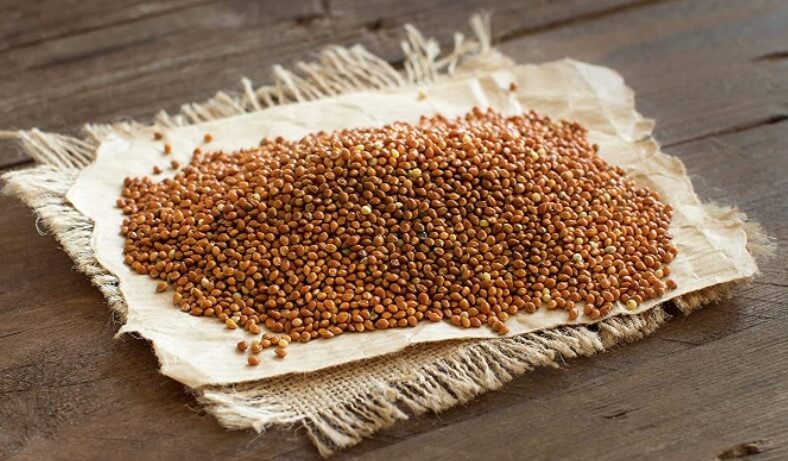
Millet is a collective term for husked grain that belongs to different genera and has a large variety of shapes. The small, round grains, about a millimeter in size, are white-grey, yellow or reddish-brown in color depending on the species and grow in panicles or cobs.
Compared to other grains, millet contains a lot of iron, vitamin B6 and silicon (silicic acid). It is gluten-free and therefore also suitable for people with celiac disease. Because of its hard chewing impression, the tart-bitter taste and the poor digestibility, millet is usually freed from the husks and peeled before it is sold as edible millet.
In this country, the yellow seeds of proso millet are preferred, which are also known as golden millet because of their color.
Brown millet is a red-orange form of proso millet, not a wild or original form of millet, as is often claimed. In contrast to golden millet, its grains are used together with the husk and hard fruit skin. In the production of brown millet flour, which is the form most commonly offered commercially, it is processed into fine flour using a special grinding process. In addition, brown millet is also sold as a dietary supplement by health food stores, health food stores, and internet suppliers.
In alternative medicine and in advertising, this brown millet powder is recommended for numerous diseases (arthrosis, osteoporosis, caries, weak connective tissue, hair loss, nail and skin diseases). Efficacy in these areas of application has not been proven! Undesirable effects and risks have not been sufficiently investigated.
Brown millet is richer in minerals than golden millet because the peel is also eaten. However, it also contains a lot of tannins, phytic acid and oxalic acid. This can hinder the absorption of certain nutrients. In addition, stomach or intestinal irritation can occur in sensitive people. Excessive consumption of brown millet is therefore not advisable.


Facebook Comments