 John Myers
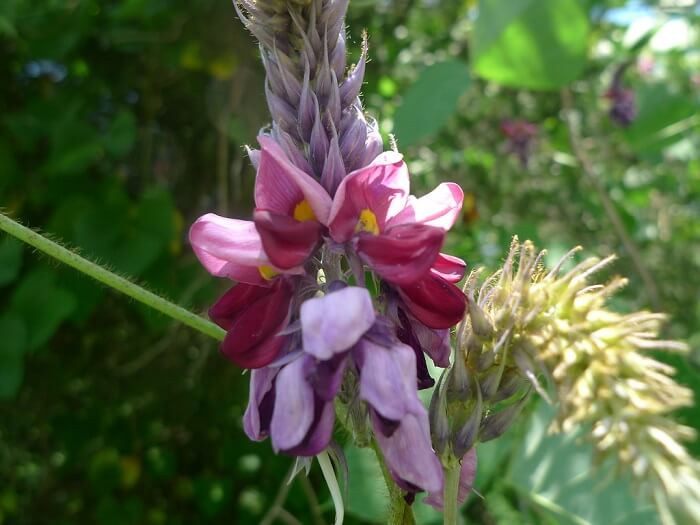
Kudzu is said to relieve menopausal symptoms and help with alcohol and smoking cessation. Is that correct?
The essentials in brief:
- Kudzu is offered as a dietary supplement for alcohol and smoking cessation, to alleviate menopausal symptoms, or for exercise.
- A conclusive health assessment is not possible due to a lack of data and many unanswered questions.
- Women who have or have had estrogen-dependent breast or cervical cancer should not take any kudzu-containing supplements without consulting their doctor.
What is the kudzu ad?
Kudzu is touted with claims such as “improves blood flow,” “helps digestion,” “relieves menopausal symptoms,” or “reduces muscle pain and stiffness.” Kudzu is also said to help with alcohol and smoking cessation. In Traditional Chinese Medicine (TCM), the kudzu bean is also said to have blood sugar-regulating and cholesterol-lowering effects .
Kudzu root powder and extracts are mainly sold online, but also in pharmacies as a dietary supplement. The advertising statements listed on the products are mostly based on traditional traditions – they are not scientifically proven by human studies. Even the first small studies that are mentioned in some internet portals do not represent sufficient scientific evidence.
According to the statutory provisions (Article 7 of the Food Information Ordinance), advertising statements that describe medicinal effects are not permitted for foods, which also include food supplements.
What should I look out for when using kudzu?
According to the Federal Institute for Risk Assessment (BfR), based on the available scientific data, a health risk cannot be ruled out, particularly with long-term consumption of kudzu roots and their preparations. “Purely plant-based” does not always mean “harmless”. There is ambiguity with regard to various aspects:
- Are there interactions with certain enzymes and drugs?
- In and from what dosage range do pharmacological and toxic effects occur?
- What estrogenic effects do the contained isoflavones have?
- What is the influence on growth and thyroid hormone?
- What is the effect together with alcohol?
Never take more than the daily dose recommended by the manufacturer , because the manufacturer is only liable for the safety of the dietary supplement for this amount.
Women who have estrogen -dependent breast or uterine If you have or have had ovarian cancer, you should not use any dietary supplement containing kudzu or other isoflavone without consulting a doctor. Pregnant, breastfeeding and children should refrain from using such products.
Do not take kudzu if you are taking medication for diabetes, tamoxifen (for breast cancer), or methotrexate ( for rheumatoid arthritis) because of interactions. Interactions with other medications are also possible. If necessary, ask your pharmacy.
Whether a food supplement containing kudzu may be sold in Germany is decided by the food control authorities in the federal states during random checks. While kudzu root, flower and leaf in food supplements are not novel within the meaning of the Novel Food Regulation (EU) No. 2015/2283, this statement does not apply to all kudzu extracts. According to a ruling by the Federal Court of Justice, a food supplement containing a dry extract from the root of the kudzu plant was considered novel and can therefore only be sold after approval as a novel food.
If you have any questions about the safety of a product, please contact your local ( city or county) Food Safety Authority.
What is kudzu?
Kudzu (Pueraria lobata), also kudzu bean or kopou root, is an Asian legume plant (legume). The kudzu root forms very long and up to 35 kg heavy, edible runners/tubers that contain starch. In Japan, they are eaten cooked or used as a source of starch, for example for noodles, and as a thickening agent.
The (freeze-dried) root powder is usually offered as a dietary supplement in capsule form, but root extracts that are not defined in more detail are also on the market.
What ingredients are in kudzu?
In the kudzu root there are so-called isoflavones, in particular daidzein, puerarin and daidzin. Isoflavones are secondary plant compounds that are also found in soybeans, but also in red clover. The structure of isoflavones is similar to that of the human hormone estrogen, which is why it is also called phytoestrogen.
According to the Federal Institute for Risk Assessment, when using kudzu root extracts – as they are used as a dietary supplement – often more than 290 mg isoflavones per day are ingested in addition to the normal diet, many products are dosed at 500-1,000 mg/day. The usual daily intake for isoflavones is 2 mg. Therefore, the use of such dietary supplements leads to a 100-fold increase in isoflavone intake, in extreme cases even to a 500-fold increase in intake.
Our tip:
With a plant-rich and varied diet, which can also contain soy products if it is well tolerated, many other valuable nutritional ingredients such as other secondary plant substances, fiber, vitamins and minerals are ingested in addition to phytoestrogens.


Facebook Comments