 John Myers
Ingredients for 4 servings:
- 4 medium-sized garlic cloves
- 4 tbsp oyster sauce
- 2 tbsp Sambal (Sambal bajak Y & Y), see in my other recipes
- 2 tbsp sauce (sweet and sour sauce), see my recipes
- 2 tbsp rice wine (Arak Masak)
- 1 ½ kg chicken, cut up
- 100 g coconut oil for roasting the ingredients
- 500 g peanut oil for frying
- 120 g tomatoes, fully ripe
- 8 macadamia nuts (kacang kemiri)
- 60 g onion(s), small, red (bawang merah)
- 8 g fresh garlic cloves (bawang putih)
- 60 g Pepper, long, red
- 25 g lemongrass, fresh or frozen
- 60 g spring onion(s), only the green part
- 20 g turmeric, fresh or frozen
- 20 g galangal, fresh or frozen
- 30 g ginger, fresh or frozen
- 4 salami leaves, frozen or dried
- 6 kaffir lime leaves, frozen or dried
- 1 pandan leaf
- 1 cardamom leaf, approx. 10 x 5 cm
- 400 ml creamy coconut milk (santan)
- 100 g juice (sirsak juice), alternatively orange juice
- 2 lemons, fully ripe, the juice
- 3 tbsp oyster sauce (saus tiram)
- 2 tbsp soy sauce, light, (kecap asin muda)
- 25 g coconut palm sugar (gula kelapa)
- 2 tbsp rice vinegar, mild, Chinese
- 2 tbsp rice wine (Arak Masak)
- 1 tsp oregano
- 2 m.-sized cinnamon stick(s)
- 5 cardamom pods
- 1 tsp nutmeg, freshly grated
- 12 g salt or instant chicken broth
- n. B. Coconut palm sugar
- e.g. Sambal (Sambal Bajak Y&Y), see in my recipes, alternatively Sambal Oelek
- 2 garlic cloves, freshly squeezed
- n. B. flowers and leaves
Instructions
Working time approx. 1 hour; Rest period approx. 1 day; Cooking/baking time approx. 2 hours 20 minutes; Total time approx. 1 day 3 hours 20 minutes
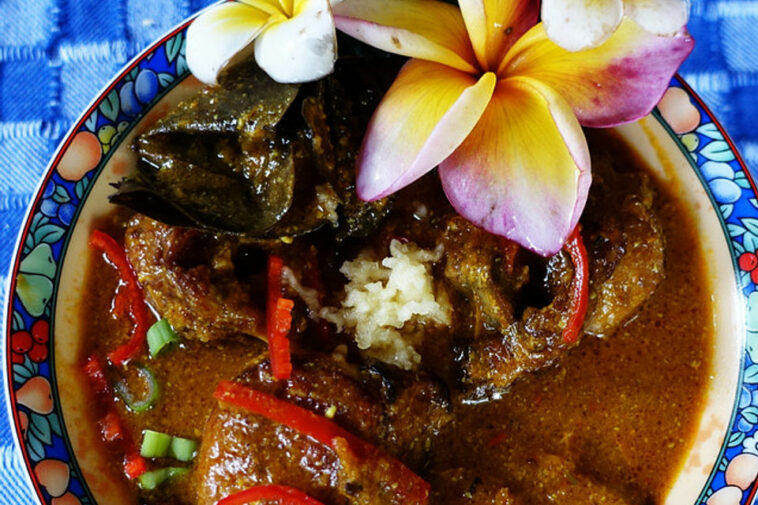
A very tasty chicken rendang in the style of ‘Dapoer Sriwidi’.
It is recommended to use kitchen gloves when working with the chili peppers and turmeric. Wash them thoroughly with soap and sprinkle a little powder inside; this makes putting them on much easier next time. Peel the skin off the chicken pieces and trim off any fat. Press the four garlic cloves into a 2-liter bowl. Add the oyster sauce, sweet and sour sauce, sambal, and arak to this bowl and mix well. Marinate the bone-in chicken pieces for 24 hours. Drain the marinade and dry the chicken pieces between paper towels. Remove the red bell pepper strips from the Thai sauce. Peel the tomatoes, halve them, and remove the green stems. Halve the tomato halves lengthwise and cut crosswise into 4 pieces. Place the tomato pieces in a blender along with the sirsak juice, coconut milk, and 6g of instant chicken stock. Blend at full speed for 2 minutes until you have a smooth tomato juice. Quarter the macadamia nuts. Peel and quarter the onions and garlic. Cut off the stems from the hot peppers, split the pods lengthwise, and fold them apart. Remove the seeds and their membranes. Cut the empty pods lengthwise into strips, then separate these into approximately 1cm long pieces. Remove the brown leaves and tough root stem from the lemongrass. Slice the lemongrass into very fine discs, discarding any leaves that are too green. Use only the white and light green parts. Wash the spring onions, using only the green parts. Cut these crosswise into 2cm long pieces. Wash, peel, and thinly slice the turmeric, galangal, and ginger. Heat a medium-sized pan. Add six tablespoons of coconut oil, swirl the pan, and when the oil is hot enough – bubbles will form at the bottom of the pan – first toast the macadamia nuts until they begin to brown. Add the lemongrass, mix, and toast for 1 minute while stirring. Add the ginger and galangal and stir in, followed by the turmeric slices. Add the garlic and onions, toast for 2 minutes, then add the pepperoni pieces and toast for 2 minutes. Deglaze the pan with the tomato juice from the blender, mix well, and finally add the green spring onions. Cover and simmer for 5 minutes, stirring occasionally. Remove the pan from the heat and let the contents cool slightly. Meanwhile, squeeze the lemons, reserving the juice and disposing of the peels in the organic waste. Combine the rice vinegar, rice wine, oyster sauce, palm sugar, and light soy sauce with the lemon juice. Pour the liquid into a blender along with the remaining coconut milk, the lime juice mixture, and 6g of instant stock. Blend until smooth for one minute at full speed. Heat the frying oil in a wok to 190°C. Brown the marinated and thoroughly dried chicken pieces in batches (3 to 5 pieces at a time) for about 30 seconds, but do not over-fry. Make sure the temperature does not drop too low. Place the browned chicken pieces in a 3-liter pot. Wash the leaves and add them whole. Pierce the pandan leaf with a fork. Add the cinnamon sticks, oregano, cardamom pods, nutmeg, and rendang sauce from the blender. Mix the ingredients thoroughly with the chicken pieces. Simmer the chicken rendang, stirring occasionally. Simmer with the lid on for the first 60 minutes, then uncovered for a further 60 minutes to allow the rendang sauce to thicken and become creamy. After 120 minutes, add the freshly squeezed garlic, stir in, and simmer briefly. Season the dish with instant chicken stock and Sambal Bajak Y&Y. Leave all the leaves in the rendang except for the pandan leaf, and remove the cinnamon sticks. Divide the rendang among four plates, garnish with the flowers and leaves, and serve while still warm. Serving suggestion: White rice, kohlrabi or green beans steamed in butter as a vegetable side dish, and two bowls of sambal mix. Sambal mix 1: Sweet soy sauce with 1 teaspoon of Sambal Bajak Y&Y, but do not mix! Sambal mix 2: A simple Sambal Matah Lestari (see my recipes), which you must make from scratch. Note: Why do you leave the leaves in the rendang if no one eats them? Well, both types of leaves have certain medicinal properties, and this shows your guests that you’ve taken this into account. Note: Rendang ayam recipes are plentiful here in the Far East. The cooking time is very short at about two hours, and the chicken is inexpensive, so you’re sure to find it at any festival. Ms. Dapoer Sriwidi’s recipe provided me with the basis for this recipe, but I had to tone down her version a bit and add a bit more seasoning, in the Madura style.

Facebook Comments