 John Myers
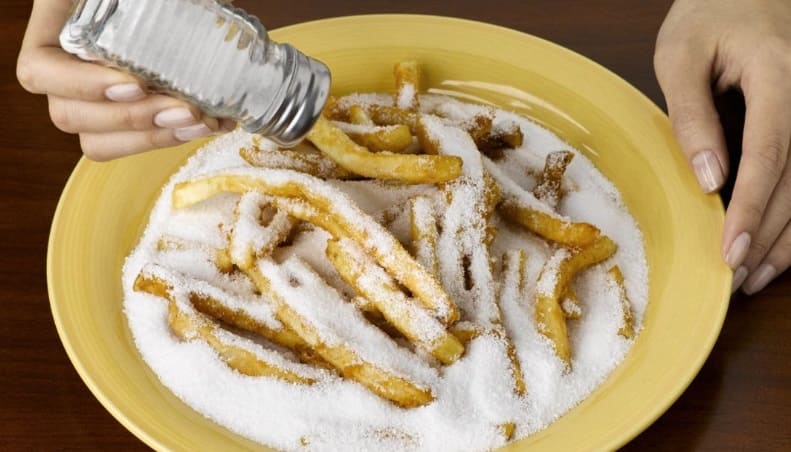
Why does salty food make you hungry and not thirsty?
It is a popular saying that salty food makes you thirsty. So far, however, this has never been questioned by scientists. Now an international research group – made up of employees from the German Aerospace Center, the Max Delbrück Center for Molecular Medicine, the Charité, and Vanderbilt University – has devoted itself to the question of how salt affects the body. The background was space travel, which depends on perfect nutrition and every drop of water.
- Accordingly, a trip to Mars was simulated. Two groups of ten subjects were housed in a mock spaceship for 105 and 205 days, respectively. At first, all participants got the same food. In the course of time, however, the salt content of food has gradually changed.
- At first, nothing special happened. As expected, participants felt more thirsty after a salty meal.
- However, that didn’t last long. A short time later, the participants felt less thirsty but more hungry.
- Crucial to this was urea, about which the scientists were able to gain completely new knowledge in this experiment. The urea ensures that the water stays in the body by binding the water to itself. In this way, the urea removes the water from the sodium and chloride ions, which they would otherwise bind and pull with them into the urine.
- Instead of the water, only the salt then gets into the urine and is then excreted. The water that is essential for our survival, however, remains in the body.
- However, this synthesis of urea with water seems to be so exhausting that the participants felt more hungry than thirsty for salty food.



Facebook Comments