 John Myers

Ingredients for 2 servings:
- 180 g rice noodles (medium-fine type, see note)
- 20 g onion(s), red, small
- 2 garlic cloves
- 15 g ginger
- 50 g spice lily (aromatic ginger)
- 1 tsp Tauco (soybean paste)
- ¼ tsp chili powder
- 2 tbsp water
- 2 tbsp sunflower oil
- 2 vegetable stock powder
- 100 g mung bean sprouts
- 2 tbsp coconut water
- 1 tbsp coconut milk, 24% fat
- 1 tbsp Tauco (soybean paste)
- 50 g onion(s), red, small
- 3 g shrimp paste (belacan or terasi udang)
- 4 kemiri nuts
- 1 tsp, levelled Szechuan pepper, ground
- 3 tbsp tomato juice
- 2 tbsp sunflower oil
- 500 g water
- 10 g chicken stock powder
- 1 tbsp tamarind syrup
- 30 g coconut butter, 24% fat content
- 1 tsp sugar, fine
- 3 m.-tall Kailan (Chinese broccoli)
- 1 pepper, red, long, medium hot
- 30 g garlic butter or herb butter
- 125 g shrimps, raw, peeled, without tail, alternatively prawns
- Spice lily (aromatic ginger), pieces thereof
- e.g. spice lily (aromatic ginger), raw and peeled
- n. B. flowers and leaves
Instructions
Working time approx. 1 hour; Cooking/baking time approx. 30 minutes; Total time approx. 1 hour 30 minutes
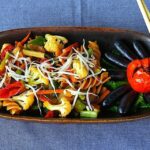
A special kind of glass noodle soup and a main course from the Nonya cuisine of Malaysia.
Soak the rice glass noodles in plenty of water until they become pliable but still firm. Strain and discard the water. Peel the onions and garlic cloves and roughly chop them. Wash and peel the ginger and lily of the valley, and slice thinly across the grain. Reserve 20g of this for the garnishes. Place the onions, garlic cloves, ginger, lily of the valley, soybeans, chili powder, and water in a blender and blend until smooth. Heat the sunflower oil in a pan. Add the mixture from the blender and the vegetable stock powder and fry until the oil rises to the top. Mix in the mung bean sprouts and the noodles, along with the coconut water and coconut milk. Fry over moderate heat until the noodles are al dente. If necessary, add a little more coconut water a tablespoon at a time to prevent burning. Remove the noodles from the heat and let them cool uncovered. For the spicy paste, peel and roughly chop the onions. Crumble the shrimp paste. Halve the kemiri nuts along the seam and check for mold. Place all ingredients in a blender and blend until smooth. For the broth, heat the sunflower oil in a large pan, add the spicy paste, and fry until fragrant. Add the water along with the chicken stock and tamarind syrup and bring to a simmer. Let cool slightly. Then mix in the coconut milk and sugar. Do not heat above 80 degrees Celsius! For the fillings, wash the kailan and separate the leaves from the stems. Cut 1 cm off the bottom of the stems. Peel the area from the 3rd leaf down to the stems. Cut crosswise into approximately 1.5 cm long pieces. Quarter thick pieces lengthwise. Separate the thin leaf stalks from the leaves along the midrib and roughly chop the leaves. Cut the leaf stalks crosswise into approximately 2 cm long pieces and discard the midribs. Blanch the firm kailan leaves for 3 minutes. Keep the leaves separate. Remove the stem from the washed chili pepper, cut open on one side, and remove the pink septa and all seeds. Slice crosswise from the top into thin strands. Melt the garlic butter in a pan over moderate heat. Add the shrimp and the spice lily pieces and fry until all the shrimp have changed color. Remove from heat immediately. To serve, divide the noodles into 2 serving bowls. Place the fillings, including the kailan leaves, on top. Pour in the broth. Serve and enjoy. Note: There are 3 types of glass noodles. The cheapest are rice glass noodles. A step up in price and taste are corn glass noodles, and the best among the glass noodles are made from soybeans. Mung bean glass noodles are just below or next to them. The last two are almost impossible to find in Indonesia.


Facebook Comments