 John Myers
Introduction: Exploring the Richness of Hungarian Cuisine
Hungarian cuisine is a reflection of the diverse cultural influences that have shaped the country’s history. From the Ottoman Empire to the Austro-Hungarian Empire, Hungarian cuisine has taken on various flavors and cooking techniques over the years, making it a rich and flavorful cuisine. Hungarian dishes are typically hearty and filling, with an emphasis on meat, potatoes, and vegetables. The spice level is moderate, with paprika being a staple ingredient in many dishes.
Traditional Hungarian Dishes: From Goulash to Lángos
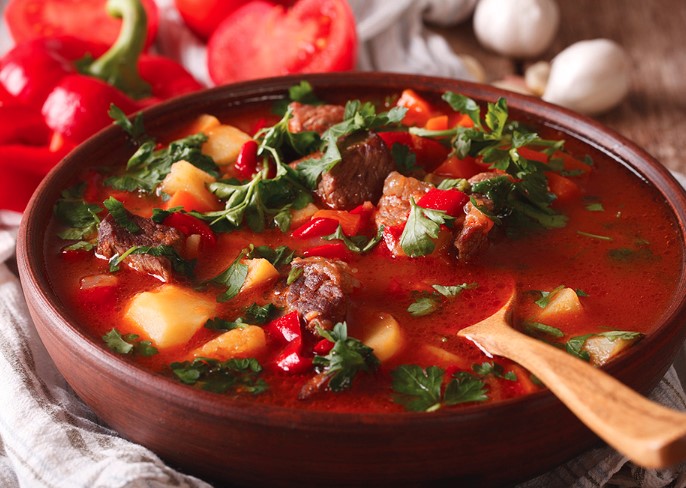
One of the most famous Hungarian dishes is goulash, a hearty meat soup made with beef, potatoes, and paprika. Other popular dishes include chicken paprikash, a creamy chicken stew made with sour cream and paprika, and lángos, a deep-fried dough topped with sour cream and cheese. Another staple of Hungarian cuisine is stuffed cabbage, made with ground pork, rice, and sauerkraut.
Hungarian cuisine also has a variety of sweet dishes, including dobos torte, a layered sponge cake with chocolate buttercream and caramel topping, and somlói galuska, a trifle-like dessert made with sponge cake, vanilla cream, chocolate sauce, and rum. Hungarian cuisine also has a strong tradition of pastry making, with chimney cake (kürtőskalács), a sweet dough cooked on a spit and coated in sugar and cinnamon, being a particularly popular treat.
Ingredients and Preparation: Uncovering the Secrets of Hungarian Cooking
Paprika is the most important ingredient in Hungarian cuisine, with several different types used depending on the dish. Sweet paprika is used to flavor soups, stews, and meat dishes, while hot paprika is used to add heat to dishes such as goulash. Another important ingredient is sour cream, which is used in many dishes to add a creamy texture and tangy flavor.
Hungarian cuisine also places a strong emphasis on cooking techniques, with slow cooking and braising being particularly important. Meat dishes are often cooked over a low flame for several hours to ensure tenderness and full flavor, while vegetables are often roasted or grilled to bring out their sweetness. Hungarian cuisine also has a strong tradition of pickling and preserving, with sauerkraut and pickled vegetables featuring prominently in many dishes.
In conclusion, Hungarian cuisine is a rich and flavorful cuisine with a long history and diverse influences. The use of paprika and sour cream, as well as slow cooking and pickling techniques, are key components of this cuisine. From hearty meat dishes like goulash to sweet pastries like chimney cake, there is something for everyone to enjoy in Hungarian cuisine.


Facebook Comments