 John Myers
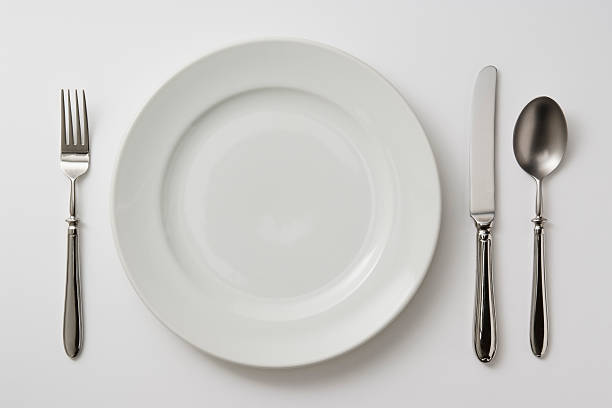
If you have visitors or are visiting someone yourself, you can often shine in front of them if you know which cutlery is intended for what.
Which cutlery is intended for what
Once you know which cutlery is intended for what, you usually don’t forget it that quickly. You can score points with this knowledge, especially at celebrations or with guests.
- As for the forks, there’s the small, four-pronged fork meant for salads. The four-pronged dessert fork and the three-pronged cake fork are a little smaller than these. The classic large, four-pronged fork is intended for the main course.
- A steak knife is usually very pointed at the front and has a sharp blade. If you have a sharp-edged, small knife in front of you, it is usually a cheese knife.
- The “normal” knife for the main menu is usually slightly round at the front and has serrations on the cutting surface. You can recognize the butter knife by the fact that it is blunt at the front and has a wide stroking surface. If you have a dessert knife in front of you, you can recognize it by the fact that it is very small and rounded at the front.
- A spoon with a large, oval surface is usually a soup spoon. A slightly smaller spoon with a circular surface is a spoon for bouillon.
- You can recognize ice cream spoons by their long handle and small surface. If you have a very small spoon with a circular surface in front of you, it is a dessert spoon.
The arrangement of the cutlery on the table
Classically, there is even a correct arrangement of the individual types of cutlery. This looks like this for a 4-course menu:
- To the right of the plate are two knives and a spoon. The knives have different sizes.
- There are two forks to the left of the plate. Again, the forks differ in size.
- The small knife and the small fork are usually on the outside, the larger variants on the inside.
- The small dessert spoon is placed above the plate and the small dessert or cake fork is underneath.
- Depending on the aisle, this arrangement can of course also vary. For example, you might need a fish knife or oyster fork for a course.



Facebook Comments