 John Myers
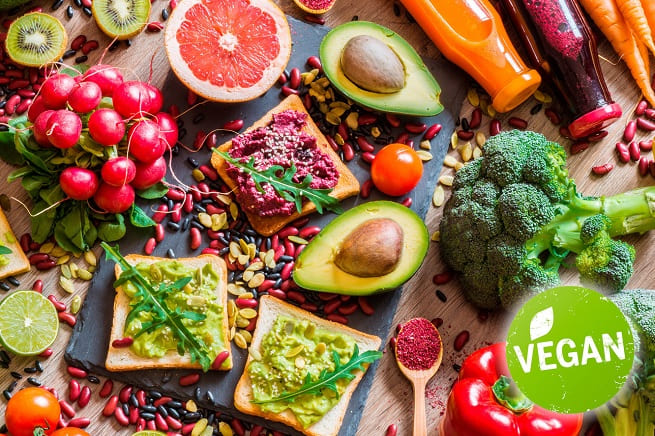
A vegan diet means avoiding animal products. Vegans only eat plant-based foods. Not only do they avoid meat and fish, but also all other foods of animal origin, even if no animals had to be killed for their production.
Vegans usually cite ethical and moral concerns about the exploitation and killing of animals as the reason for this form of nutrition. In addition to respect for animal life forms and avoiding animal suffering, ecological reasons are also given as motives for a vegan diet: Vegans argue that the cultivation and distribution of plant-based foods use fewer resources than meat production. Last but not least, health reasons also play a role. For example, a vegan diet can have a positive effect on Hashimoto’s thyroid disease in some patients.
No animal products of any kind
Anyone who eats a vegan diet eats no dairy products, no eggs, and no honey, but can enjoy our vegan ground pork with a clear conscience, for which you use rice waffles and aromatic ingredients such as soy sauce, mustard, and fresh parsley. Even foods that only contain additives from animal sources are not part of a consistently vegan diet. For example, a wine that consists of fruit but is clarified with the help of gelatine is not vegan. The binding agent gelatine is obtained from the connective tissue of pigs or cattle. You can find out how to replace gelatine here.
Not only do many vegans avoid animal-based foods, they also avoid leather, fur, down pillows, wool and other products made with animals or animal parts. Cosmetics are often not vegan either, as they can contain animal additives such as collagen, carmine, or keratin. In addition, many cosmetics also contain secondary animal products such as beeswax, milk, or honey as well as synthetic substances that have been tested in animal experiments.
Everyday products such as medicines or wallpaper paste can also contain animal substances. A 100 percent vegan life is therefore almost impossible or can only be achieved with a great deal of time and money.
Vegan foods
Fruit and vegetables form the basis of a vegan diet. In addition, substitutes for dairy products such as cheese, yoghurt, or cream are also available on a soy basis. For example, you can make vegan cheese from soy and nuts. Meat substitutes made from tofu, seitan, or tempeh are also available to vegans. Foods made from soy, legumes, or wheat protein also serve as an important source of protein in a vegan diet, nuts and seeds also provide vegetable protein.
The essential need for nutrients for a balanced diet can also be covered with plant-based foods. It is particularly important for vegans to ensure they have an adequate supply of iron, calcium, iodine, zinc, vitamins D and B12, and omega-3 fatty acids.
Millet, quinoa, amaranth, lentils, and dried porcini mushrooms are among the sources of iron. Calcium is particularly found in tofu, broccoli, kale, nuts, sesame, and legumes. Calcium-fortified beverages such as soy drinks and naturally calcium-rich mineral water are also available. Vitamin B12, on the other hand, is only found in animal foods – vegans must take the vitamin through supplements.
The origin of the word “vegan”
The term “vegan” was coined as early as 1944. The Englishman Donal Watson founded the “Vegan Society” this year as a spin-off from the English vegetarian society. Watson created the word “vegan” by contracting the first and last syllables of the word “vegetarian”. In 1946, the first vegan cookbook was published with the word “vegan” in the title. The term entered the Oxford Illustrated Dictionary in 1962.
According to an estimate by the Vegetarian Association from January 2015, around 7.8 million people in Germany are currently vegetarian. According to the Vegetarian Association, around 900,000 prefer a vegan diet. According to a study by the University of Hamburg in 2014, the average vegan is 31 years old, female, and has been vegan for about one to two years. The growing number of vegans in Germany is accommodated by a parallel infrastructure of vegan restaurants, cafés, and supermarkets. In addition, more and more celebrities are publicizing the vegan lifestyle.
Forms of vegan diets
The veganism known today developed from the vegetarian diet, which was already practiced in ancient times and is particularly widespread in Buddhist cultures. Various sub-forms of vegan life have emerged in the 20th and 21st centuries.
One of these forms of nutrition is the vegan raw food diet. No food of animal origin is eaten and the purely vegetable foods that are on the menu instead are not heated, but eaten raw or at most slightly heated.
The small subgroup of fruitarians feeds only on fruits, seeds, berries, or nuts that can be harvested without damaging the plant. Since vegetables are injured by eating the tuber, stem, or leaves, strict fruitarians avoid these foods. This form of nutrition, also known as fruitarism, is intended to respect and protect not only animals but also plants.
An organic vegan diet only includes food that comes from organic vegan farms. These are farms that only grow plant-based products and do without meat and dairy farming. In organic-vegan agriculture, no products are used that were produced through animal husbandry or animal slaughter. For example, no liquid manure and no bone meal are used as fertilizers.


Facebook Comments