 John Myers
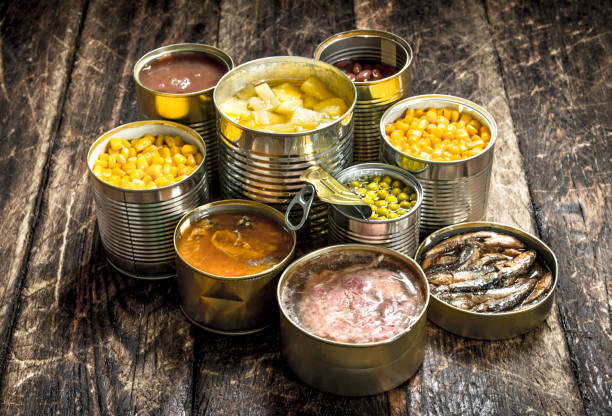
Canned food doesn’t have the best reputation: it’s unhealthy and doesn’t contribute significantly to a balanced supply of nutrients. It is therefore surprising for some that food from the tin can also has positive aspects. In the end, it is a matter of individual consideration.
Benefits of canned food
‘Canned food’ – this term already signals that the belief in good quality is a long way off here. In fact, canned food has disadvantages, but also some advantages. In individual cases, it is always worth taking a closer look at the ‘what’, the ‘how’, and the ‘frequency’ with which the food from the can ends up on the plate.
- Canned food can be stored for a long time and is on the table quickly without long cooking times. The preservation as a semi-preserve offers a shelf life of at least about 6 months, that as a full preserve even at least 18 months, but usually much longer.
- Semi-preserves are usually pasteurized at low temperatures of less than 100 degrees Celsius. This is gentler but does not completely kill all germs. In contrast, fully preserved foods are sterilized at over 100 degrees Celsius (usually around 121 degrees Celsius). Almost no germs survive this and it ensures long storage times.
- Most canning producers today have highly efficient production processes: the ingredients such as vegetables, fruit, legumes, meat, or even meat substitutes are processed fresh and with only very short intermediate storage times. Because they are protected from light and air by being preserved in the tin, many vitamins and other sensitive nutrients are preserved.
- In fact, canned food often contains just as many vitamins as home-cooked from fresh ingredients. The only exception is vitamin C. Canned food is a bit behind here, but this only detracts a little from the overall health assessment. In general, there is sufficient vitamin C on the menu for mixed food choices.
- In some cases, the vitamin content of canned food even tops home-cooked food. Namely, if you have long interim storage times for your fresh ingredients at home or if you overdo it when cooking and expose your dishes to high heat for far too long.
- For example, it is known from canned tomatoes and similar tomato-based products that the lycopene they contain, an important and healthy ß-carotenoid, is much more readily available from canned tomatoes than from fresh and only briefly cooked tomatoes.
- A major advantage that speaks in favor of preserving in cans compared to other preservation methods: many manufacturers do not use any preservatives such as sulfites, nitrites, benzoic acid, or the like, even in ready-made dishes such as organic ravioli. So the can is to a certain extent a ‘clean eating product’.
Concerns about canned food
With all the advantages, you should also know the disadvantages of canned food in order to be able to decide whether, when, and how often you want to use the quick solution from the tin can.
- The taste and appearance of canned foods naturally change. The high temperatures cause the meat to turn greyish, vegetables to have a duller color and the typical canned flavor. With a few individual seasoning tricks, some taste disadvantages can be improved before consumption.
- Be careful when consuming food from a can if the can is damaged or if a so-called bomb is visible, i.e. the can is curved. Then perishable germs, such as Clostridium botulinum, could make the food inedible and even a health hazard.
- Canned convenience foods, like other convenience foods, can also be high in salt. Here it is important to keep an overview and choose low-salt canned food so that the salt account is not overburdened. The German Society for Nutrition (DGE) specifies a maximum daily salt intake of 6 grams as a guideline.
BPA as a risk substance in cans
A decisive disadvantage, of why you shouldn’t reach for canned food too often, are other health concerns: Substances that can migrate from the inner coating of the can into the food are suspected of being harmful to health.
- A particular focus is on the substance bisphenol A (BPA), which can be released from the epoxy resin coating of the cans, particularly in oily foods such as fish, but also in watery foods. The assessment of a health risk from this substance is currently the subject of heated debate among scientists.
- An American study found residues of BPA in about 78 percent of the examined food samples from cans. In contrast, only 7 percent of foods packaged in other ways were identified as contaminated with BPA.
- BPA has been suspected of having a negative effect on hormone metabolism for decades. There are studies on animals that indicate a fertility-reducing effect of the hormonally active chemical. Added to this are fears that the immune system of fetuses can be damaged by BPA while still in the womb.
- Therefore, the European Food Safety Authority (EFSA) publicly reassessed possible health risks associated with the use of bisphenol A in December 2021. The new tolerable daily intake (TDI) of bisphenol A is therefore only 0.04 nanograms per kilogram of body weight and day.
- The result is alarming: This amount, which is classified as harmless, is apparently quickly exceeded with canned goods, among other things. However, the health commissions of the federal states currently do not fully agree with this EFSA assessment, including the Federal Institute for Risk Assessment (BfR) in Germany.
- The North Rhine-Westphalian consumer advice center has come to a preliminary conclusion for consumers: “Reduce the purchase of packaged food as much as possible. More and more reach for loose, unpackaged goods and fill the food out of opened tins before they go into the refrigerator.”



Facebook Comments