 John Myers
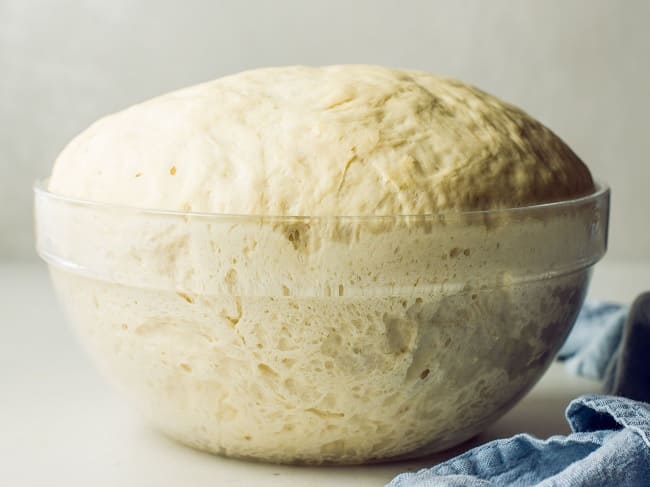
Yeasts are unicellular fungi that reproduce mainly by budding. When yeast is mentioned in the kitchen, it is usually baker’s yeast that is meant. It comes from the top-fermenting brewer’s yeast that was used to brew beer as early as the Bronze Age. In ancient Egypt, yeast was first used to bake bread. Yeast consists of a living microorganism. This feeds on sugar, while fermentation produces carbon dioxide (CO2) and ethanol (alcohol). These substances are in turn used in the production of numerous foods such as pastries, beer and wine. The yeast available in the refrigerated section as cubes belongs to the “Saccharomyces cerevisiae” species. It has a very strong raising power and is therefore ideal for loosening up pastries. Good to know: Normally, yeast is gluten-free.
Purchasing and storage
If yeast comes from industrial production, the yeast strain is cultivated in several stages in a nutrient solution. The result is yeast cream or milk with billions of yeast cells. This is then used to produce pressed fresh yeast or – by removing water – dry yeast. The weight of a cube of yeast, as it is in the refrigerated section of the supermarket, is 42 grams. Incidentally, the crooked measure dates back to the time when yeast was bought from the baker – and he cut 500 gram blocks into twelve parts. Fresh yeast can be stored in the refrigerator for a maximum of two weeks, after which it loses a lot of its raising power. If the leavening agent has developed brown spots and a crumbly consistency, it is no longer usable. Then it is best to dispose of it. You can easily freeze yeast in advance and it will keep for up to six months. To thaw, place the yeast in the fridge overnight or add it dissolved in warm liquid directly to the dough. Dry yeast can be stored in a cool, dry place for at least a year. Our expert knowledge will help you with reliable answers when deciding whether you should use fresh yeast or dry yeast.
Kitchen tips for yeast
Sufficiently long rising times are crucial when baking with yeast. Depending on the recipe, there are one or two resting phases during which the yeast allows the dough to rise. A warm environment is beneficial: place the bowl near the warm oven or a heater. But it shouldn’t be too hot – because the baker’s yeast dies at temperatures above 45 degrees. For the processing in doughs, take the number of grams indicated on the list of ingredients from a cube of yeast. Then crumble the leavening agent into warm liquid sweetened with sugar. Dry yeast can be mixed directly with the flour. If you have neither the fresh nor the dried version at home, baking often works with a yeast substitute. If you have a lead time of about a week, you can also make your own yeast. Our step-by-step instructions show you what to look out for and how to implement it.


Facebook Comments