 John Myers
Contents
show
Fructose, stevia, and syrup: healthier than sugar?
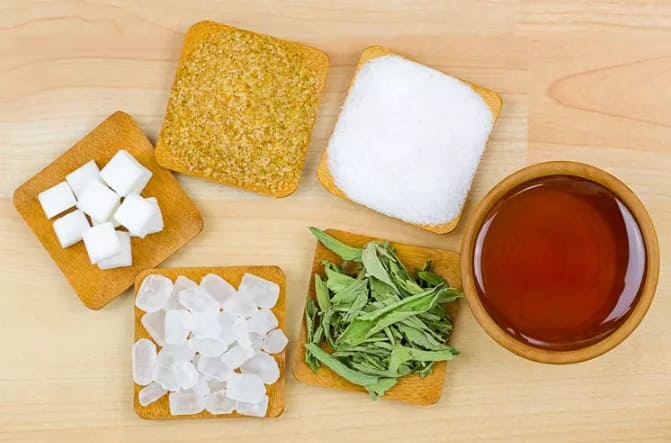
- There is no question that sugar in large quantities is unhealthy. Anyone who eats consciously, but still doesn’t want to do without sweets, is therefore happy to use the advertised alternatives such as stevia, fructose, or syrup.
- But even these sweeteners are not completely risk-free, as experts warn.
How Harmful is fructose?
- Fructose, i.e. fruit sugar, is a natural sugar. It is found in fruit and honey. But even this natural sweetener should only be consumed in moderation.
- According to a study by the European Food Safety Authority (EFSA), high fructose intake leads to metabolic disorders. In addition, fructose, like sugar, also promotes tooth decay and increases the fat levels in the blood.
- Although the study was mainly carried out on animals and only on a small group of people, it does suggest that fructose is not as harmless as is often claimed.
- The so-called isoglucose has been approved in the EU since October 1st. This is fructose-containing corn syrup. Like so many things, isoglucose comes from the USA, where it has been used as a sweetener for some time. In the future, pay more attention to the ingredients of food when shopping – you will probably find isoglucose more often.
Stevia – really completely harmless?
- Stevia has a reputation for not having any negative effects on the body. That is not completely correct.
- On the one hand, stevia is not a natural sweetness, as is often assumed and suggested in advertising. Stevia comes from a plant, that’s right. However, only steviol glycosides are approved for trade – and they are obtained through complex chemical processes.
- You should not use stevia indefinitely. The EFSA has set a limit of 4 mg steviol equivalents per kilogram of body weight for daily consumption. Up to this maximum amount, consumption is not a problem.
- The food industry is therefore not allowed to use any amount of stevia. In a liter of lemonade, for example, only about a third of the sugar can be replaced with stevia. The remaining two-thirds of the sweetness comes from sugar or other artificial sweeteners.
- Stevia is also often used to save calories. However, in our stevia article, you will learn that weight loss from the use of stevia is unlikely.
Is syrup a healthy alternative?
- Anyone who thinks that syrup is a healthy alternative to table sugar is unfortunately wrong.
- The popular maple syrup mainly contains sucrose. From a chemical point of view, sucrose is one of the disaccharides, i.e. one of the double sugars, and consists of glucose and fructose. You have already read in the first section how problematic fructose can be.
- Agave syrup, which is also touted as a healthy sugar substitute, is also sweetened with fructose. This alternative also has negative effects on metabolism and teeth.


Facebook Comments