 John Myers
Ingredients for 1 servings:
- 250 g peas, green, dried
- 4 tsp sesame paste (tahini)
- 1 tbsp mustard or 2 tsp mustard powder
- 5 tsp wasabi paste
- 3 tsp wasabi powder
- 1 tbsp sugar
Instructions
Working time approx. 30 minutes; Rest time approx. 12 hours; Cooking/baking time approx. 5 hours 10 minutes; Total time approx. 17 hours 40 minutes
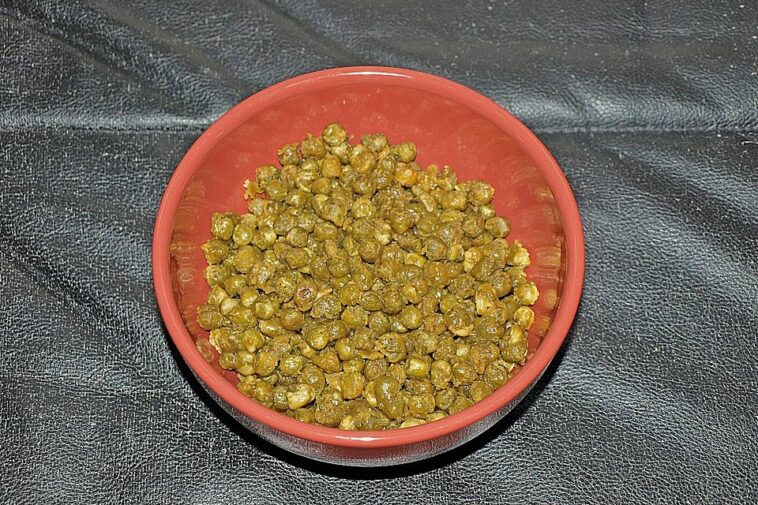
Snack: Peas coated with spicy Japanese horseradish
Soak the peas in water overnight (at least 12 hours) and then drain. Place in a saucepan and cover with water. Simmer on low heat for about 1.5 hours. The general cooking time depends on the size and type of peas, but is usually printed on the package of dried peas. I made sure the peas still had a bit of a bite. Place the cooked peas on a baking sheet lined with baking paper and gently dry them in the oven at around 100°C (212°F). It’s worth experimenting with this method every now and then—I took my peas out of the oven after about 20 minutes. When the peas have a dry texture again, roast them again at 150°C (302°F) for 10-15 minutes. Be careful not to overcook them. A quicker alternative is to briefly roast them in a pan. But be careful, I burned some of them during my first attempts. In the meantime, I prepare the paste for the wasabi coating. Combine the tahini, mustard, wasabi paste, wasabi powder, and sugar in a bowl and, if necessary, add a tablespoon at a time of water to form a puree. The required consistency is best achieved if you imagine the peas are completely coated in the mixture. If the mixture is too thick, it will be difficult to enclose the peas afterwards. If it’s too runny, it will run down the peas. If the mixture has become too runny, you can adjust it with the wasabi powder (the powder only adds a little spice). I think the right amount is when the mixture just drips off the spoon. The spiciness also depends on your own taste. I found 5 teaspoons of wasabi paste suited my taste quite well. Now comes the most important part: add the peas to the finished mixture and stir well so that all the peas are coated. Then carefully spread them out again on the baking sheet and dry the casing until crispy for 3 hours at a maximum fan-assisted oven of 70°C. A wide variety of recipes are circulating online. This last point is particularly crucial. Temperatures of 100°C – 170°C are sufficient. You can do it and save a lot of time, but the porridge casing is very delicate. My experiments with higher temperatures meant that I could not enter my kitchen for a while because the essential oils in the wasabi portion were released into the air and did not remain in my delicious snack. This significantly diminished the flavor and completely lost the spiciness. My urgent advice: take your time! This is the only way to create a delicious snack and is sure to impress friends and acquaintances. Finally, a storage tip: if you store them in an airtight container, they will keep for several days. The commercially available commercial product comes with small drying bags. It’s good if you have any leftovers – add them to the mix.


Facebook Comments