 John Myers
Ingredients for 2 servings:
- 150 g watermelon(s), peeled, pitted
- n. B. Sugar, fine
- 14 Topai Cai (small Pak Choi variety), leaves thereof (alternatively small chard leaves or spinach leaves)
- 100 g water
- 1 tsp broth powder (mushroom bouillon, granules)
- Cooking water (from the Topai Cai leaves)
- 1 tbsp tomato ketchup
- 12 shrimp(s), raw, peeled, without tail, approx. 18 cm, frozen
- 2 eggs, size M
- 1 tbsp tapioca flour
- 1 tsp, leveled chicken broth powder
- 1 tsp, levelled jalapeño pepper, ground
- 30 g garlic butter, alternatively herb butter
Instructions
Working time approx. 20 minutes; Cooking/baking time approx. 10 minutes; Total time approx. 30 minutes
Three protein- and vitamin-rich side dishes from Indonesia’s Nonya cuisine. Recipe from Jakarta.
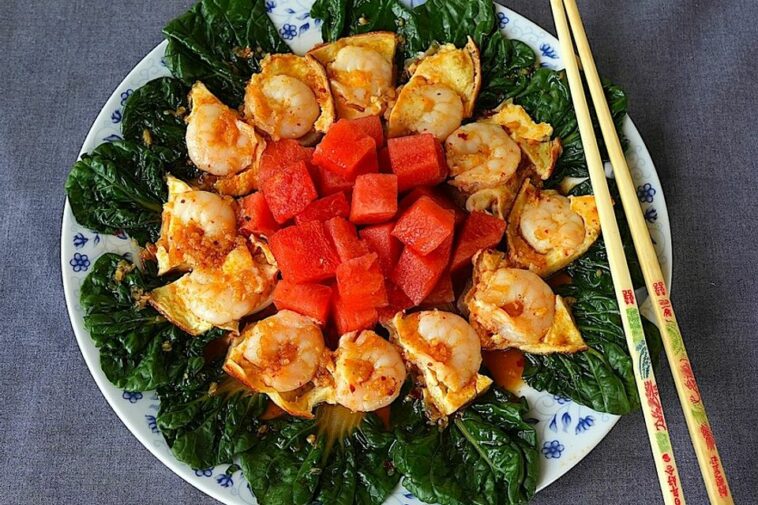
Cut off a piece of watermelon, remove the green and white parts, and cut into bite-sized cubes. Add a little sugar if desired. Use the resulting juice for something else. Separate the top cai leaves from the stem without the stems and rinse them. Use smaller leaves for something else. Bring the water to a boil and dissolve the mushroom stock in it. Blanch the leaves for 1 minute, strain, drain well, and spread out on a serving plate. Use the stock for the sauce. For the sauce, stir the tomato ketchup into the blanching stock and keep warm. Make a 5 mm deep cut in the back of the thawed and dried shrimp. Remove the stuffed intestines (gray-black). Mix the beaten eggs with the tapioca flour, chicken stock powder, and jalapeño pepper until smooth. Melt the garlic butter in a small pan. Fry the shrimp over moderate heat until white to light pink on both sides. Add the egg mixture and cover, letting it set. Slide the set mixture onto a cutting board and carve out the prawns and egg. Spread them out on the leaves and drizzle with the sauce. Place the melon pieces in the middle. Serve and enjoy as a side dish or snack. Note: Topai is a small, half-sized variety of pak choi (Chinese leafy cabbage with a slight mustard flavor). Topai leaves grow in a circle on a short stalk (similar to lettuce). The inner leaves (the hearts) are yellowish and are considered a special delicacy. Topai has a less pronounced mustard flavor, and the inner leaves taste similar to lettuce. Note: The translation is not clear: Bok Choi, Topai Cai, and Top Cai are also possible.


Facebook Comments