 John Myers
Ingredients for 1 servings:
- 800 g flour
- 50 g yeast
- 150 g butter, melted
- 3 tbsp sugar
- 200 ml milk
- some butter
- some sugar
- possibly cinnamon
- 1 egg(s)
- some sugar (granulated sugar) for sprinkling
- possibly vanilla sugar
- possibly cardamom
Instructions
Working time approx. 45 minutes; Rest time approx. 1 hour; Total time approx. 1 hour 45 minutes
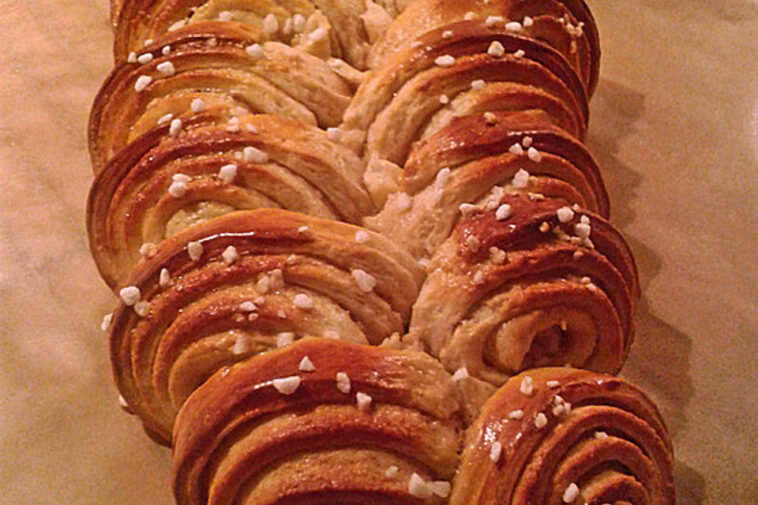
Swedish yeast cake
Combine flour, yeast (I always use dry yeast), sugar, and melted butter in a large bowl and mix. Make sure the yeast only mixes with the sugar and butter while mixing, and not beforehand. The best way to do this is to make a well in the flour and add the sugar and butter to the well. Sprinkle the yeast over the floured surface. Then gradually add the milk until a firm dough forms. If you use too much milk, you can add a little more flour until the dough is no longer sticky. Let the dough rise for 1 hour. Then divide the dough into thirds and roll each out into a 1 cm thick rectangle. Brush the rolled out dough with butter and sprinkle with sugar (you can also sprinkle cinnamon, vanilla sugar, or cardamom on top, depending on your taste). Roll it into a roll and place it on a baking sheet. Grease the baking sheet beforehand or line it with baking paper. Make a deep cut in the top of the roll (but don’t cut all the way through!) and place the pieces alternately on the right and left sides. This laying technique gives the baked plait a very sophisticated look – as if it had been intricately braided. Brush the plait with the beaten egg and sprinkle some sugar on top. Alternatively, you can cut the roll into 1-2 cm thick pieces and bake them as snails. Brush these with egg and sprinkle with sugar before baking. The plait is then baked in a preheated oven at 250°C for about 10-12 minutes (until the plait is lightly browned). I’m always very generous with butter, sugar, and other spices when brushing. This ensures the cake is nice and moist.



Facebook Comments