 John Myers
Ingredients for 4 servings:
- 250 g beluga lentils
- 500 ml water
- 1 cinnamon stick(s)
- 3 garlic cloves
- 5 allspice berries
- 4 bay leaves
- 3 cardamom pods
- 5 carnations
- 1 piece(s) ginger, thumb-thick
- 1 onion(s)
- 400 g tomatoes, chopped
- some butter
- some curry powder
- some paprika powder, hot
- some coriander powder
- some turmeric
- some chili powder
- some cumin powder
- some salt
- 1 tbsp fenugreek seeds
- 150 g rice, as a side dish, to taste
- some crème fraîche as garnish, to taste
Instructions
Working time approx. 30 minutes; Cooking/baking time approx. 2 hours 30 minutes; Total time approx. 3 hours
vegetarian, very aromatic Indian lentil dish, without fresh coriander
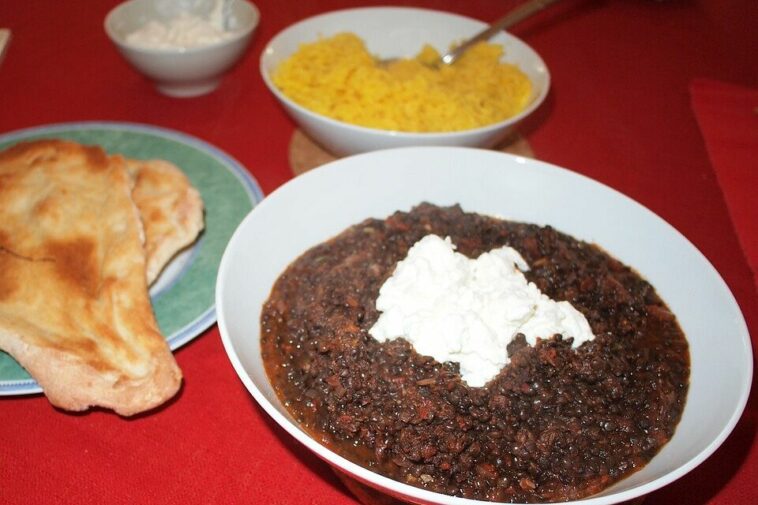
Wash the lentils thoroughly and place them in a medium saucepan with water, a cinnamon stick (break in half), 1 garlic clove (quartered), allspice, bay leaves, 1/2 teaspoon cumin, cardamom pods, and cloves. Bring to a boil briefly, uncovered, then cover and simmer over low heat for about 30-35 minutes. Grind the ginger and remaining garlic through a garlic press into a small mortar and pestle and grind to a paste, but you can also do without a mortar if necessary. Prepare a spice mix of curry powder, paprika, coriander powder, turmeric, cumin, and chili powder to taste. This should make about 1.5 teaspoons total. Dice an onion and sauté it with the spice mix in butter in a pan. When the onion is translucent, add the ginger and garlic paste. Continue to fry everything briefly, but don’t let the garlic become brown and bitter. Then deglaze with the tomatoes and bring to a boil briefly. When all the water has been used up from the lentils, taste them and add a little more if they are still very hard. Adding the tomatoes will soften them later, so it’s okay if they are firm to the bite. Add the tomato mixture to the lentils in the pot. Add the fenugreek. Season with salt and, if desired, add a little more butter. Let everything simmer on low heat for another 1-2 hours. You can serve rice with it; we use basmati rice, which has a lovely yellow color when a little turmeric is added to the cooking water. You can also eat the dal on its own, refined with a dash of crème fraîche.


Facebook Comments