 John Myers
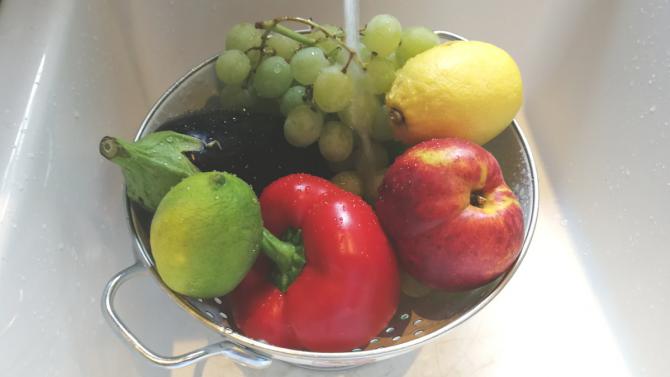
Do you have to wash fruit and vegetables with warm water or is cold water enough? Do you need your own cleaning product or a vegetable brush? What should I do with strawberries and other delicate fruits and lettuce? Is there anything that should definitely not be washed?
There is no fruit or vegetable that should not be washed before eating or processing. This also applies if it has been peeled beforehand and also applies to organic fruit and vegetables.
Adhering dirt, dust or germs can carry part of what is on the outside of the skin inside the fruit when it is cut with a knife.
Cold/lukewarm or even warm water is suitable for cleaning fruit and vegetables, depending on sensitivity. Special cleaning agents or detergents are not necessary.
For larger fruits (e.g. oranges, lemons, apples, cucumbers, peppers) the combination of water and then wiping with a clean cloth can improve the result. Vegetable brushes can also be used for stubborn dirt.
Lettuce leaves often have very fine and delicate leaves. Therefore, they should only be swung around in the water very carefully so as not to destroy the leaf structure. If it is heavily soiled, repeated washing is better than a single wash in plenty of water.
Seedlings and sprouts or pre-washed ready-to-eat salad mixes should always be washed again before use. Bacteria and fungi can multiply quickly, especially in sealed plastic packaging. This is also the reason why ready-to-eat salad packs have a use-by date and not a best-before date. As a precaution, the Federal Institute for Risk Assessment advises people with a weakened immune system against eating raw sprouts and packaged, pre-cut mixed salads.
Sensitive types of fruit such as strawberries should only be cleaned briefly in standing water and not left in the water for longer. Washing under running water is not suitable with a very hard jet of water, as this could damage the fruit.
You can also use the peels of organic oranges or lemons without hesitation after washing them thoroughly with warm water. In organic farming, the use of pesticides during the growth and ripening period is prohibited, as is the preservation of the fruit after harvest. In conventional cultivation of citrus fruits On the other hand, the use of pesticides and preservatives is common. Although the use of skin treatment agents such as tiabendazole or orthophenylphenol must be labeled, the notice is often very small and hidden. A strikingly bright color and shiny skin can indicate conservation. Again and again, citrus fruits from conventional production that are marked as “untreated” can be found on the market. However, this only refers to the treatment of the skins with preservatives after harvesting. It remains unclear which and how many pesticides were used in the period before.
Thorough washing can remove up to 50% of the pesticides – nothing more! In the case of fruit and vegetables, the pesticides are also under the skin.
If you want to avoid pesticides, you should prefer organically grown fruits.


Facebook Comments