 John Myers
Ingredients for 8 servings:
- 6 eggs
- 60 g flour
- 60 g cornstarch
- 2 pinches of baking powder
- 150 g powdered sugar
- 500 ml water
- 150 g sugar
- 100 ml liqueur (Alkermes), alternatively Cointreau or Maraschino
- 700 ml milk
- 1 vanilla pod(s)
- 50 g cornstarch
- 5 egg yolks
- 140 g sugar
- 50 g butter
- 5 egg whites
- 300 g sugar
- 2 oranges or other seasonal fruit for the filling
Instructions
Working time approx. 2 hours; Cooking/baking time approx. 1 hour; Total time approx. 3 hours
Classic dessert with Italian meringue topping
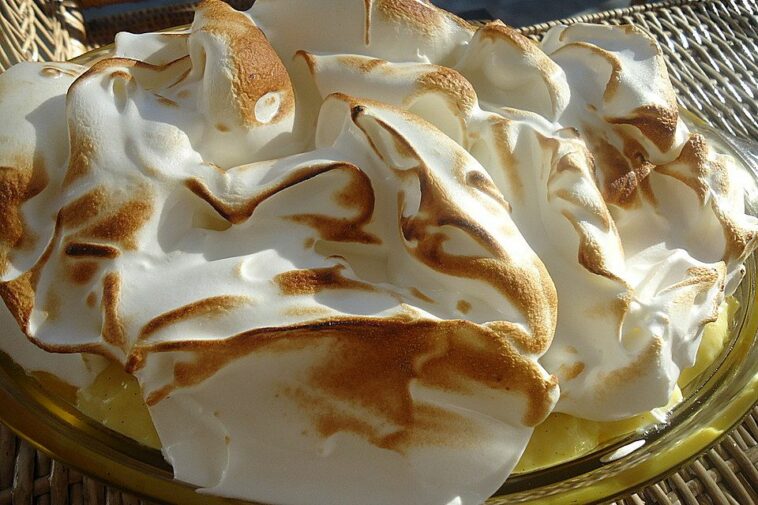
Sponge cake: Separate the eggs and beat the egg yolks with the powdered sugar until frothy. Carefully fold in the flour, cornstarch, and baking powder. Beat the egg whites until stiff and fold in. Line a baking sheet with baking paper and spread the mixture evenly. Dust with powdered sugar and bake in an oven preheated to 200 degrees Celsius for about ten minutes, until the surface begins to brown. Syrup: Bring the water to a boil and dissolve the sugar in it. Once cooled, add the traditional Alkermes or another liqueur. Cream: Scrape out the vanilla pod and bring to a boil along with the seeds in the milk. Beat the egg yolks with the sugar until frothy. Add the cornstarch. Remove the vanilla pod from the milk and bring back to a boil. Mix 100 ml of the hot milk with the beaten egg yolks and pour the resulting mixture back into the remaining milk. Let it bubble several times, stirring constantly with a whisk. Remove from the heat and fold in the butter. Allow to cool slightly and dust the surface with powdered sugar to prevent a skin from forming. Fillet the oranges and cut the fillets into small pieces again. Now cut the sponge cake into the right size for the dish(es). Then soak it in the liqueur syrup. First, spread some cream in the dish, place a sponge cake layer on top, another layer of cream, a sponge cake layer, cream, the fruit, a sponge cake layer, and more cream on top. Meringue: Boil the sugar with a little water until it forms a thick syrup. The sugar content should be at least 35 degrees Baumé. If you don’t have a sugar scale, occasionally drop a drop of the syrup onto a plate to test it. Pick it up with your index finger, press it against your thumb, and pull it apart. In the preliminary stage (33 degrees Baumé), short threads no more than two centimeters long will form between your fingers (small thread). When long threads appear (large thread), you’re ready to go. You can, however, let it simmer for a little longer. The sugar content determines how stiff the meringue will be. Whisk the egg whites until stiff peaks form and add the hot syrup a spoonful at a time or in a thin stream while the mixer is running continuously. Once all the sugar has been used, spread the still-warm meringue on the top layer of the dessert and decorate with a piping bag. If you like, you can light the tips with a Bunsen burner. A time-consuming but also very tasty and visually appealing dessert. One explanation for the name is that it is a variation of English trifles. Other derivations relate to the Italian cook of an English family who is said to have first prepared this dish in Fiesole.



Facebook Comments