 John Myers
Contents
show
Glauber’s salt: What is it actually?
- Glauber’s salt has a more or less strong laxative effect. So that the intestines can regenerate during fasting, it is recommended to clean them beforehand.
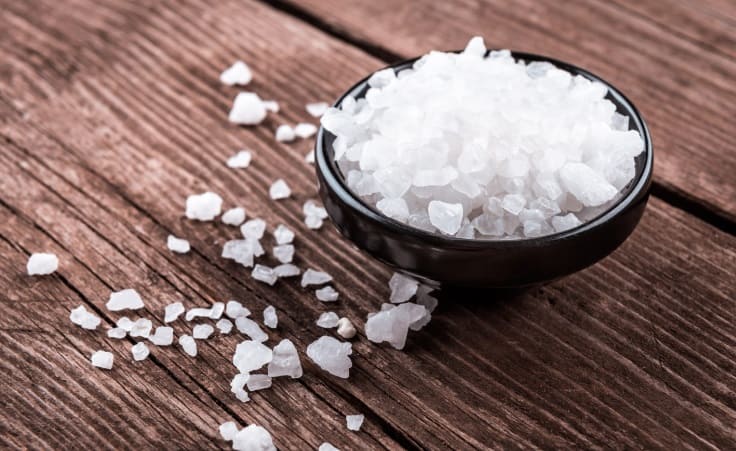
- Sodium sulfate is also called Glauber’s salt after its discoverer Johann Rudolph Glauber. It consists only of common salt and sulfuric acid.
- Compared to an enema, Glauber’s salt offers a much easier way to empty the bowel.
- Alternatively, you can use Epsom salt. This is magnesium sulfate. The effect is pretty similar.
Take Glauber’s salt for fasting: That’s how it works
- Fill a glass with about 200 to 250 milliliters of lukewarm water. Add two to three heaped teaspoons of Glauber’s salt and stir.
- Stir the mixture until the salt has completely dissolved. You can soften the strong taste with a dash of lemon or orange juice.
- Immediately prepare the second glass of water. So you can flush out the taste directly.
- Note: Some package directions recommend up to 40 grams of Glauber’s salt. You need a correspondingly larger amount of water for this. Drink such amounts slowly over a period of about 15 minutes.
Glauber’s salt when fasting: when does the effect occur?
- Everybody reacts differently to Glauber’s salt. Depending on the person and the dosage, the Glauber’s salt works within one to three hours.
- Make sure you’re drinking enough water during this time, as depletion is dehydrating. You should drink around 2 liters of water per day.
- The way to the toilet should not be far either. The urge to have a bowel movement shouldn’t usually surprise you, but you shouldn’t take any major risks.
- If the desired effect does not occur, stimulate your digestion a little. You can also do a small sports unit in the living room. Not drinking enough fluids can also be the cause.
- Not everyone is receptive to Glauber’s salt. People who are overweight need a slightly higher dose, in rare cases even several tablespoons are necessary for the effect to take effect.
Be careful when taking Glauber’s salt
- Glauber’s salt is not suitable for regular use. The natural bowel function is thereby overridden, which can lead to long-term damage with repeated applications.
- If you suffer from low blood pressure, heart failure, or kidney problems, you should not use Glauber’s salt. Glauber’s salt is also not recommended for sensitive stomachs and intestinal tracts.
- For healthy people, Glauber’s salt usually has no side effects. Getting a headache is a sign of dehydration. Drinking a lot is particularly important in this case.


Facebook Comments