 John Myers
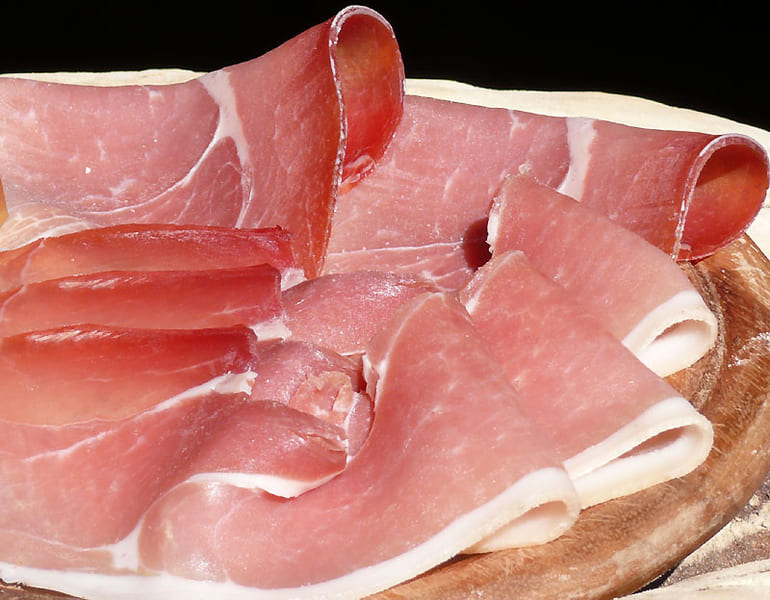
The entire leg of pork including the bone is salted and cured for the delicacy “Holsteiner Katenschinken”, then cold-smoked over resin-free wood for a long time. This creates the typical aroma. The ham then matures for several months before it is sold.
Origin
According to tradition, smoked ham from Holstein began to be known as a specialty as early as the 17th century. He is a North German product from Holstein.
Season
Holsteiner cottage ham is available all year round.
Taste
Holstein cottage ham has a mild, fine, and nutty aroma.
Use
Cold and sliced, Holsteiner Katenschinken is a delicious sandwich topping and is often served with asparagus dishes with various types of vegetables.
Storage
When it comes to shelf life, it is best to follow the information on the packaging or ask the staff at the fresh food counter.
Nutritional value/active ingredients
100 g of this ham contains approx. 128 kcal or 535 kJ, 17 g protein, around 6 g fat, and 0.8 g carbohydrates. In addition, vitamin B1, niacin, vitamin B6 and B12 as well as zinc are contained in significant amounts.
How much does Holsteiner Katenschinken cost?
Naturally mild and very delicate. Boneless and rindless. Sheer gems approx. 700 g – 800 g (100 g = €4.60) .
How is cat ham made?
Holstein Katenschinken is a North German ham specialty from the Schleswig-Holstein region of Holstein. For production, cured ham (pork ham) is smoked in the cottage smoke for up to eight weeks.
What is Katenschinken aus der Pape?
The pape: This piece of Holsteiner cottage ham is also called core ham and consists of an upper and lower shell. The mildest and most tender pieces of Holstein cottage ham are obtained from the pulp. The flower: It is stronger than the Pape and has a mildly spicy taste. The flower is also called nut.
Where does the name katenschinken come from?
It got its name from the small farmhouses in which it was initially smoked over open fires. They were called Katen. A whole pork ham is used for cottage ham. The bones remain in this buttock and only the paw is sawed off.



Facebook Comments