 John Myers
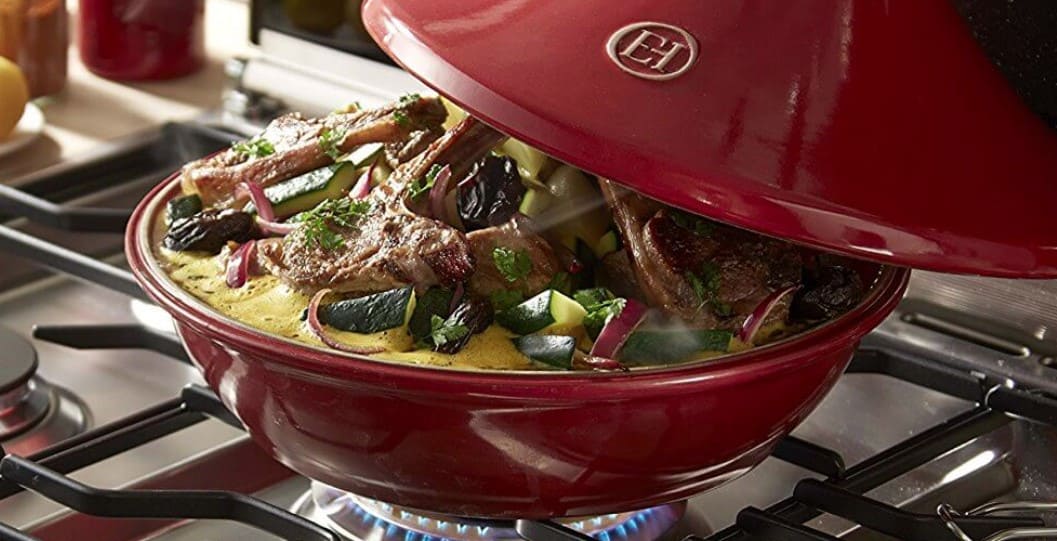
A tajine pot is a casserole made of clay and originally comes from Morocco. It consists of a bowl and a domed or conically shaped lid. The lid has a small depression at the top, which is filled with cold water before cooking. The food in the tagine pot cooks in its own juice at low temperature.
As the food is slowly heated, the liquid in the food evaporates. The steam rises and condenses on the edge and on the trough filled with water. If the food itself does not contain enough liquid, you must add some water. The condensed steam runs back into the bowl and a heat cycle is set in motion. It preserves both nutrients and flavors, so the cooking method in the tagine pot is considered very gentle. In addition, the food should taste better than from a classic metal cooking pot. You also save water and energy with the long cooking time at low temperatures.
You can prepare both savory and sweet meals in the tagine. Put the ingredients that need a longer cooking time in the middle. Drape the ingredients that cook quickly around the edges. Tajines are traditionally heated over a charcoal fire. If they have a smooth base, you can also use them on the stove or in the oven. The casserole should always be heated slowly so that it does not shatter or crack.
Tajines come in both glazed clay and untreated form. For glazed pots, you should follow the manufacturer’s instructions, as they may not be suitable for long stewing. The glaze may contain heavy metals. You have to soak natural tajines for ten minutes before cooking – similar to a Roman pot. Over time, a patina develops in the jar, which acts like a non-stick coating. Do not clean your tajine with washing-up liquid and do not put it in the dishwasher. Rinse them only with a soft sponge, if necessary with lemon water or vinegar. In addition, a tajine pot can be burned out in the oven at high temperatures and thus be freed from dirt.


Facebook Comments