 John Myers
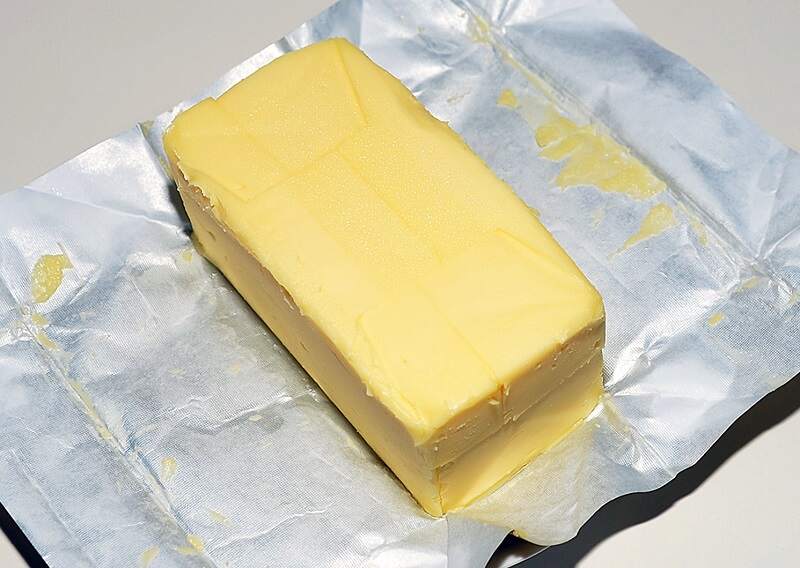
Butter or margarine – which is better? Here you can find out everything about the composition and health properties of butter as well as the differences in quality of different types of butter.
Butter from an ethical point of view
From an ethical point of view, the question “butter or margarine?” answered very quickly: butter is a dairy product – and milk production is associated with discrimination, exploitation and animal cruelty.
From a nutritional point of view, things are not that simple. Let’s first look at the quality, composition, properties and health effects of butter – in part 2 of our comparison you will finally find all the information about margarine.
Butter making – pasteurized only, not homogenized
Butter is made from cream, i.e. the fat in cow’s milk. It takes 20 to 25 liters of cow’s milk to produce 1 kg of butter – an enormous amount. The milk used to make the cream is pasteurized (heated to around 75 degrees Celsius for 15 to 30 seconds to kill potentially harmful microorganisms) but not homogenized.
During homogenization, the milk fats are broken up into tiny particles under high pressure in order to prevent the milk from creaming. Butter can no longer be made from milk treated in this way due to the altered fat structure.
What types of butter are there?
Butter is available in different variations:
- Sweet cream butter: For sweet cream butter, the cream is stored in a cool place (at around 10 degrees Celsius) for 10 to 15 hours before it is made into butter. This gives it a mild, slightly sweet aroma.
- Sour cream butter: With sour cream butter, the cream is mixed with lactic acid bacteria. The bacteria lead to a slight acidification of the cream within 10 hours at around 18 degrees. A butter is then made from the fermented cream, which is considered to be easier to digest and tolerate than sweet cream butter.
- Mildly acidified butter: Mildly acidified butter is intended to save time and money, but at the same time offer the consumer a taste similar to sour cream. You simply knead lactic acid or lactic acid bacteria into the butter after it has been made. There is no fermentation here.
- Reduced fat butter e.g. Semi-Fat Butter: These types of butter are lower in fat than regular butter. Instead, they contain significantly more ingredients to get the texture and taste as butter-like as possible. In addition to butter, the main ingredients are water and buttermilk. Emulsifiers are also required so that the butter combines with the water. Gelatin and modified starch ensure a good consistency. Salt, acidity regulators and flavorings try to mimic the taste of butter, and preservatives – which aren’t needed in real butter – have yet to preserve the mix.
- Raw Milk Butter : Raw milk butter is butter made from unpasteurized raw milk. It is therefore the most natural butter there is. Their vital substance content corresponds to the original vital substance content of the raw cream used. In addition, all enzymes are still intact in the raw milk butter and the fat structure is completely unchanged. It is only available in some delicatessens and organic supermarkets or from the producers directly on site or online.
- Ghee: Ghee is the clarified butter from Ayurveda. In our regions, ghee is also called clarified butter.
Butter for lactose intolerance and milk protein intolerance
Butter contains almost no lactose (0.1 to 1 g per 100 g) and hardly any milk protein (0.9 g per 100 g). Therefore, it is generally well tolerated by people with lactose intolerance as well as by people who are sensitive to the milk protein. However, if you have a severe milk protein allergy (i.e. not just a milk protein intolerance) and already react to traces of protein, you should be careful with butter.
Ghee/clarified butter
Ghee would be an alternative here (if it has to be an animal product). Because ghee or clarified butter is created when butter is boiled and the resulting foam on the surface is skimmed off again and again. In this way, water, protein and lactose are removed. The pure butterfat remains.
Lactose-free butter
Another lactose-free alternative is lactose-free butter, which contains no more than 0.1 g of lactose (milk sugar) per 100 g of butter. The lactose is first removed from the milk. They are treated with the enzyme lactase. This splits the lactose into the two simple sugars glucose and galactose – and the milk becomes lactose-free. Now lactose-free dairy products can be made from this milk, and so can lactose-free butter.
However, the enzymes used are mostly genetically modified. Although they are no longer active in the end product, those who are critical of genetic engineering may prefer to use a purely vegetable fat that is automatically lactose-free and milk protein-free. But remember that margarine is not always purely plant-based. Milk components can also be processed here, so you should pay attention to the list of ingredients.
When it comes to butter, however, cholesterol is much more frequently discussed than lactose or milk protein. Butter is one of the top cholesterol-rich foods.
Butter provides a lot of cholesterol
100 g butter contains approx. 220 mg cholesterol. In 100 g ghee even 340 mg cholesterol. These values are only exceeded by the egg yolk, which provides over 1000 mg of cholesterol per 100 g, by innards (liver and kidney), caviar and products containing eggs such as biscuits, hollandaise sauce and mayonnaise.
But we now know that the cholesterol content of the diet does not necessarily lead to an increased blood cholesterol level. Here it is more about the overall diet and lifestyle (exercise, stress, etc.).
Butter causes heart disease?
And even if butter raised cholesterol levels, that wouldn’t necessarily be a cause for concern. Because high cholesterol doesn’t necessarily lead to an increased risk of cardiovascular disease — as was believed for years.
This should only be the case for those people whose LDL cholesterol is in small, dense particles. LDL cholesterol is commonly considered “bad” cholesterol. However, it is only bad if the particles are small and dense. It is quite unproblematic when it is present in large particles – and that is exactly what it is in the majority of people.
These details are rarely considered when prescribing cholesterol-lowering drugs (statins). And so many people swallow medicines that they do not need and which also expose them to the risk of extremely unpleasant side effects.
Butter and its saturated fatty acids
However, not only cholesterol is considered a risk factor for heart disease, but also the saturated fatty acids in butter.
These should also increase the cholesterol level in the blood (the triglyceride level of course anyway). This may be the case if you regard butter as a staple food and live largely on butter. However, when butter is consumed in normal amounts (15 to 30g per day), cholesterol levels don’t matter much.
Butter is about 50 percent saturated fat:
- The saturated fatty acids are in turn made up of almost 10 percent short and medium-chain fatty acids (butyric acid, caprylic acid, lauric acid, etc.), which are very easy to digest and have health benefits (see below under “Butter – anti-inflammatory and good for the intestines “).
- Of the long-chain saturated fatty acids, myristic acid can even improve the cholesterol quotient (ratio of good HDL to bad LDL cholesterol) – and it is precisely this quotient that should matter much more if you want to assess the cardiovascular risk than the level of cholesterol.
- Another long-chain fatty acid found in butter is palmitic acid. It is said to be the only one that increases LDL cholesterol slightly more than HDL cholesterol. So maybe it would be a problem if you only ingested this fatty acid. But you don’t do that. One eats the butter and with it a complete food, which consists of many different fatty acids, which influence each other in their effects.
Therefore, studies show time and time again: Saturated fats do not make you sick. For example, an international review from 2016, which evaluated nine studies with data from 15 different countries, came to the following conclusions:
- There is little association between butter consumption and all-cause mortality.
- There is no significant association between butter consumption and cardiovascular disease, coronary artery disease, or stroke.
- The risk of diabetes even decreases when you eat butter.
Another 25 percent of the fatty acids in butter consist of monounsaturated fatty acids, which are known from olive oil. Polyunsaturated fatty acids make up a good 3 percent (omega-3 and omega-6 fatty acids).
Butter contains trans fats
However, like margarine, butter contains trans fats: up to 3 g per 100 g. At a serving of 15-30g per day, this would equate to 0.45-0.9g of trans fat, with the official recommendation being no more than 2g total trans fat per day.
If you eat mainly confectionery, ready-made baked goods and fried foods, it is of course not unlikely that you will exceed this value. However, if you eat a healthy diet and like to eat a little butter every now and then, the trans fats in butter should have little effect.
In addition, the trans fatty acids in butter are produced naturally during digestion in the rumen of cows – industrial trans fatty acids, such as those found in margarine, on the other hand, have a different structure and are therefore said to have a negative effect on health.
The butter production

The vitamins and minerals of butter
Butter is often described as the purest cornucopia of vitamins and minerals, but this does not correspond to reality.
Butter: A Good Source of Minerals?
Butter can only provide tiny traces of minerals and is therefore not one of the relevant sources of minerals in human nutrition.
A 20 g serving of butter contains e.g.:
- 2.6 mg calcium (daily requirement 1000 mg),
- 0.6 mg magnesium (daily requirement 350 mg),
- 0.05 mg zinc (daily requirement 8.5 mg) and
- almost no iron at all.
You can see that these low values cannot make a helpful contribution to covering the mineral requirement. How about the vitamins?
Butter: A Good Source of Vitamin A?
A 20 g serving of butter contains around 130 µg of vitamin A. This is a relevant amount, especially since the daily requirement is 900 µg. With vegetables, however, you get ahead faster: 100 g of cooked carrots already provide a multiple of vitamin A, namely 1340 µg, which the organism can produce from the beta carotene it contains. Butter is therefore a nice extra for the vitamin A supply, but not absolutely necessary.
Butter: A Good Source of Vitamin D?
Butter is often mentioned in the same breath as vitamin D. Butter contains about 1 µg of vitamin D per 100 g. The official daily requirement is 20 µg vitamin D for adults, but many experts now estimate it to be much higher: Vitamin D: daily dose was a calculation error.
A daily portion of butter of 30 g, which is really quite large, supplies 0.3 µg of vitamin D, which is not worth mentioning. So, butter is NOT a good source of vitamin D.
Butter: A Good Source Of Vitamin B?
On many pages, butter is even praised as a good source of B vitamins. If you look at the corresponding nutritional value tables, you will find that the B vitamins in butter are only contained in completely inconspicuous traces.
With nutritional tables, always remember that the information relates to 100 g, but you will usually eat a maximum of 15 to 30 g of butter per day. Vitamin B12 is even often given as 0.0 µg in butter, sometimes as 0.2 µg, which corresponds to 0.04 µg per 15 g portion and does not really make a difference with a requirement of 4 µg.
Butter: A Good Source of Vitamin K?
Butter is also said to be a wonderful source of vitamin K — but it only contains 7 mcg of vitamin K per 100g ( 13 ). Far better sources of vitamin K are broccoli (130 µg of vitamin K in cooked broccoli) and spinach (350 µg of vitamin K in cooked spinach). Of these two foods, one can easily consume 100g or even more, while no human eats 100g of butter per day.
It must also be noted that the vitamin K levels in butter vary depending on the quality of the butter. Organic butter from pasture-raised cows provides significantly more vitamin K than butter from conventionally raised cows.
It is not necessary to consume animal-based vitamin K2, since vitamin K1 from plant-based foods can be converted by the body to vitamin K2 in very large amounts and as required.
Butter – anti-inflammatory and good for the gut?
Nutrients are therefore only contained in minimal amounts in the butter. Nevertheless, it is suspected that butter can have a positive effect on chronic diseases thanks to a certain fatty acid – butyric acid. About 3 to 4 percent of butterfat is made up of this fatty acid.
Butyric acid is a saturated fatty acid, i.e. a representative of the fatty acid group that has a bad reputation. However, as we explained above, saturated fat is not bad for your health. Perhaps this is also due to the positive effect of butyric acid.
Butyric acid against chronic inflammation
One of the main causes of most chronic diseases are chronic inflammatory processes. These can put a strain on the organism for decades without the person concerned noticing it too much.
The consequences can be arteriosclerosis, heart attack and stroke. But diabetes, autoimmune diseases, joint problems, chronic inflammatory bowel diseases and many other diseases are also associated with chronic inflammation.
When the intestinal bacteria of the intestinal flora metabolize fiber, butyric acid is produced, among other things – and this is exactly what is said to have an anti-inflammatory effect. When you eat butter, you ingest the butyric acid directly. The intestinal flora does not have to produce it from fiber. Nonetheless, fiber intake is beneficial for health as it helps the digestive system stay healthy in many other ways.
Butyric acid helps to regenerate the intestinal mucosa
On the one hand, butyric acid has an anti-inflammatory effect on the intestinal mucosa. On the other hand, butyric acid is also used as an energy source by the cells of the intestinal mucosa. At the same time, it regulates the formation and breakdown of the intestinal mucosa and ensures that the so-called tight junctions remain intact.
Tight junctions are the connections between the intestinal mucosa cells that prevent bacteria, toxins or incompletely digested particles from passing through the intestinal mucosa and entering the bloodstream. If the tight junctions are damaged, this is referred to as leaky gut syndrome , which can be the cause of many chronic diseases.
Butyric acid actively helps in the regeneration of a diseased intestinal mucosa – and not “only” in leaky gut syndrome, but also in chronic inflammatory bowel diseases such as Crohn’s disease or ulcerative colitis. It is known that the intestines of people affected by Crohn’s disease sometimes contain only half the usual concentration of butyric acid.
Butyric acid doesn’t make you fat
Like all short and medium-chain fatty acids, butyric acid is also extremely easy to digest. It is very easily soluble in water and can be absorbed directly into the bloodstream – without going through the lymph , as is the case with long-chain fatty acids – and used there by the body’s cells as an energy source. Short-chain fatty acids are therefore not stored in the fat depots, but rather burned directly – much like carbohydrates.
Butter: A Good Source of Omega-3 Fatty Acids?
Omega-3 fatty acids are also considered anti-inflammatory. Butter contains varying amounts of it, depending on how the cows are kept and fed. Organic butter contains significantly more omega-3 fatty acids than conventional butter, but the differences are small.
However, butter contains hardly any of the long-chain omega-3 fatty acids DHA and EPA, which are otherwise found in animal foods such as fish and eggs. Butter mainly contains the short-chain alpha-linolenic acid, which many people already know from linseed, rapeseed or hemp oil, i.e. actually from vegetable oils.
Alpha-linolenic acid has anti-inflammatory properties and has beneficial effects on many chronic diseases. It also protects the nerves and regulates the immune system. The need for alpha-linolenic acid is 1200 to 2000 mg per day. A 15 g portion of butter contains between 60 and 150 mg of alpha-linolenic acid – depending on quality and cow husbandry.
The omega-6-omega-3 ratio of butter also depends on the quality. It varies between 1.5:1 and 3.2:1 (optimal would be 4:1 to 6:1). Organic butter often has the best ratio, conventional butter (not always, but often) the worst.
Due to the low omega-3 amounts, butter is only suitable for supporting the supply of this fatty acid. It is therefore not possible to use the butter to cover the omega-3 requirement. You would have to eat more than 100g of organic butter a day.
Much more reliable sources of omega-3 are flaxseed oil and hemp oil . A tablespoon of linseed oil already provides 6000 mg of alpha-linolenic acid, a tablespoon of hemp oil 2000 mg.
Butter for rheumatism?
However, butter also contains pro-inflammatory arachidonic acid, an omega-6 fatty acid found only in animal foods. The butter contains 22 mg of arachidonic acid per 20 g serving.
This is very little compared to lard, which provides 340 mg per 20 g. Anyone who eats pork also takes 240 mg of arachidonic acid with 200 g, and 40 g of liver sausage provide almost 100 mg of the pro-inflammatory fatty acid.
A vegetarian who suffers from rheumatism can therefore eat butter with peace of mind, since the small amounts of arachidonic acid will not have any negative effects here, especially since plenty of omega-3 fatty acids are also ingested through other foods (linseed oil, hemp oil, linseed, hemp seed , chia seeds , dietary supplements, etc.) – and omega-3 fatty acids compensate for a possible harmful effect of arachidonic acid.
Butter – yes or no?
Butter is definitely not a superfood and it is not a recommended food from an ethical point of view. From a health point of view, however, the butter is not harmful – at least not if a high-quality butter is chosen. However, it can become a problem if you eat it in large amounts (which is the case with any food).
So if you live only on bread and butter or plenty of buttercream cakes, buttery cakes and shortbread, then the butter calories would soon burst your waistband. But if you use butter in manageable amounts (maximum 30 g per day), e.g. as a spread (15 g) and now and then a spoonful (15 g) to refine vegetables or potato dishes, does not get into the embarrassment of eating too much butter.
As with any food, there are differences in the quality of butter. How the cows are kept and fed has a serious influence on the quality of the butter: it is known that butter from cows that receive grass and hay or are kept on pasture has higher vitamin K levels and a more favorable fatty acid pattern (more omega-3 -fatty acids, better omega-6-omega-3 ratio) than butter from cows that have to live mainly on soy and corn in the barn. In addition, the butter from organic cows also has a higher beta-carotene content.
Golden yellow butter: Beta carotene is usually added
Beta- carotene is a phytochemical with an antioxidant effect that gives the butter a beautiful golden yellow color. However, in order to pretend to the consumer that he has bought a particularly high-quality butter, many types of butter are now colored with beta-carotene.
Either you add the beta-carotene to the soy-corn mixture that the cows eat, or you color the cream with the beta-carotene before making it into butter. A yellow butter is therefore not an indication of whether the butter comes from grass-fed farming or not.
Of course, pictures of romantic alpine pastures on the butter pack have no deeper meaning (they are only intended to boost sales, so they are window dressing). Most of the cows involved in the production of the butter in question have never seen a meadow in their lives.
When you shop for butter, choose the best
Anyone who wants to eat butter should therefore pay particular attention to buying butter from organic farming – even if it is significantly more expensive than conventional cheap products. Here the cows at least get enough green fodder, which ultimately makes the butter more valuable.
Butter brands from Demeter and organic farming are recommended. You have fewer guarantees if you buy organic butter from the discounter. Because this butter only has to meet the minimum criteria of organic farming, while the farming associations Demeter, Bioland, Naturland and others make much stricter demands on their farmers, which is then noticeable in the quality of the food.
Decide between sweet cream and sour cream butter. Mildly acidified butter is not recommended for the reasons mentioned above, nor are reduced-fat butters.



Facebook Comments