 John Myers
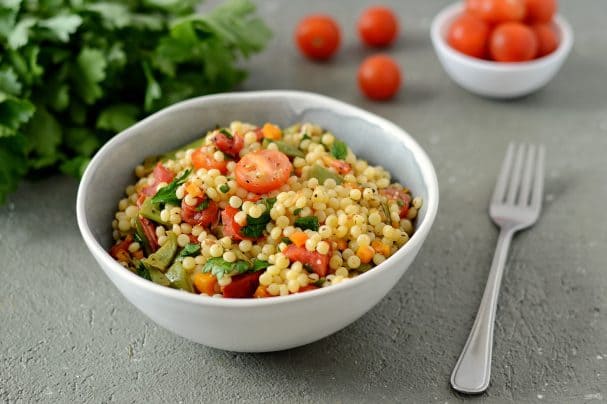
Couscous is considered healthy: on the one hand, it contains valuable dietary fiber and, on the other hand, significantly more protein than potatoes, for example. When it comes to energy content, couscous performs (slightly) better than pasta: it has around 112 calories per 100 g. Or: The energy content of couscous is lower than that of pasta.
What is couscous made of?
Wheat is used as the basis for production. To make couscous, durum wheat semolina is mixed with salt water and then rubbed intensively. This is how the small balls are formed, which then dry until they get the characteristic hard, slightly rough structure.
At the same time, there are variants made from barley, spelt, buckwheat or millet. Wholemeal couscous is particularly nutritious because it supplies the body with carbohydrates and energy more slowly and constantly. In addition, it fills you up effectively and in the long term thanks to its high fiber content. Our experts know what to look out for when preparing couscous and bulgur.
Prepare and season couscous
Since it is high in carbohydrates but low in fat at the same time, couscous can be suitable for weight loss nutrition – especially in the whole grain version. It is best to mix the small grains with fresh vegetables and, depending on your taste, with intensive spices such as cumin, coriander, or allspice. Cinnamon is also an option. Also add fresh herbs like parsley, maybe some pomegranate, and lemon juice.
So you can make couscous dishes varied and low in fat. The same applies to our couscous salad, as well as our couscous pan with broccoli, provided you omit the sour cream dip or replace it with a light yoghurt sauce. A variant made from soy or oat drink is also an option if you are vegan. Basically, couscous is an excellent food if you want to avoid animal products. Because the small grains serve as a wonderful source of protein alongside legumes, broccoli, and spinach.



Facebook Comments