 John Myers
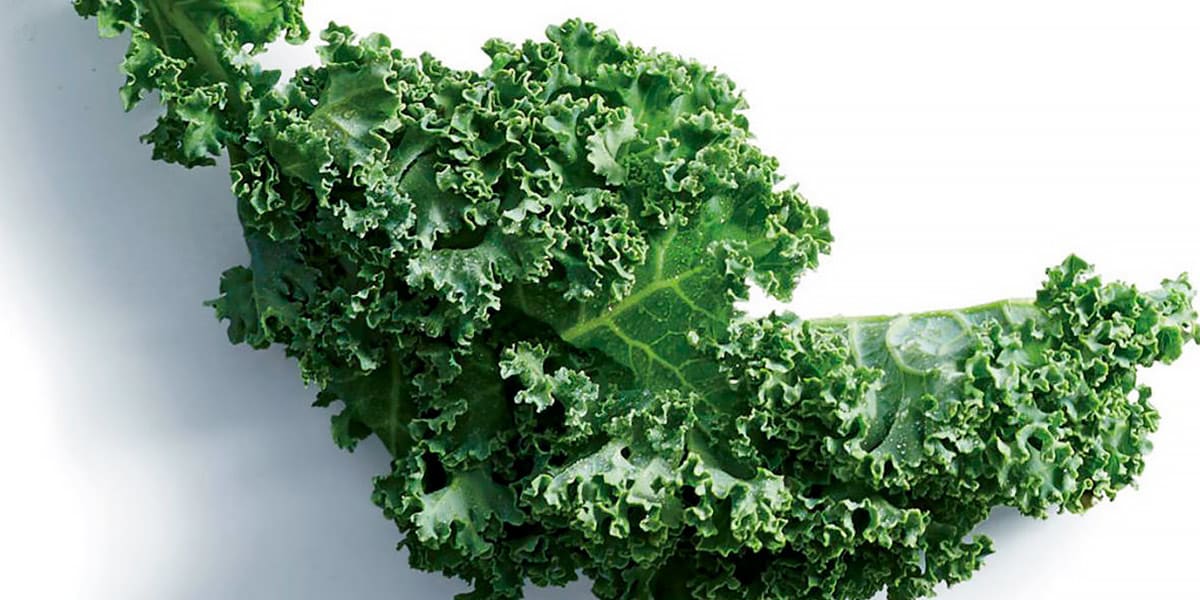
Also known as brown cabbage, Krauskohl, or Oldenburg palm, kale is a leafy cabbage that grows on thin, woody stalks. Kale tastes best when it has had a frost just before harvest. Then it converts its starch into sugar. The result: it tastes milder and is easier to digest. In contrast to other types of cabbage, kale does not form heads, but an open rosette of leaves. Depending on the variety, the leaves are more or less ruffled and are light green in early varieties and dark green to blue-green in late varieties.
Origin
The origin of cabbage is probably Greece. From there it made its way to Italy as a delicacy. Today, kale is grown in Central and Western Europe, North America, and East and West Africa.
Season
Kale is available from late September to early March.
Taste
The taste of kale is pleasantly spicy and sweetish-tart.
Use
The vegetables are cleaned (without the stalk and stripped of the leaf veins) and offered as a whole plant. The strong cabbage is particularly suitable for hearty preparations. It tastes good braised with lard, with cured or smoked meat or with boiled sausages as an ingredient; Kale with pinkel is a traditional dish from northern Germany. And the vegetables are also excellent in our kale stew. Today, briefly blanched kale is also often eaten in salads.
Storage
Unwashed kale will keep in the vegetable compartment of the refrigerator for about 2 days. At temperatures around 2 °C even up to 5 days.
What is kale good for?
Kale is a nutrition superstar due to the amounts of vitamins A, K, B6 and C, calcium, potassium, copper and manganese it contains. One cup of raw kale has just 33 calories and only 7 grams of carbohydrate. So, it’s a very diabetes-friendly/weight-friendly vegetable.
Is it better to eat kale raw or cooked?
To benefit most from all that kale has to offer, it’s best consumed raw since cooking can reduce its nutrient profile ( 4 ). Kale is rich in minerals, antioxidants and vitamins, particularly vitamins A, C and K. To reap the most benefits, it’s best eaten raw, as cooking reduces the nutritional profile of the vegetable.
Which is healthier spinach or kale?
The Bottom Line. Kale and spinach are highly nutritious and associated with several benefits. While kale offers more than twice the amount of vitamin C as spinach, spinach provides more folate and vitamins A and K. Both are linked to improved heart health, increased weight loss, and protection against disease.
Is kale the healthiest food?
Of all the super healthy greens, kale is king. It is definitely one of the healthiest and most nutritious plant foods in existence. Kale is loaded with all sorts of beneficial compounds, some of which have powerful medicinal properties.
Will kale make you poop?
Kale is more than a food trend, it’s also one of nature’s best natural laxatives. Dark leafy greens like kale, collards, Swiss chard, and spinach contain magnesium, a mineral that helps soften stools, making them easier to pass.
Can I eat kale everyday?
Manganiello says you can eat kale every day, just don’t overdo it. She recommends one to two servings maximum of kale per day, leaving room for other healthy foods that provide an assortment of nutrients.


Facebook Comments