 John Myers
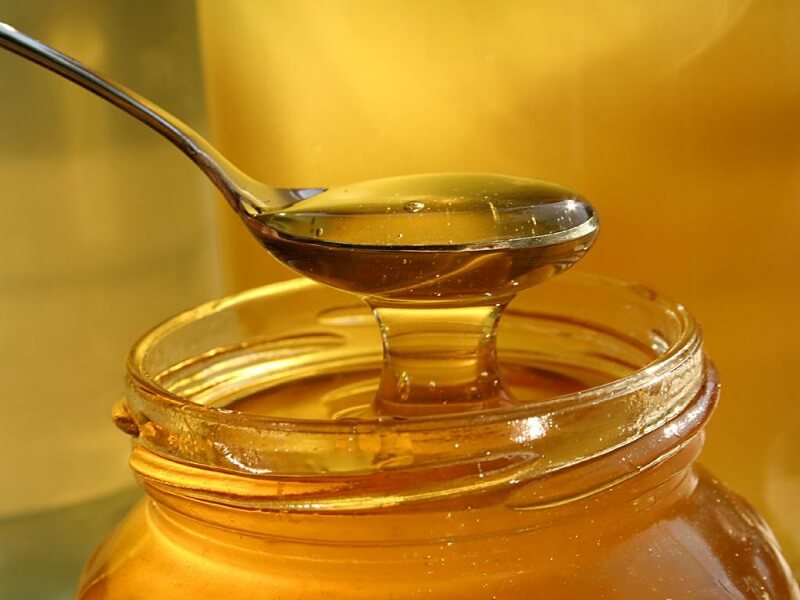
I’ve been buying my honey from a beekeeper in Munich for some time now. The honey I get there is relatively light in color, completely clear, transparent and not stirred. It’s probably blossom honey. I find that even after storing it for a long time, it doesn’t set.
Is it possible that blossom honey, without treating it separately, does not candy? Or are there ways to treat blossom honey so that it does not candy without losing its original ingredients?
The so-called tendency of honey to crystallize is not related to the quality, but is a characteristic of each individual honey.
It depends on the ratio of the individual types of sugar.
The main types of sugar in honey are fructose and glucose. The higher the fructose content of a type of honey, the longer this honey remains liquid.
In spring, when rapeseed, dandelion etc. are in bloom, honey with a higher proportion of glucose is usually produced. These crystallize after just a few days and are therefore only offered stirred. Stirring the honey creates a homogeneous, finely crystalline consistency.
Liquid honey is made, for example, from the nectar of the black locust (acacia tree). It could be that the honey you describe contains a fairly high proportion of it. Due to the high fructose content, it can take many months before the honey begins to crystallize.
In Munich, for example, there are many robinias on Gärtnerplatz. Certainly there are still some of these trees in other places in the city.
But even in summer, the bees often bring in nectar that has a high proportion of fructose, so that the honey stays liquid longer. You will then usually find the term “summer costume” on the label.
For an exact variety designation of the honey, the pollen contained in it would have to be analyzed by a laboratory. However, this is usually too much effort for smaller beekeepers.
Sooner or later, however, all honey crystallizes. To liquefy honey that has solidified again, you can slowly heat the jar in a water bath at a maximum of 40 degrees Celsius. Afterwards you have a liquid honey again for a certain time. But this one will also become solid again.
The honey should not be heated above 40 degrees Celsius, as valuable ingredients are then lost.
The industry and some large beekeepers specifically produce honey mixtures from different types of honey so that the consistency, color and taste always remain the same as possible. Many customers always want the same product.
The best way to find out exactly what kind of honey you get from your beekeeper is to ask them directly. Most beekeepers are happy to provide information about their honey and are happy about the interest.

Facebook Comments