 John Myers
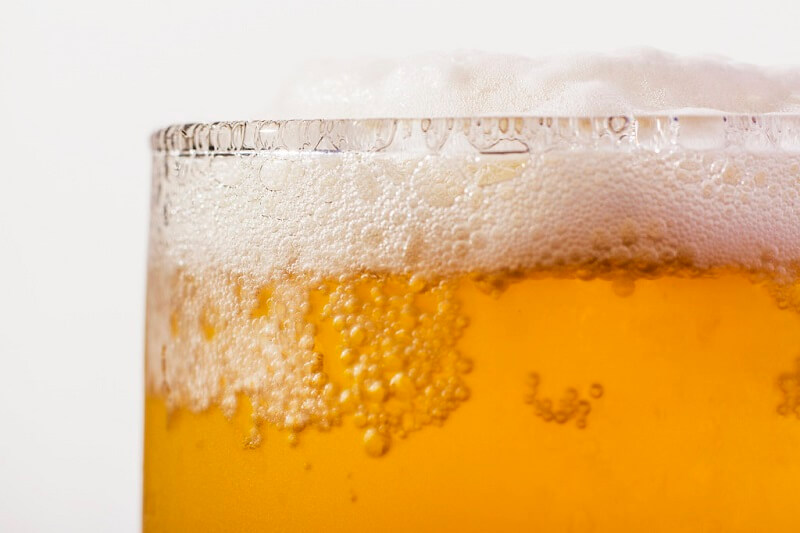
I’m interested in why non-alcoholic beers always contain so much sugar? And how exactly are they made?
There are three different ways to produce non-alcoholic beer. In order to understand them better, we would like to make a small digression and briefly explain the brewing process of “normal” beer.
According to the German Purity Law, only malt, hops, water and yeast may be used for beer.
To obtain malt, the grain is soaked in water and allowed to germinate. It is then dried and the seedling removed. The remaining malt is crushed. This malting step is important because during germination, enzymes are formed and activated in the grain, which break down part of the starch into smaller molecules, primarily into the disaccharide maltose.
Malt and water are now mixed (mash) and heated while stirring. Starch and sugar dissolve out. After filtering, the so-called wort is created, which is boiled together with the hops. This brew is separated from the coagulated albumen and other remaining solids.
From here the manufacturing processes go different ways.
For “normal” beer, the brew is cooled to the appropriate fermentation temperature and yeast is added. This converts the sugar it contains into alcohol and carbon dioxide. After several weeks of fermentation, the yeast is removed and the beer is stored. During this time, the remaining sugars are converted into alcohol. The beer is then either bottled directly or filtered. “Normal” beer does not contain any sugar.
There are physical and biological processes for the production of non-alcoholic beer:
- In the physical process, the alcohol is removed after brewing in different ways. It is either filtered off by special membranes or evaporated by distillation in a vacuum. Carbon dioxide and flavorings can be lost in the process. The latter can be partly caught and added again. Such beers contain little or no sugar.
- In the biological process, the formation of alcohol is suppressed during fermentation so that hardly any alcohol can be produced. For this purpose, the brew is cooled, for example, so that it ferments more slowly or the fermentation is stopped. There are also special yeast strains that cannot utilize the malt sugar. These non-alcoholic beers end up tasting sweeter because some of the malt sugar is still included.
The label usually does not show which method was used. But at least you can use the nutritional information to compare the sugar content of the different suppliers.
Some manufacturers explain on their website how they make their non-alcoholic beer.


Facebook Comments