 John Myers
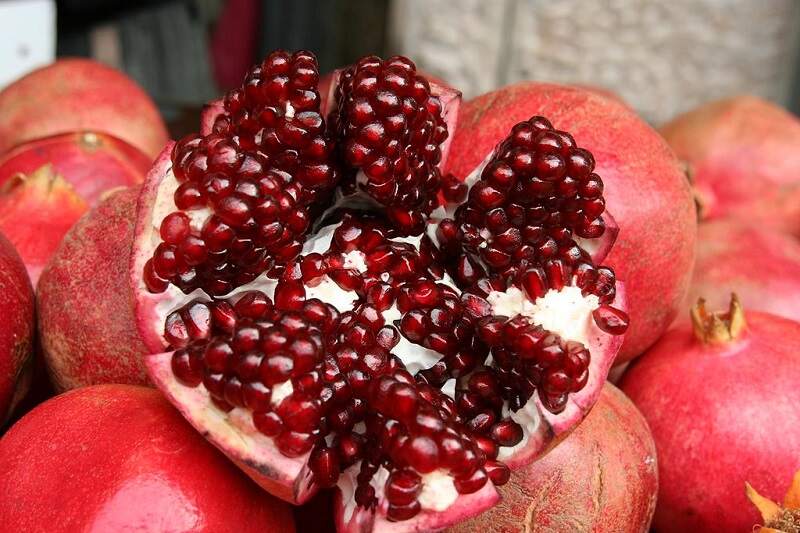
A pomegranate has few calories. In this guide, we will tell you what information you should know about the fruit.
Calories and nutritional values of a pomegranate at a glance
A standard pomegranate usually has around 124 kilocalories and is therefore extremely low in calories. There are around 75 to 80 calories per 100 grams. Important to know: Only the pomegranate seeds are edible. And they really pack a punch when it comes to nutritional values (per 100 grams):
- The pomegranate consists of around 1.7 grams of proteins.
- The pomegranate has around 1.2 grams of fat.
- The proportion of carbohydrates is about 19 grams.
- The fiber comes to around 2.2 grams.
- The pomegranate contains about 79 grams of water.
Pomegranates are rich in vitamins
The special thing is that the exotic fruit also has a lot to offer in terms of vitamins and is therefore often referred to as a superfood. Among other things, it also contains many components that benefit the immune system, but also the skin. However, it is also worth consuming pomegranates during pregnancy because, according to a study, they are said to have a positive effect on the baby’s brain development. The following vitamins and minerals are contained in each 100 grams of the fruit:
- The vitamin C content is around 7 milligrams (mg).
- Vitamin A (approx. 0.01 mg) and vitamin E (approx. 0.2 mg) are also included.
- There are also various B vitamins: vitamin B1 (approx. 0.05 mg), vitamin B2 (approx. 0.02 mg) and vitamin B6 (approx. 0.1 mg).
- The iron content is around 0.5 milligrams, while zinc is present at around 0.3 milligrams and magnesium at around three milligrams.
- Pomegranates also contain potassium (approx. 290 mg), phosphorus (approx. 17 mg) and calcium (approx. 8 mg).
- Also included are salt (approx. 0.02 g), chlorine (approx. 40 mg), manganese (approx. 0.1 mg) as well as sulfur (approx. 15 mg), copper (approx. 0.1 mg) and fluorine (about 0.02 mg).



Facebook Comments