 John Myers
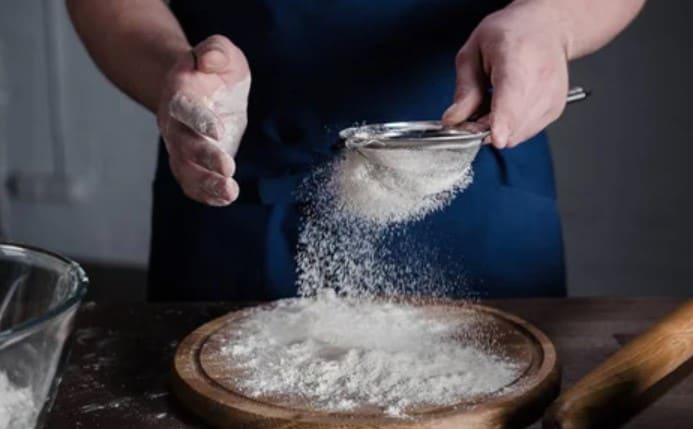
According to old kitchen wisdom, flour for many baking recipes must be finely sifted before it is added to the dough. But does it really make sense to sift flour? The short answer to that is a resounding no.
Anyone who thinks that sifted flour makes for a particularly fluffy and airy dough and extra soft pastries is wrong. The raising agent used is responsible for the loose rising of the dough. Whether the baking powder is baking soda and vinegar, cream of tartar, yeast, or sourdough depends on the recipe.
The myth probably dates back to grandmother’s times, when impurities, uncleanly ground grains, and bugs in the flour were not uncommon. Anyone who finds mealworms or food moths in the flour these days should better dispose of the flour. If stored properly, flour can in principle be kept almost indefinitely. Find out more about whether flour can spoil in our food knowledge guide.
Back then, when flour was still bought in advance, it made sense and was necessary to sift the flour to keep unwanted impurities out of the cake or bread dough. Modern grain mills already sift the flour several times during the grinding process, regardless of whether it is wholemeal flour or white flour and regardless of the degree of grinding. Flour is the smallest comminution level of the mill and is defined as smaller than 150 µm. So there are no longer coarser particles in the flour.
Sieving also doesn’t help prevent the dough from clumping. When kneading or stirring, slightly clumped flour parts dissolve very quickly anyway.
Versatile ingredient flour
Flour is a very versatile ingredient in the kitchen. Whether for thickening sauces as roux, for baking hearty bread, pizza or tarte flambée, or for sweet pastries and fluffy soufflés, ground grain has a permanent place in the kitchen. We have put together a selection of recipes with flour for you. There are extra recipes for wheat, rye, spelled, and wholemeal flour, let yourself be inspired.
Tip: As an alternative, try baking with coconut flour! The ground coconut is ideal for sweet pastries and delicious treats and brings a whole new taste to tried and tested baking recipes.



Facebook Comments