 John Myers
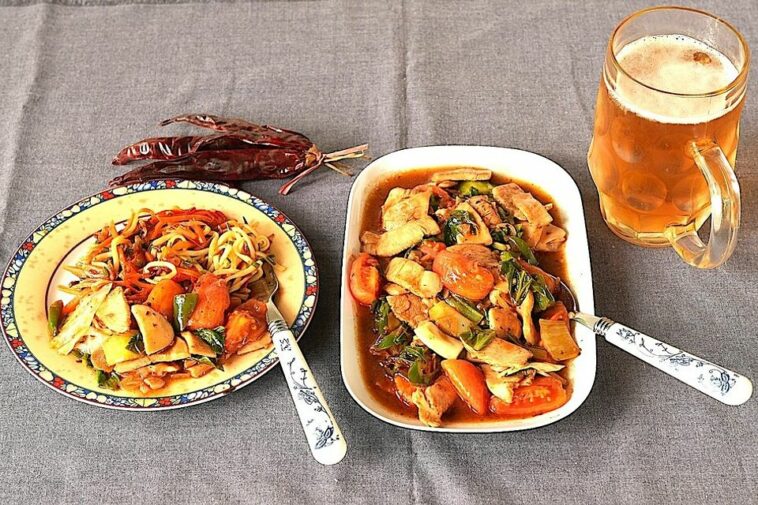
Ingredients for 2 servings:
- 200 g chicken breast, without skin and bones, frozen
- 1 tbsp light soy sauce
- 1 tsp oyster sauce
- ½ tsp sugar, fine
- 1 tsp lemon juice
- 2 tsp tapioca flour
- 2 tbsp sunflower oil
- 30 g onion(s), red, small
- 10 g garlic clove(s)
- 15 g ginger
- 1 small Thai chili pepper(s), green
- 1 m.-large pak choi
- 2 leaves of white cabbage
- 180 g tomatoes (approx. 4)
- 2 tbsp sunflower oil
- 30 g carrot(s)
- 40 g celery leaves
- 350 g water
- 6 g chicken stock powder
- 120 g Chinese egg noodles (Linguine type)
- 1 tbsp sesame oil, dark
- 50 g cooking water (pasta)
- 30 g tomato juice
- 1 tbsp light soy sauce
- 1 tbsp sautéed oregano
- ½ tsp tapioca flour
- 1 tbsp rice wine, clear
Instructions
Working time approx. 30 minutes; Cooking/baking time approx. 15 minutes; Total time approx. 45 minutes
A dish that’s not just visually appealing. Recipe from Hunan, China
Cut the thawed chicken breast across the grain into approximately 3 mm thin slices (use a bread and sausage slicer if possible). Cut the slices crosswise into thirds. Mix all of the marinade ingredients until smooth and marinate the meat until ready to use. Then strain and drain well. Peel and finely chop the onions, garlic cloves, and ginger. Cut the washed chili pepper crosswise into thin slices, leaving the seeds and discarding the stem. Remove the leaves from the rinsed bok choy and cut the white part crosswise into approximately 2 cm wide pieces. Quarter the green part lengthwise and cut crosswise into approximately 3 cm pieces. Keep them separate. For the white cabbage, use only unblemished leaves; remove the appropriate number of leaves, rinse, clean, and remove the midrib. If the midrib doesn’t taste bitter, cut it crosswise into approximately 2 cm long pieces and keep them aside along with the white bok choy pieces. Cut the leaves into pieces approximately 2 x 3 cm in size. Wash the tomatoes, remove the stems, peel them, quarter them lengthwise, and remove the green and white stem end. From the top of a washed and peeled carrot, shave thin threads diagonally. Rinse the fresh celery stalks, shake them dry, and remove the leaves. Trim the bottom of the stalks and then cut them crosswise into rolls. Freeze any unused rolls and leaves separately. Bring the water for the pasta to a boil and dissolve the chicken stock powder in it. Add the carrot threads, celery rolls, and the noodles. Cook the noodles al dente according to the package instructions. Strain, reserving the noodles, mixed vegetables, and stock. Mix all the ingredients for the sauce together and keep them on hand. Mix well before use. Heat a wok until very hot, add 2 tablespoons of the sunflower oil, and heat until hot. Add the drained chicken pieces and stir-fry for 1 minute. Remove from the wok with a slotted spoon and keep warm. Add the remaining 2 tablespoons of sunflower oil and heat until hot. Add the onions, garlic cloves, ginger, and chili and stir-fry for 1 minute. Add the white bok choy pieces with the white cabbage ribs and stir-fry for a minute. Then mix in the tomatoes and white cabbage leaves and stir-fry for 2 minutes. Deglaze with the sauce. Reduce the heat and simmer for 2 minutes, then transfer to a serving dish along with the chicken pieces. Reserve some of the sauce in the wok. Add the colored noodles to the wok and stir-fry until they have absorbed the sauce. Drizzle the sesame oil over the noodles and divide the noodles between 2 serving plates. Serve the colored noodles with the chicken cap cay and enjoy. Serve with a cold beer. Notes: Stir-frying is a Chinese cooking technique associated with the wok. It requires two long-handled wooden spoons with a scoop-like tip and a gas burner with at least 3 kW power for two servings. The stirring technique involves stirring and simultaneously turning the food over each round, with the outer, lower edge of the wok being used primarily. This technique results in extremely short frying times of just a few minutes. The long spoons protect you from burns, especially at the beginning of the frying process when the food comes into contact with the hot oil and the oil begins to splatter. You are also somewhat away from the heat source, which is pleasantly noticeable with a 5 kW burner. A technique associated with stir-frying is the “fire in the wok” method, where the gas flame is allowed to hit the splattering oil. This initially creates a flash of flame and then gives the food a special flavor. Here, too, the stir-fry continues and after at most four rounds the fire is out, i.e. the whole process takes about 5 seconds.


Facebook Comments