 John Myers

Many people would like to eat less sugar for the sake of their health. But that’s not so easy in everyday life: Sugar has many faces and it often hides where you least expect it. So how do you know the sugar content in food? And what do notices such as “low-sugar” or “sugar-free” mean on the packaging?
There are many reasons to eat less sugar. Too much sugar can increase the risk of various diseases such as tooth decay, obesity and diabetes. Hunger is also affected. Those who eat excessive amounts of sugar get hungry again more quickly after a meal and eat more than they actually need. In addition, the brain feels rewarded by sugar: it releases messenger substances that can cause feelings of happiness. This also increases the appetite for sugar.
The World Health Organization therefore recommends consuming no more than 50 grams of sugar per day. The problem: Many foods contain hidden sugars that are not immediately recognizable. Sugar is not only found in obviously sweet foods. Processed meat products, sauces and canned goods, for example, can also contain a lot of sugar. Sometimes the word “sugar” does not even appear in the manufacturer’s information, but it still sometimes contains a lot of sugar.
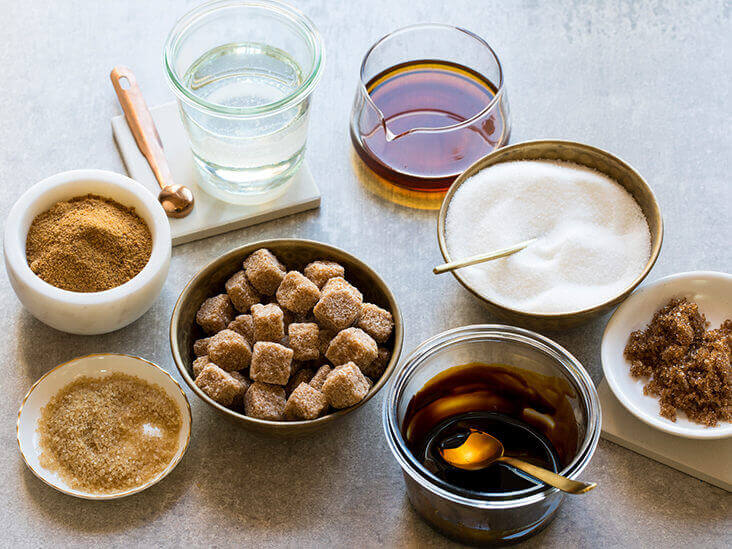
How is sugar found in food?
Sugar can be found naturally in food or added by the manufacturer. The difference can be explained using muesli as an example: Homemade muesli made from oatmeal, fruit and milk contains sugar, since fruit and milk products naturally contain sugar. Bought mueslis were often additionally sweetened with table sugar, honey, syrup or juices. So they contain “added sugar”.
How do I know how much sugar a food contains?
Food manufacturers are legally obliged to list the nutritional value of their products in so-called nutritional tables on the packaging. The information usually refers to a quantity of 100 grams or 100 milliliters. Sometimes information about the nutritional content of a portion is also given, e.g. of 80 grams. The amount of sugar is given as part of the amount of carbohydrates.

How can I identify added sugars?
The table of nutritional values does not show whether a food naturally contains sugar or whether it contains added sugar. However, added sugars must be listed in the ingredients of a food. Here they often hide behind other names that are not immediately recognizable as sugar.
Ingredients ending in -ose
Sugars often end in -ose, e.g. Glucose (also dextrose), sucrose, raffinose, fructose, maltose, lactose (milk sugar).
Sugar from dairy products
Dairy products that contain lactose can be used as a sweetener. Examples are lactose or milk sugar, sweet whey powder or skimmed milk powder.
Syrup and honey
Natural substances such as syrup and honey also consist largely of sugar. Examples are glucose syrup, agave syrup, malt extract or sugar beet syrup.
Does “sugar-free” really mean “free of sugar”?
The EU Food Labeling Regulation regulates how sugar must be declared in food. Some foods are advertised as containing less sugar. However, the information on the packaging can be misleading for the consumer. This is hidden behind the terms:
Sugar free
A product labeled “sugar-free” must contain a maximum of 0.5 grams of sugar per 100 grams or 100 milliliters.
Low in sugar
A food can be described as “low in sugar” if it contains no more than 5 grams of sugar per 100 grams. In the case of liquid foods, there may be a maximum of 2.5 grams of sugar per 100 milliliters.
Sugar reduced
In order to be allowed to bear the label “reduced sugar”, the product must contain at least 30 percent less sugar than other products of the same type.
No added sugar
This information is permitted if no sugar has been added to the product. If the food naturally contains sugar, this should be labeled “naturally contains sugar”.
Fruit sweetness
This term means that the product contains fruit sugar (fructose). Fructose occurs naturally in fruit. However, processed foods often contain much more fructose than fruit. Scientists have suspected for many years that this industrially produced fructose in particular could be harmful to health. Studies show that fructose promotes obesity, fatty deposits in the liver, insulin resistance and diabetes.
Less sweet
There are no legal requirements for this information. It only refers to the taste and does not provide any information about the actual sugar content.



Facebook Comments