 John Myers
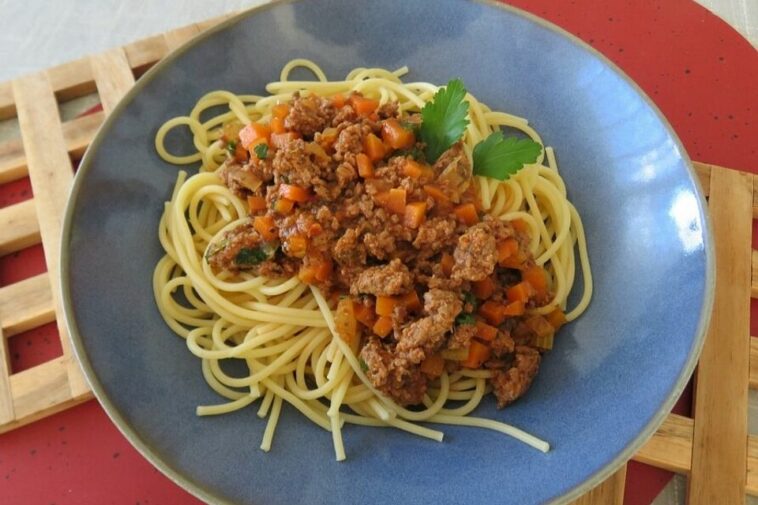
Ingredients for 4 servings:
- 1.2 kg minced meat (beef)
- 2 marrow bones (beef), the marrow removed
- 250 g root vegetables (carrots, celery, parsley root, leek, fennel, onion, garlic)
- 700 ml white wine, dry
- 500 ml beef broth
- 3 bay leaves
- 2 sprigs rosemary
- 4 juniper berries
- 1 tube(s) Tomato paste
- olive oil
- Clarified butter
- pepper
- Sea salt
- 1 pinch(s) of sugar
Instructions
Working time approx. 45 minutes; Total time approx. 45 minutes
another variation of the Bolognaise sauce – for purists
A few tips first: It’s important that the ground beef has a low fat content, so please don’t use tartar sauce. It’s equally important to me to use homemade beef broth for this dish, made from beef, bones, and soup vegetables. All my attempts with store-bought broths and stocks have never succeeded in teasing out that wonderful beef flavor (I make a batch of broth about every six weeks anyway, so about 2 liters net, which is only worth it in large quantities anyway). And now let’s get started: Peel or clean the root vegetables and dice them very finely. Then fry them in a large cast-iron pot (important!) in a mixture of clarified butter and olive oil until they brown slightly and develop the first roasted aromas. Then stir-fry a free space in the middle of the pot and add 2 tablespoons of tomato paste. Heat the mixture briefly (max. 2 minutes) over very high heat – the tomato paste needs to caramelize thoroughly, but the vegetables must not burn on the sides of the pan – it’s a bit of a balancing act. Then reduce the heat and stir together the tomato paste and vegetables. In a pan, brown the ground beef in the rendered beef marrow. I brown the meat in batches of about 300g each, because otherwise the meat doesn’t heat up quickly enough and thus “slumps.” When each portion of meat is crispy, transfer it to the pot with the vegetables. Finally, brown the rest of the tomato paste in the pan until it caramelizes thoroughly. Then reduce the heat and deglaze with a little wine or broth – also adding this to the pot. Now add the spices and herbs to the meat and gradually add more liquid (alternating between white wine and beef broth), letting it simmer gently over low heat. This process must take at least 6 hours – so check, stir, and top up the liquid every half hour. It shouldn’t be so hot that the mixture sticks to the bottom of the pot. This works better in a cast iron pot than in a stainless steel pot (if you don’t have a cast iron pot, you’ll just have to keep a closer eye on the dish). It’s even better, by the way, to stop cooking after 6 hours, let the pot stand overnight, and reheat the ragù the next day. Important: You can vary everything except one thing – the preparation time! A bolu tastes better the longer it simmers gently. 12 hours is no problem – on the contrary. 6 hours is the absolute minimum!!! I’ve since discarded all variations with real tomatoes, canned tomatoes, tomato puree, red wine, and anything other than beef broth (e.g., vegetable broth or veal broth) as not achieving the desired result. Other vegetables, such as red bell peppers or chili peppers, also had a short lifespan in my bolu recipe canon (fresh red chili peppers in small cans might still work – I like it much better without them these days). Since this dish is quite labor-intensive, I always make at least double the amount and freeze the leftovers; the dish can withstand that perfectly. Despite the white wine in the recipe, I recommend a decent red wine, a Chianti, a simple Bordeaux from the Médoc, or even a not-too-weak German Pinot Noir. And finally: There is no such thing as THE recipe for Bolognaise sauce. There will be as many recipes as there are housewives and cooks in Italy and elsewhere. One important thing, and one thing that all good “Bolu” recipes require, is only the very best ingredients and plenty of time! I’ve tried a few things and found MY recipe, which is a mixture of several Italian cookbooks, oral tradition from an Italian acquaintance (OK, actually Sardinian, but maybe we can just about accept that *g*) and my own experimentation.


Facebook Comments