 John Myers
Can I safely grow and eat fruit and vegetables if the nitrate level in the groundwater exceeds the limit?
The amount of nitrate in vegetables depends only to a limited extent on the nitrate content in the groundwater. A whole series of other cultivation and harvesting conditions are also decisive, such as solar radiation, fertilization and harvesting time and, last but not least, the types of vegetables cultivated. In this respect, we cannot give an assessment of the health risk from the nitrate content of your home-grown vegetables.
Nitrate is a natural and harmless substance. The problem for humans is that nitrate is converted to nitrite by bacteria in the human digestive tract. This blocks the transport of oxygen in the blood, which can be life-threatening, especially for babies.
Furthermore, nitrite can combine with protein building blocks to form so-called “nitrosamines”, which are very likely to be carcinogenic. For this reason, there are statutory maximum levels for the nitrate content in drinking water and in food. At 50 mg/l, the limit value for drinking water was selected by the legislature so that the water is suitable for all consumer groups, including sensitive infants. If the limit is exceeded, the health department must point out that the water may not be used for infants under 10 kg.
The limit for food varies between 7000 mg/kg of food (arugula) and 2000 mg/kg (frozen spinach) depending on the type of vegetable. The World Health Organization specifies 3.7 mg/kg body weight as the general tolerable daily intake for adults. For a person weighing 70 kg, this corresponds to around 260 mg of nitrate, which can be easily ingested per day without having to reckon with a health risk.
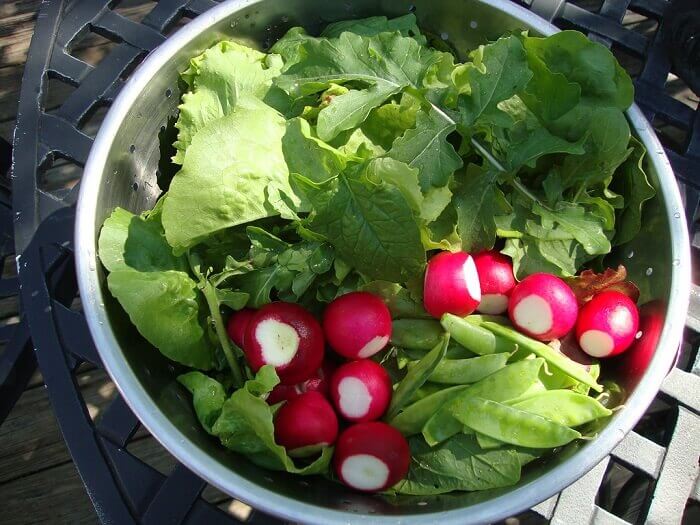
In any case, you can influence your nitrate intake by making a targeted choice of food. Nitrate is mainly found in stems, leaves and roots, from where it is transported to the plants’ metabolic systems. For this reason, leafy vegetables (lettuce, lamb’s lettuce, spinach, rocket), brassicas (Chinese cabbage, savoy cabbage, kale) and root vegetables (radishes, beets) are particularly rich in nitrates. On the other hand, less nitrate is found in cucumbers, peppers, green beans, peas, Brussels sprouts, onions and garlic.
How to reduce nitrate intake:
- Don’t eat nitrate-rich vegetables every day. Instead, vary the types of vegetables by including low-nitrate variants in your diet.
- Remove the stems and outermost leaves of leafy greens, especially during the winter months.
- Buy your vegetables by season. Because nitrate is broken down by sunlight, outdoor vegetables tend to be lower in nitrate.


Facebook Comments