 John Myers
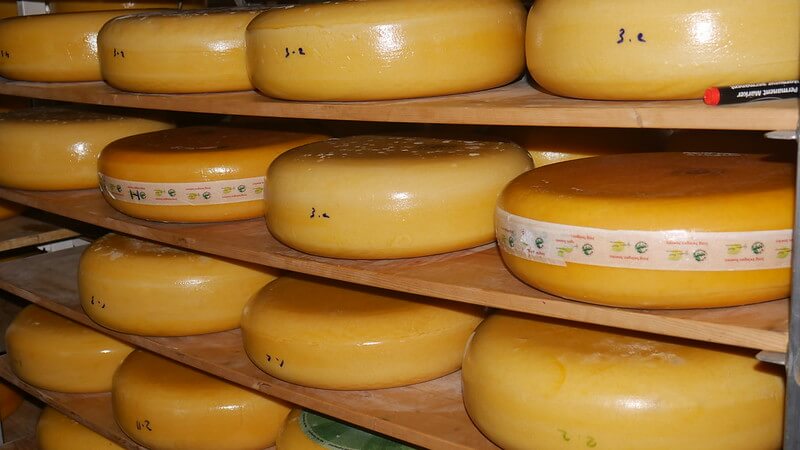
Which cheese rind can I eat? Some packaged cheeses are labeled “rind suitable for consumption”. Does this mean that for varieties that do NOT have this indication, the bark must or should be removed? And what about cheese from the cheese counter?
Artificial cheese rinds made from paraffin or wax are not intended for consumption and should always be trimmed. Cheese with a plastic coating must be marked with the notice “Plastic coating not suitable for consumption”, also in the cheese counter.
The preservative natamycin is permitted in limited quantities on the rind of hard cheese, semi-hard cheese and semi-hard cheese with a closed rind . It works against the growth of unwanted yeast and mold. The packaging must then contain the information: “preservative natamycin” or “preservative E 235”. In the case of loose goods at the cheese counter, the note “with preservatives” or “preserved” on a label directly on the cheese is sufficient.
Contrary to earlier statements by the Federal Institute for Risk Assessment (BfR), the rind of cheese treated with natamycin can also be eaten. If you still prefer not to take in this preservative, you have to pay close attention to the list of ingredients when shopping and remove the surface of the cheese. The use of natamycin is not permitted in organic cheese.
According to the Federal Institute for Risk Assessment, pregnant women, the elderly and immunocompromised people should always remove the cheese rind, regardless of whether natamycin was used during production. Children should only eat cheese without the rind. The reason lies in a possible contamination of the bark with pathogenic germs such as listeria. In the risk groups mentioned, these can lead to an infection with flu-like symptoms, and in severe cases to blood poisoning and meningitis. Pregnant women are at risk of miscarriage.
Apart from this limitation, all naturally ripened, untreated cheese rinds are, in principle, edible. With raw milk cheese, the natural bacterial flora of the fresh milk is used for maturing and for the characteristic taste. This is the case, for example, with Allgäu Emmental, Parmesan or Roquefort. In the case of mold, yellow or red smear cheese, the rind plays a special role for the special aroma. For many consumers, however, the rind of some varieties is too intense in taste, so they cut it off for this reason. Their firmness also makes the rind of some hard cheeses inedible.
If the surface of the cheese has been treated with biochar (E 153), this must be stated in the list of ingredients. The biochar protects the surface of the cheese from mold but is edible.

Facebook Comments